Brain Science
How does real-time brain monitoring work?
Your brain never stops changing, but most shifts go unnoticed until they affect you. Real-time EEG monitoring makes these invisible transitions visible by continuously tracking and interpreting brain activity as it happens.
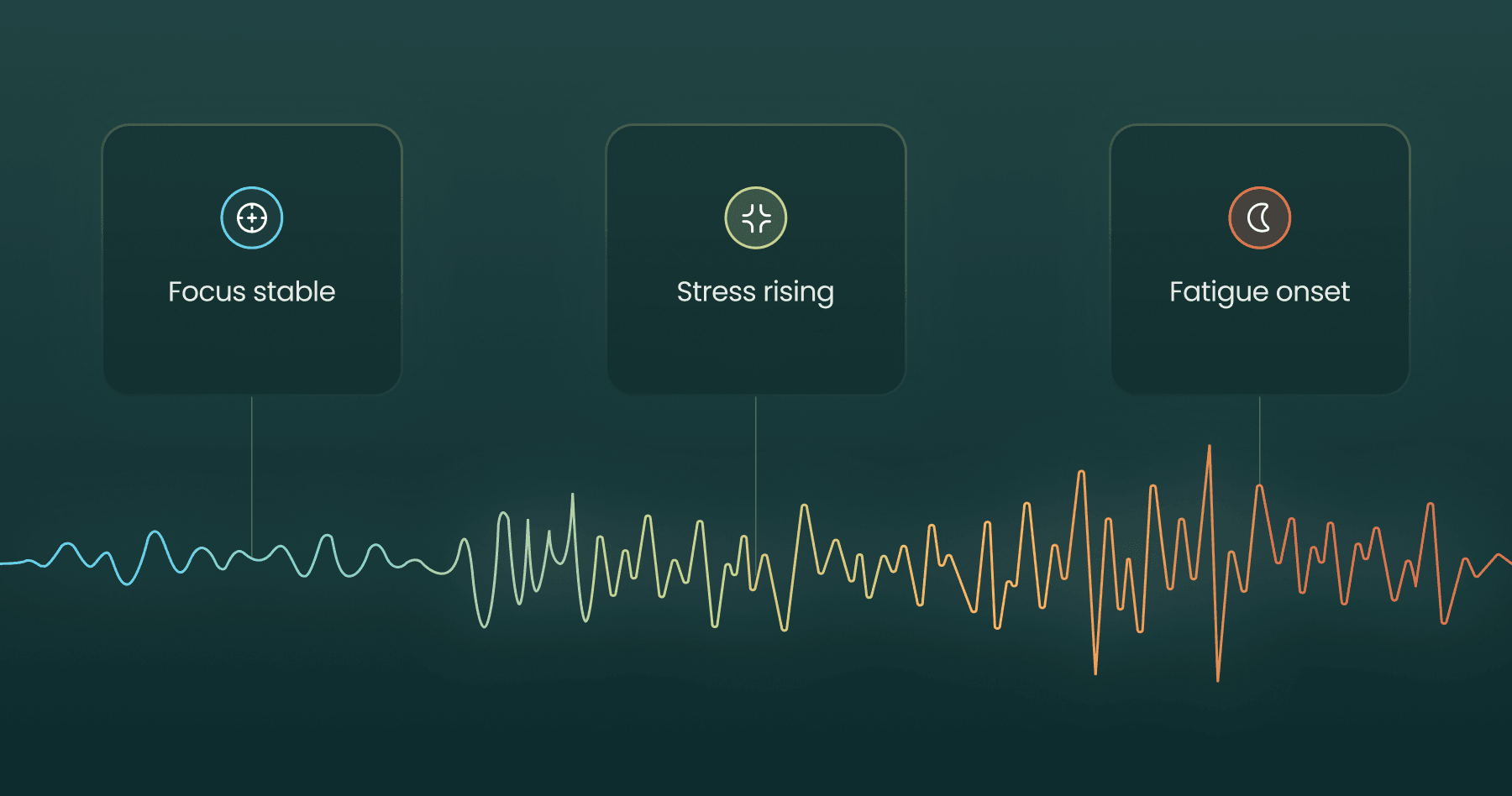
Your mental state is constantly shifting. You move from focus to distraction, from calm to restlessness, often within minutes. These changes feel immediate, but you don't see them happening, you only notice the effects.
A drop in attention. A sudden sense of pressure. A moment where thinking feels harder than usual. By the time you recognize it, the shift has already happened. This is where real-time brain monitoring becomes relevant. Instead of relying only on delayed awareness, brands like Basil Health use EEG to track these changes as they occur, making your mental state visible in the moment, not after.What “real-time” actually means?
Real-time doesn't just mean fast. It means continuous. Your brain is constantly producing electrical signals. These signals don't pause or update in intervals; they flow continuously. Real-time monitoring captures this ongoing activity without gaps. This is important because mental states don't change in steps. They evolve gradually. If you only measure occasionally, you miss the transitions. But when monitoring is continuous, you can see:
- when a state begins to shift
- how quickly it changes
- whether it stabilizes or continues to fluctuate
This is what makes real-time monitoring different from traditional observation.
How are brain signals captured?
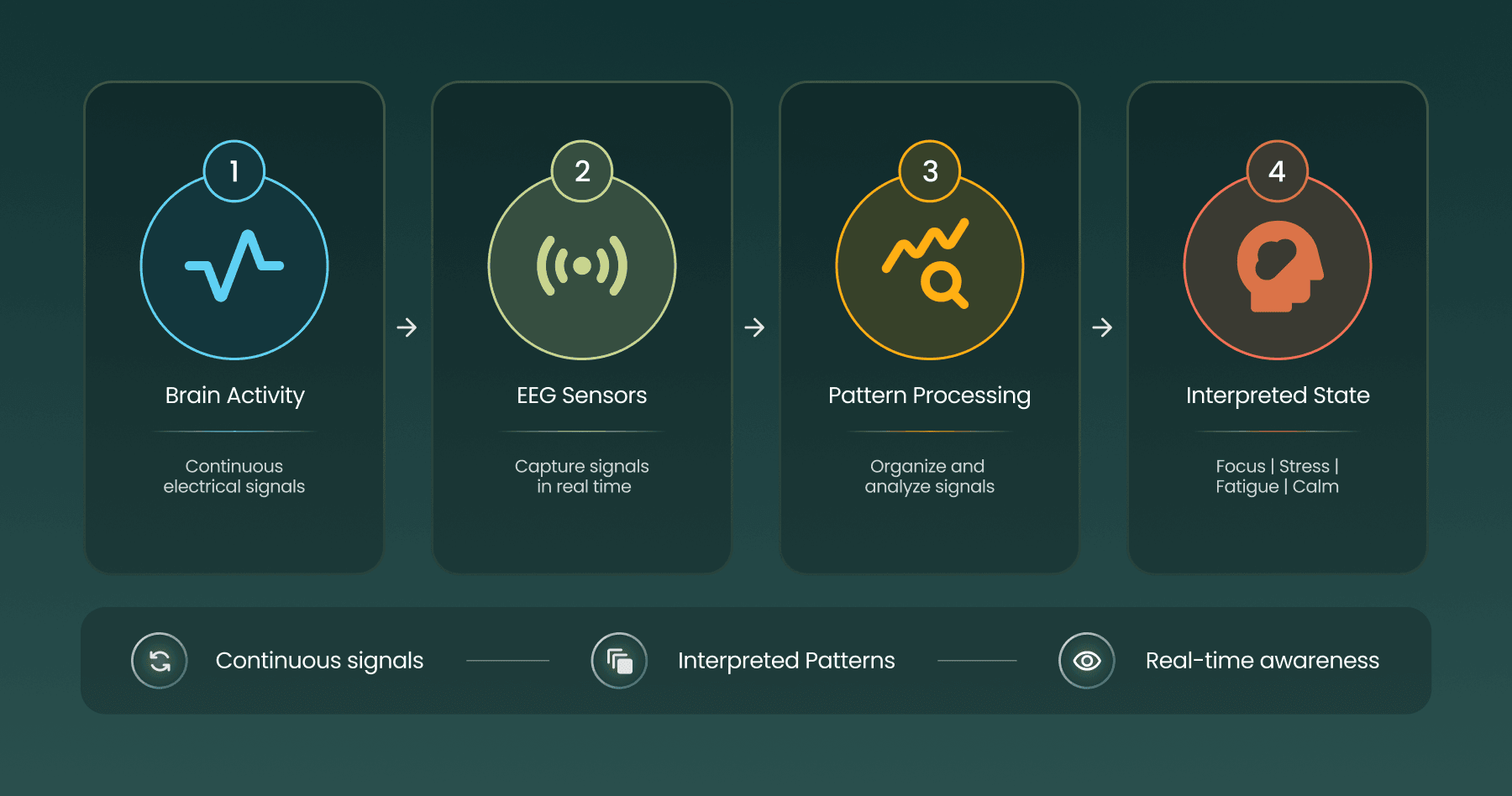
Real-time brain monitoring starts with measuring electrical activity. EEG sensors detect tiny signals generated by the brain. These signals are extremely fast and constantly changing, which is why they need to be captured continuously. At this stage, the data is raw. It doesn't say “you are stressed” or “you are focused.” It's simply a stream of signals reflecting how your brain is functioning. The key is accuracy and consistency, capturing the signal without interruption so that nothing is missed. This is the foundation on which everything else is built.
How raw signals become meaningful insights
Capturing data is only the first step. The real value comes from interpretation. What happens after signals are captured:
- The raw data is organized into recognizable patterns
- These patterns are analyzed for stability, intensity, and variation
- Changes in patterns are tracked over time
- The system identifies shifts linked to different mental states
This is where platforms like ours comes in. They translate complex brain signals into clear insights about stress, focus, and fatigue. So, the data becomes usable, not just technical. Without this layer, real-time monitoring would be difficult to understand.
From signals to real-time awareness
At this point, the process becomes clearer.
Real-time monitoring changes everything
Most people understand their mental state only after it affects them. They notice distraction after losing focus. They recognize stress after feeling overwhelmed. But by then, the shift has already taken hold. Real-time monitoring changes the timing. With brands like Basil Health, you can observe these changes as they develop. You start seeing patterns earlier, when your focus begins to fluctuate or when mental load starts increasing. That allows for earlier, more precise responses.The takeaway
Your brain is always active, always changing. The difference is whether you can see those changes or not. Real-time brain monitoring works by capturing continuous signals, identifying patterns, and translating them into something you can understand. It doesn't predict your state. It reveals it as it happens. And that shift, from delayed awareness to real-time visibility, is what makes it useful.
Frequently Asked Questions
1. What is real-time brain monitoring?
It is the continuous tracking of brain activity using tools like EEG, allowing you to observe changes in your mental state as they happen.
2. How is real-time monitoring different from regular measurement?
Regular measurement captures snapshots. Real-time monitoring captures continuous data, showing how your state evolves over time.