Basil Health blog
Brain science, EEG, and mental performance
In-depth articles on EEG biofeedback, brainwaves, stress, focus, calm, and sleep — the science behind every metric on the Basil Health platform.
Featured topics
- Brainwaves explained — alpha, beta, theta, delta, gamma.
- How EEG biofeedback measures stress and recovery in real time.
- Why your focus drops, and how to train it back.
- Stress build-up, mental exhaustion, and how to reset.
- Real-time monitoring of the nervous system.
All articles
 Why can social interaction leave you mentally exhausted? · July 16, 2026 — Your brain is constantly processing, predicting, and adapting during conversations, even enjoyable ones. Learn why social interaction leaves you mentally drained.
 Why does decision making feel harder by the end of the day? · July 15, 2026 — Decision fatigue builds quietly throughout the day. Learn why simple choices feel harder by evening and what your brain is experiencing.
 What is background cognitive fatigue doing to your brain? · July 14, 2026 — Background cognitive fatigue quietly drains focus and mental energy. Learn how to recognize it before it impacts your daily performance.
 Why attention fatigue and burnout are not the same thing? · July 13, 2026 — Attention fatigue and burnout aren't the same. Learn the difference and how understanding your brain helps you recover the right way.
 Cognitive fatigue explained through everyday life · July 9, 2026 — Feeling mentally drained without doing much? Discover how cognitive fatigue develops and why your brain needs recovery, not just rest.
 What does nervous system overload really feel like? · July 7, 2026 — Nervous system overload often feels like mental heaviness, poor focus, and low recovery—not a breakdown. Learn the signs before burnout.
 Why does emotional residue stay with you longer than expected? · July 6, 2026 — Emotional residue lingers after moments end, quietly shaping focus, mood, and energy. Learn why your brain takes time to emotionally reset.
 What does silent anxiety look like beneath the surface? · July 2, 2026 — Silent anxiety often hides beneath daily routines. Learn how it quietly affects focus, recovery, and mental wellbeing before you even notice it.
 Why small stressors create bigger problems than you think? · June 30, 2026 — Small stressors add up quietly. Learn how microstress builds mental overload and why recognizing it early can protect your brain.
 How overstimulation affects your brain and attention? · June 29, 2026 — Your brain isn't built for constant input. Learn how overstimulation fragments attention, fuels mental fatigue, and makes focus harder to sustain.
 Why does your brain feel noisy all the time? · June 26, 2026 — Why does your brain feel noisy even in quiet moments? Discover how cognitive load, unfinished thoughts, and constant inputs shape mental noise.
 Why does recovery feel harder than it used to? · June 25, 2026 — Why does rest no longer feel enough? Discover how constant mental load disrupts recovery and why true recovery needs more than downtime.
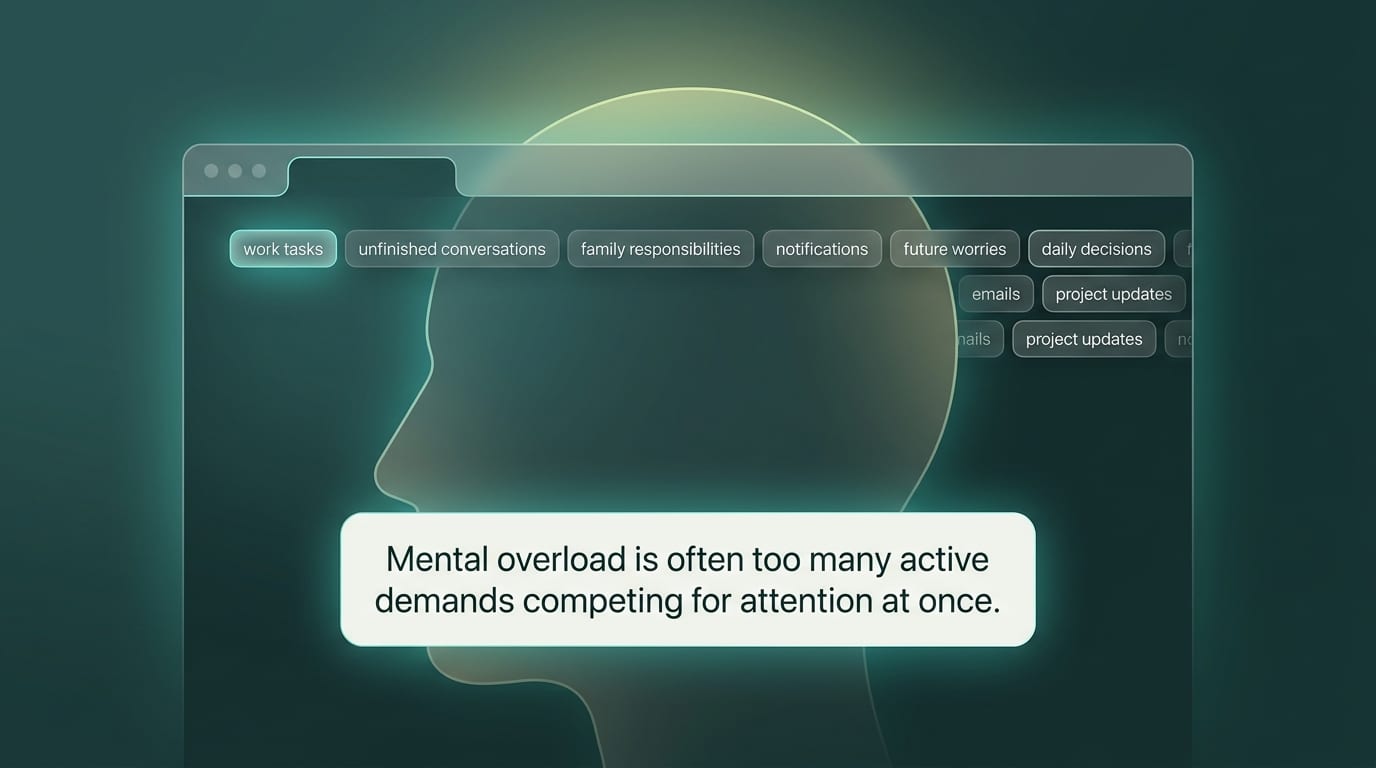 What mental overload actually looks like? · June 16, 2026 — Mental overload rarely looks the way you expect. It doesn't always stop you from functioning — it just makes functioning feel heavier than it should.
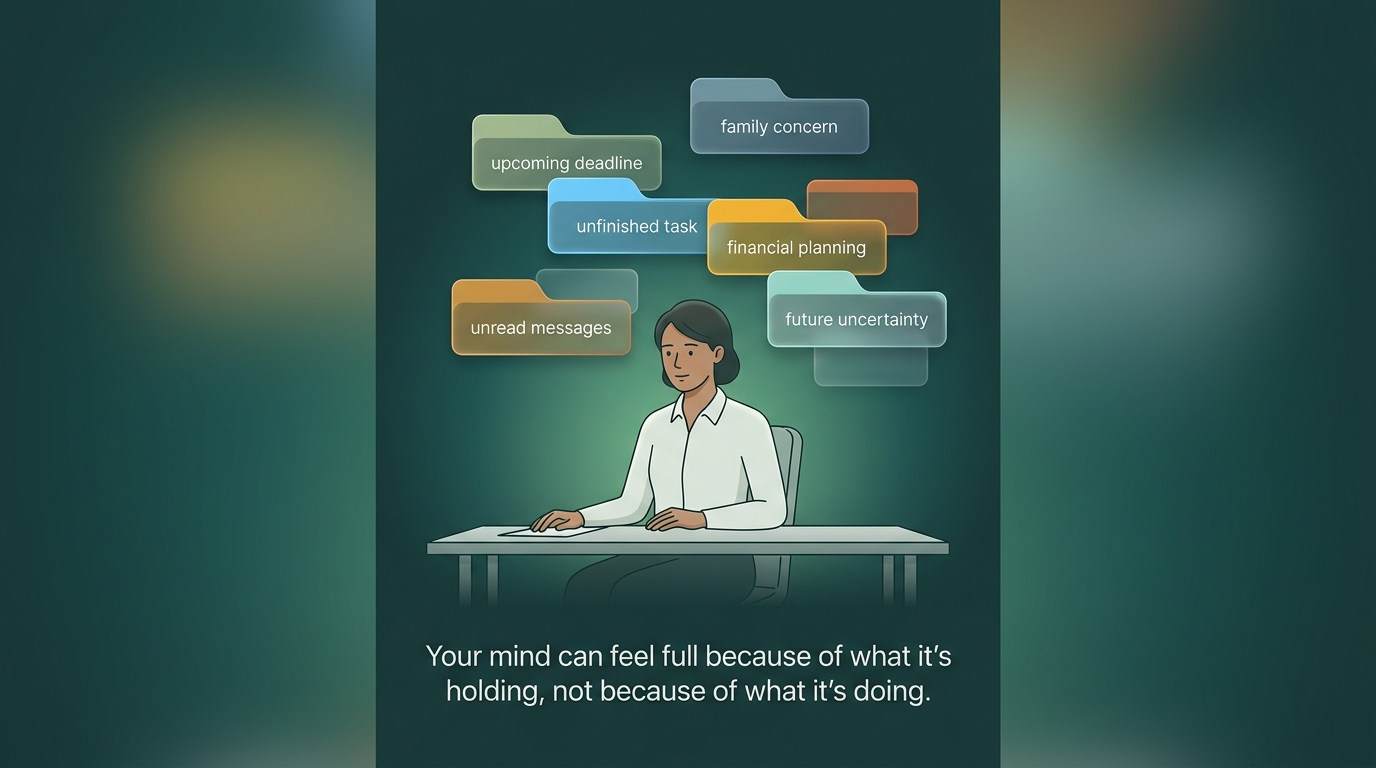 Why does your mind feel full even when you're doing less? · June 14, 2026 — Sometimes it's not the amount of work that drains you, but the amount your brain is quietly carrying in the background. Mental overload often begins where visible workload ends.
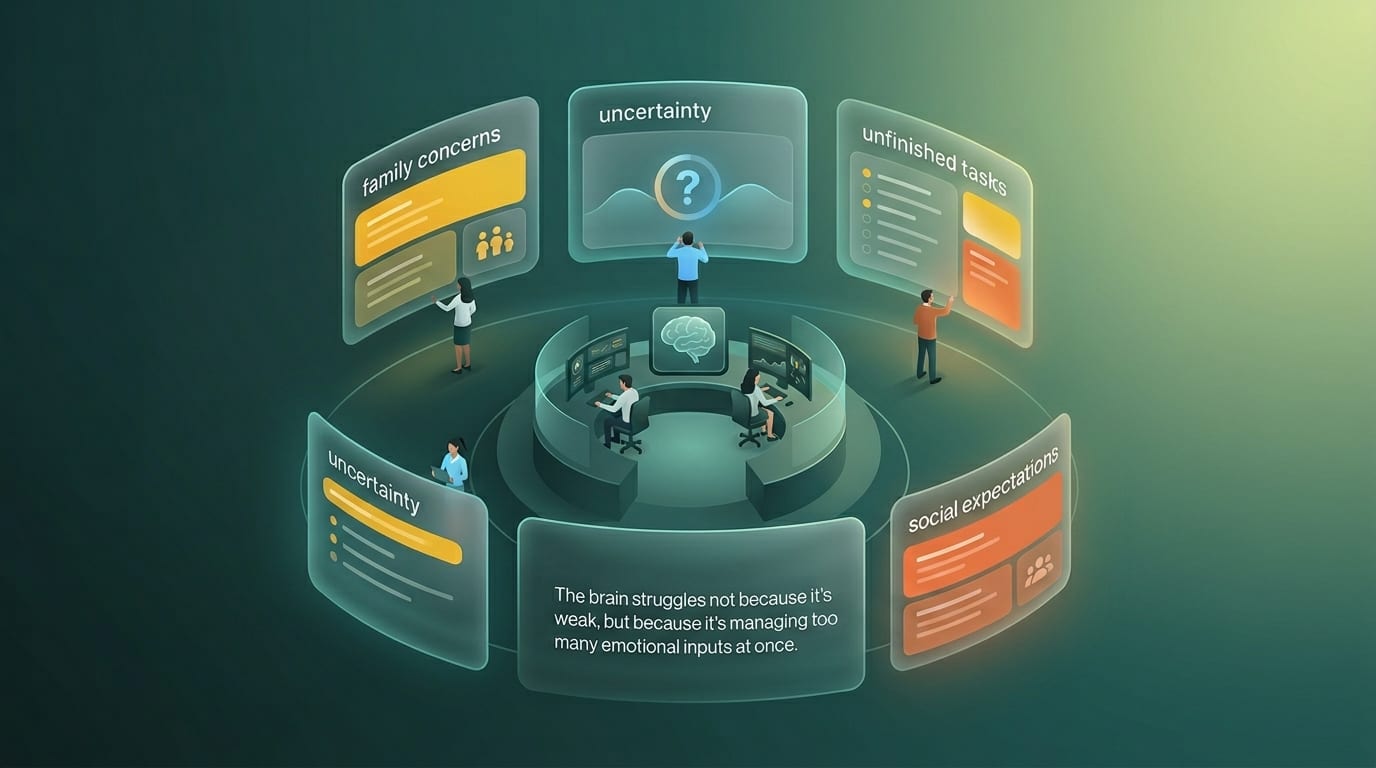 What emotional overload feels like inside the brain? · June 11, 2026 — Emotional overload is not a single emotion but the cumulative burden of unresolved mental demands, gradually reducing the brain's capacity for focus, clarity, and emotional resilience.
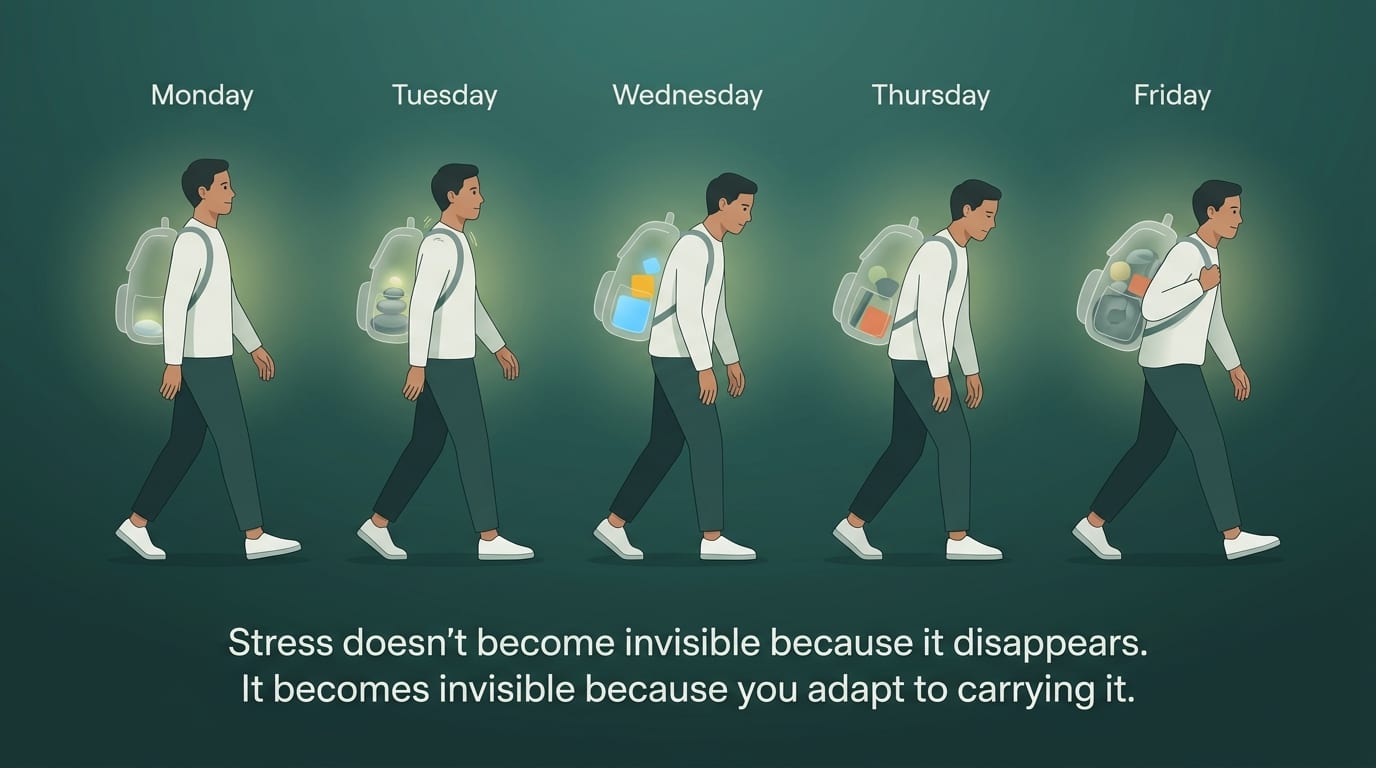 Why stress becomes invisible before it becomes a problem? · June 11, 2026 — The earliest signs of stress are often the easiest to ignore. Learn why the brain normalizes ongoing pressure and how invisible stress quietly grows before becoming a problem.
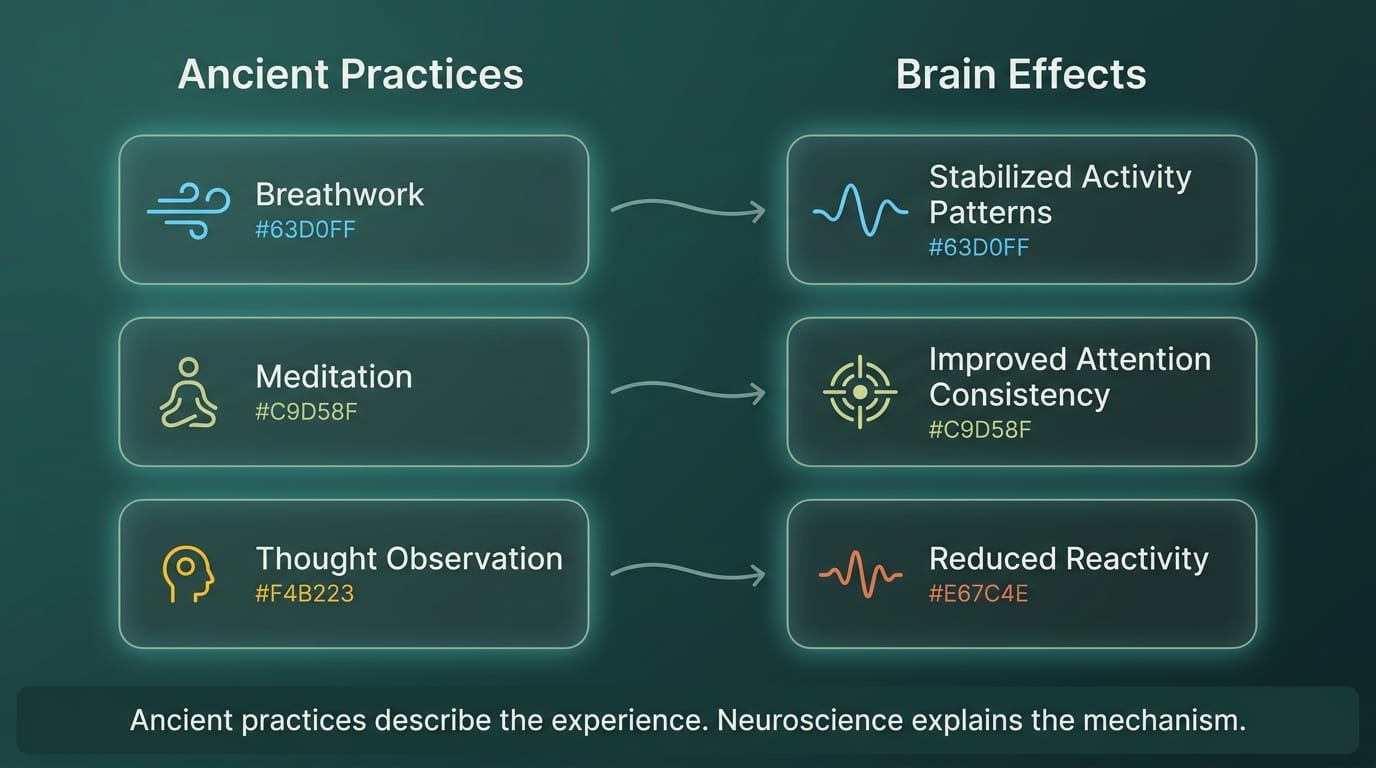 How ancient practices make sense through neuroscience today? · June 11, 2026 — The practices haven’t changed. Our understanding of them has. Neuroscience is helping decode how ancient techniques influence the brain, transforming timeless wisdom into observable mental patterns.
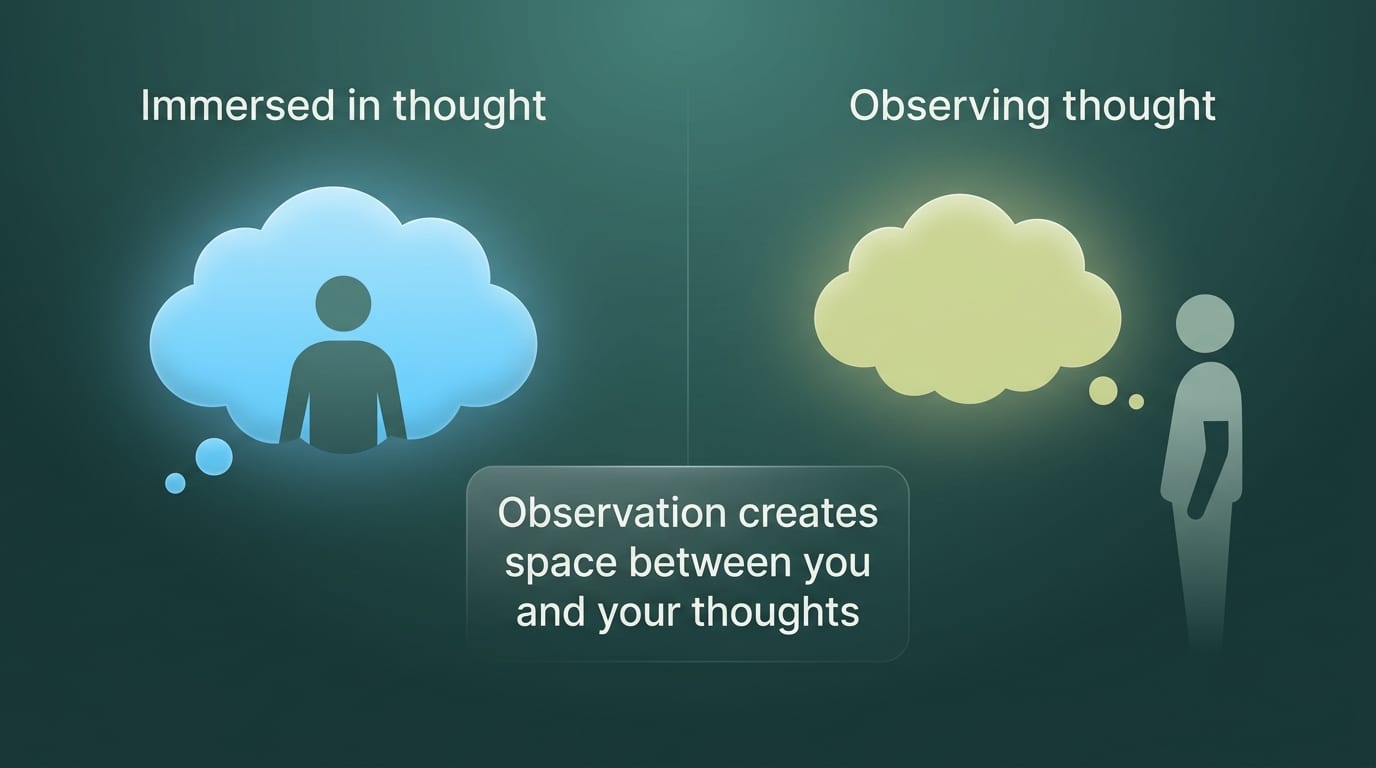 What happens in the brain when you observe your thoughts? · June 3, 2026 — The moment you observe a thought instead of following it, your brain begins to respond differently. Discover how simple awareness can reduce reactivity and create greater mental stability.
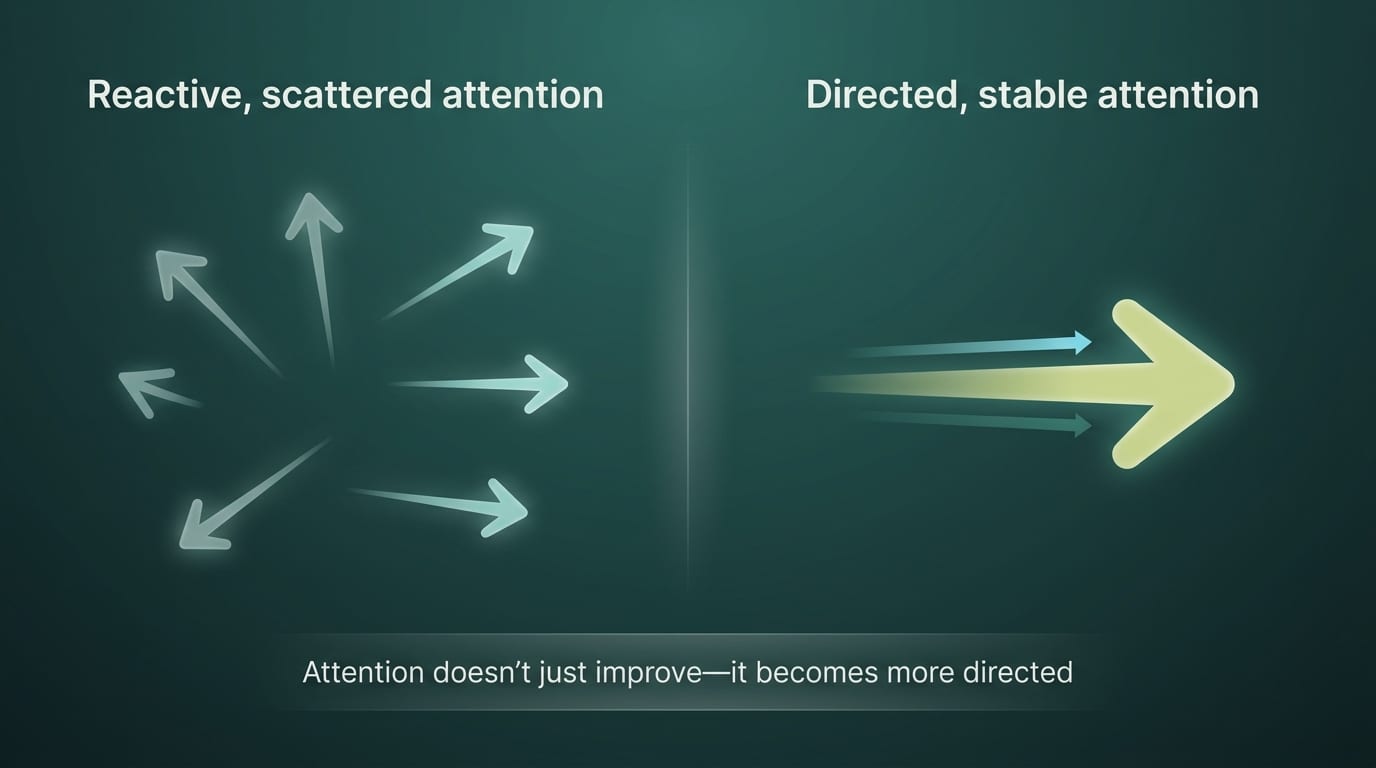 Why attention training is the missing skill today? · June 1, 2026 — Focus isn’t something you’re born with. It’s something your brain learns. In a world built for distraction, attention training becomes the skill that determines clarity, consistency, and mental control.
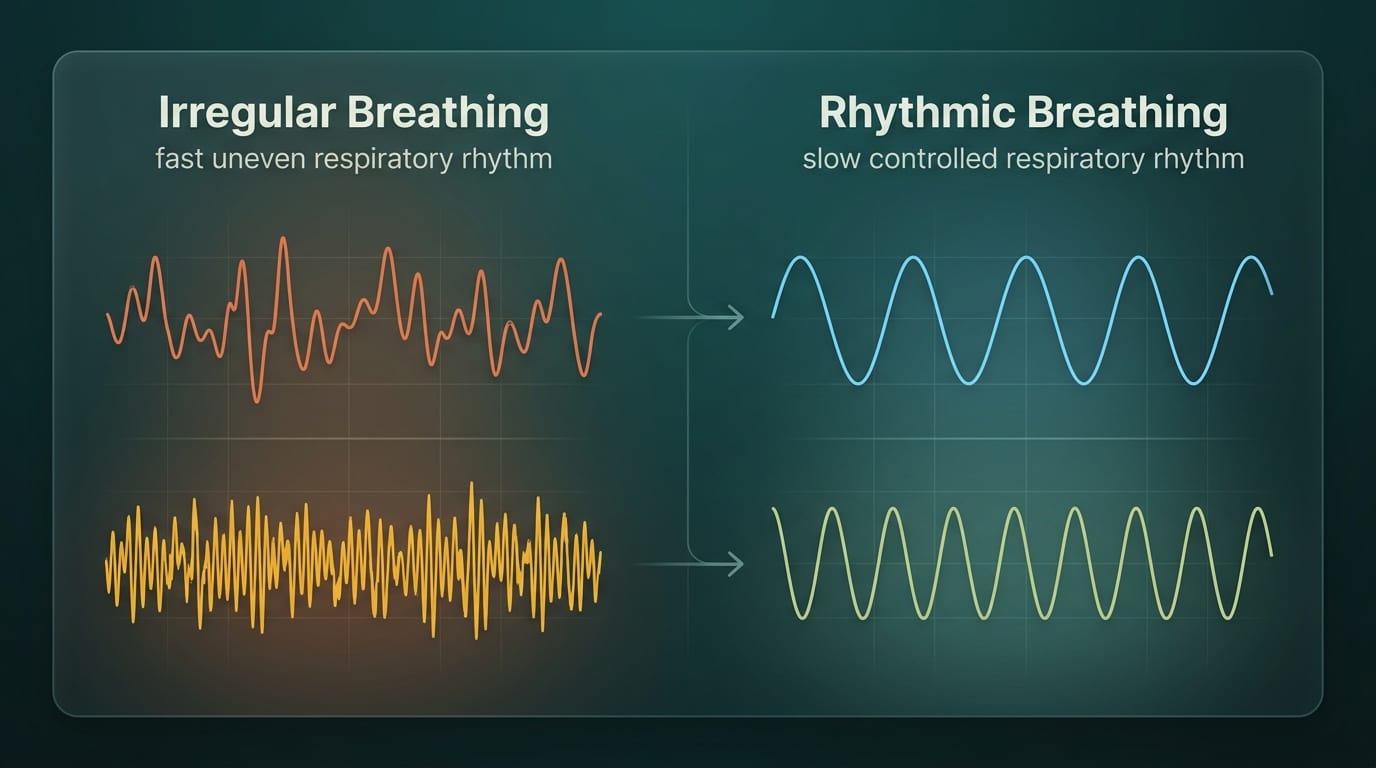 What actually changes when breathwork affects brainwaves? · May 28, 2026 — Breathwork does more than slow your breathing; it gradually reshapes your brain activity. As breathing stabilizes, brainwaves become calmer, clearer, and more organized, influencing focus, emotional control, and mental clarity in real time.
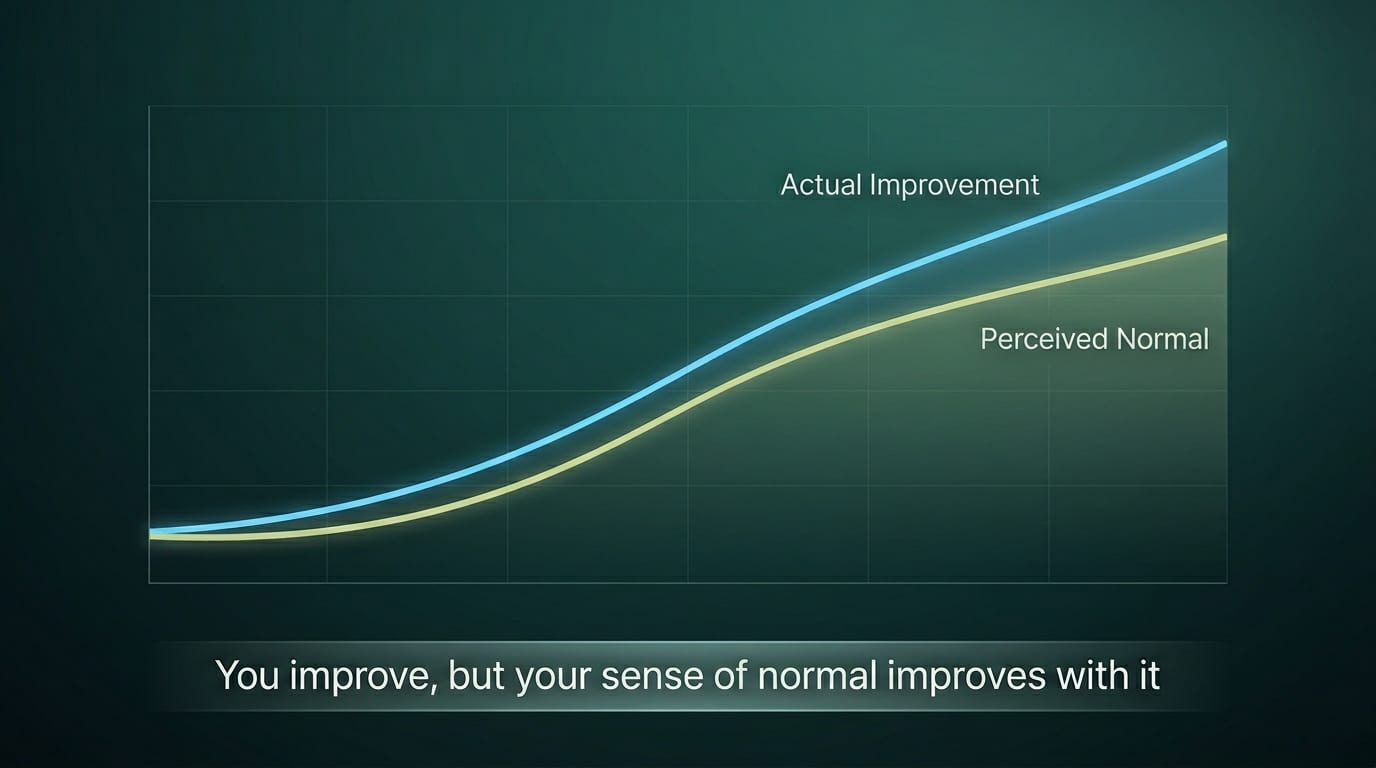 Why can’t you tell if your mind is improving? · May 27, 2026 — Mental improvement rarely feels dramatic because your brain adapts quietly over time. What once felt like progress slowly becomes your new normal, making real growth surprisingly hard to notice.
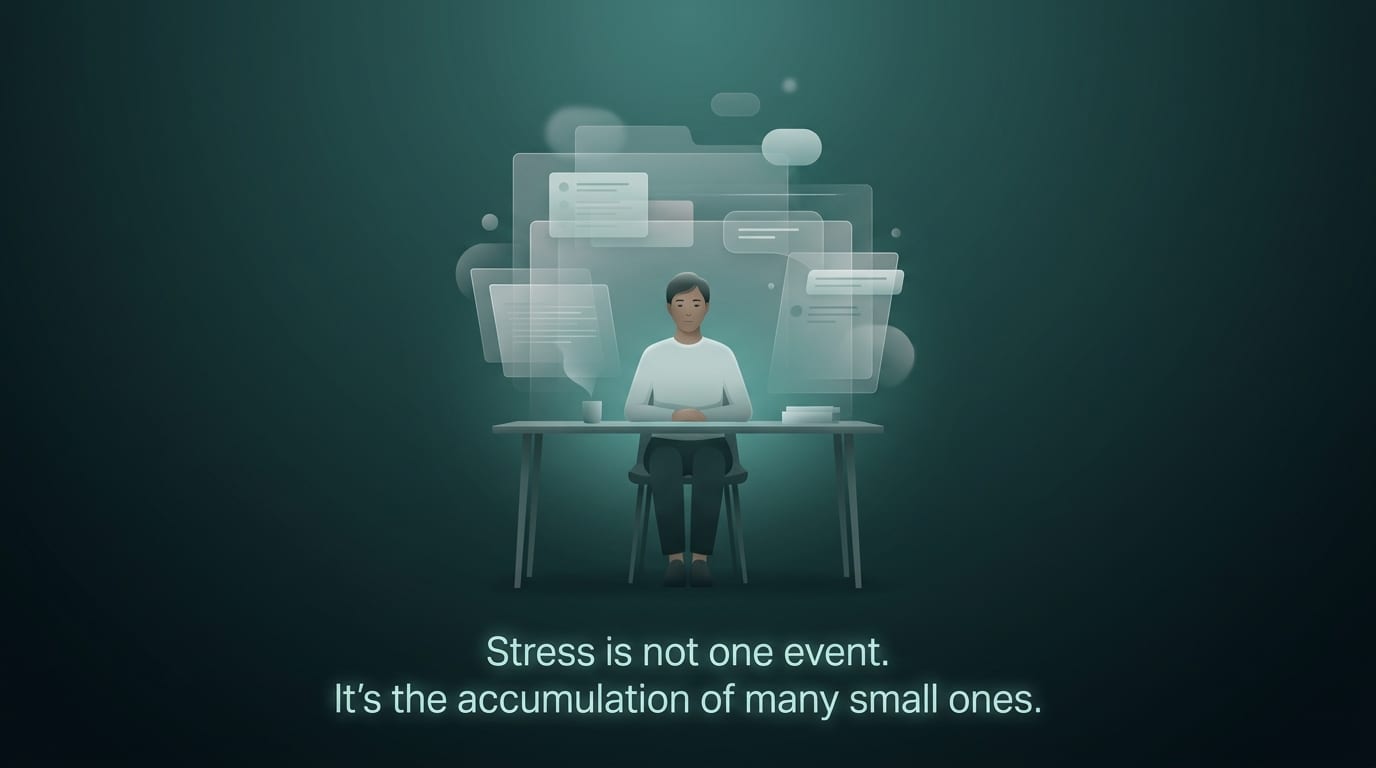 Why stress builds up without you noticing? · May 26, 2026 — Stress rarely arrives all at once. It builds quietly through small mental shifts your brain gradually adapts to, making exhaustion and overwhelm feel sudden only when the accumulated load becomes impossible to ignore.
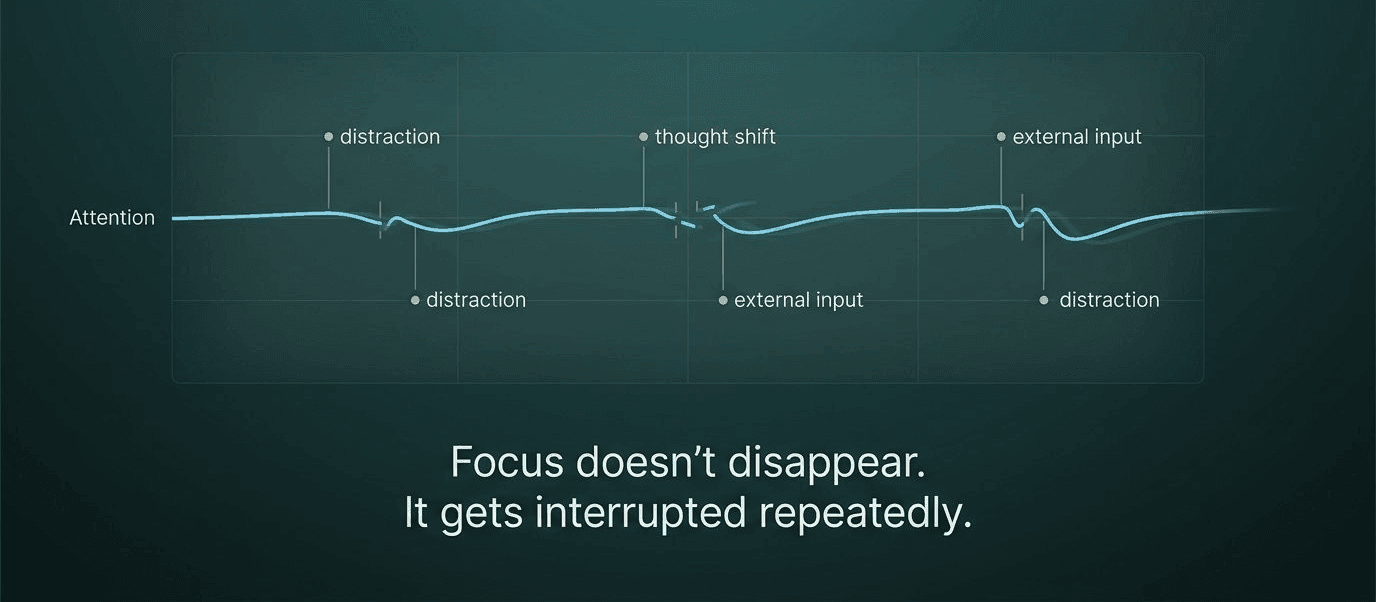 Why your focus always keeps on dropping when it shouldn’t? · May 26, 2026 — Your focus doesn’t suddenly disappear; it slowly breaks through constant mental restarts, unstable attention, and hidden cognitive fatigue that quietly disrupt your ability to sustain deep, consistent concentration.
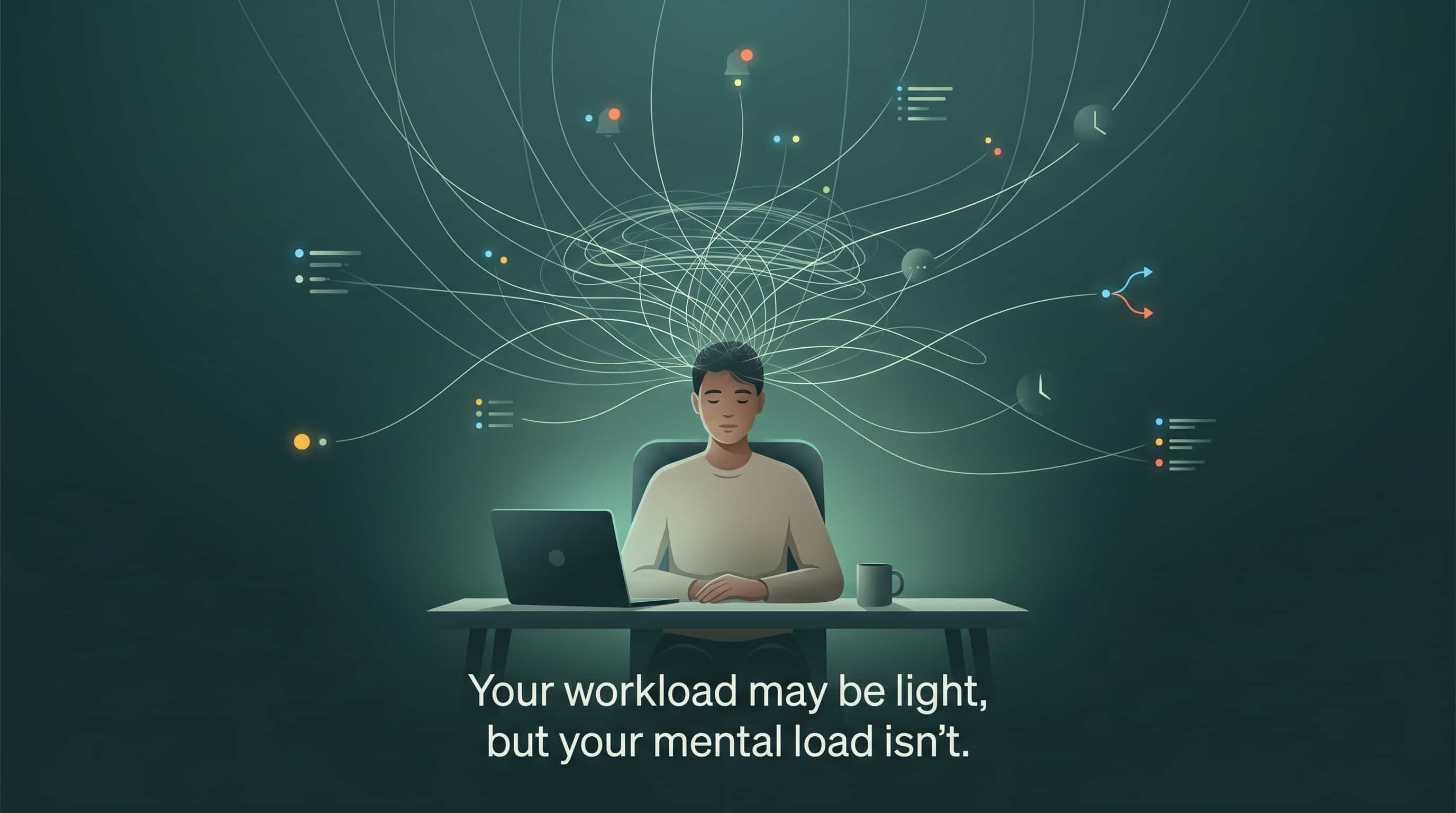 Why do you feel mentally exhausted without doing much? · May 22, 2026 — Mental exhaustion isn’t always caused by heavy work. Sometimes, unstable attention, constant mental restarts, and nonstop low-level stimulation quietly drain your brain far more than you realize.
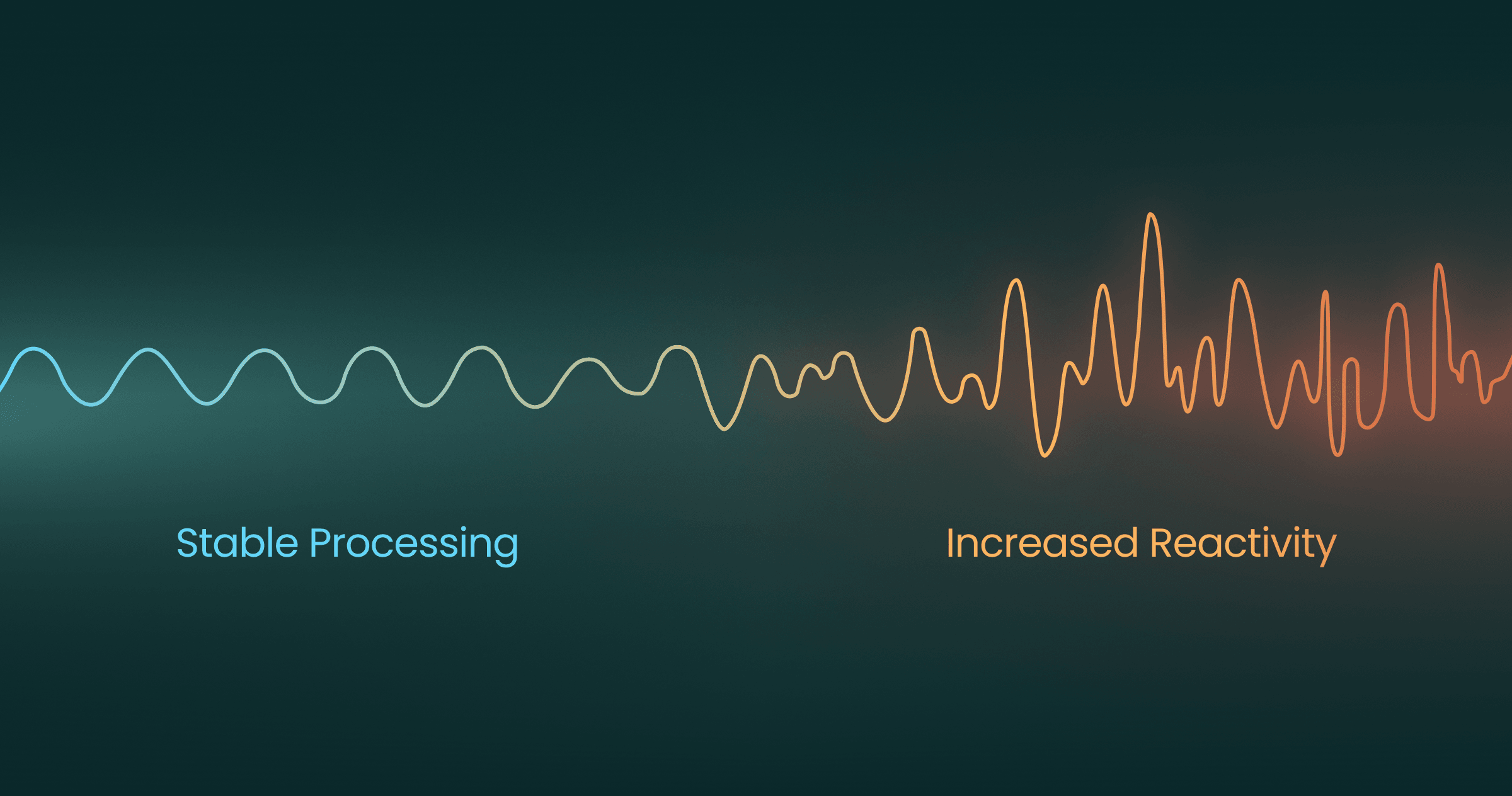 What happens in your brain when you’re stressed? · May 22, 2026 — Stress begins long before you consciously feel overwhelmed. Your brain gradually shifts into a more reactive, less efficient state, affecting focus, clarity, and emotional control before the symptoms become obvious.
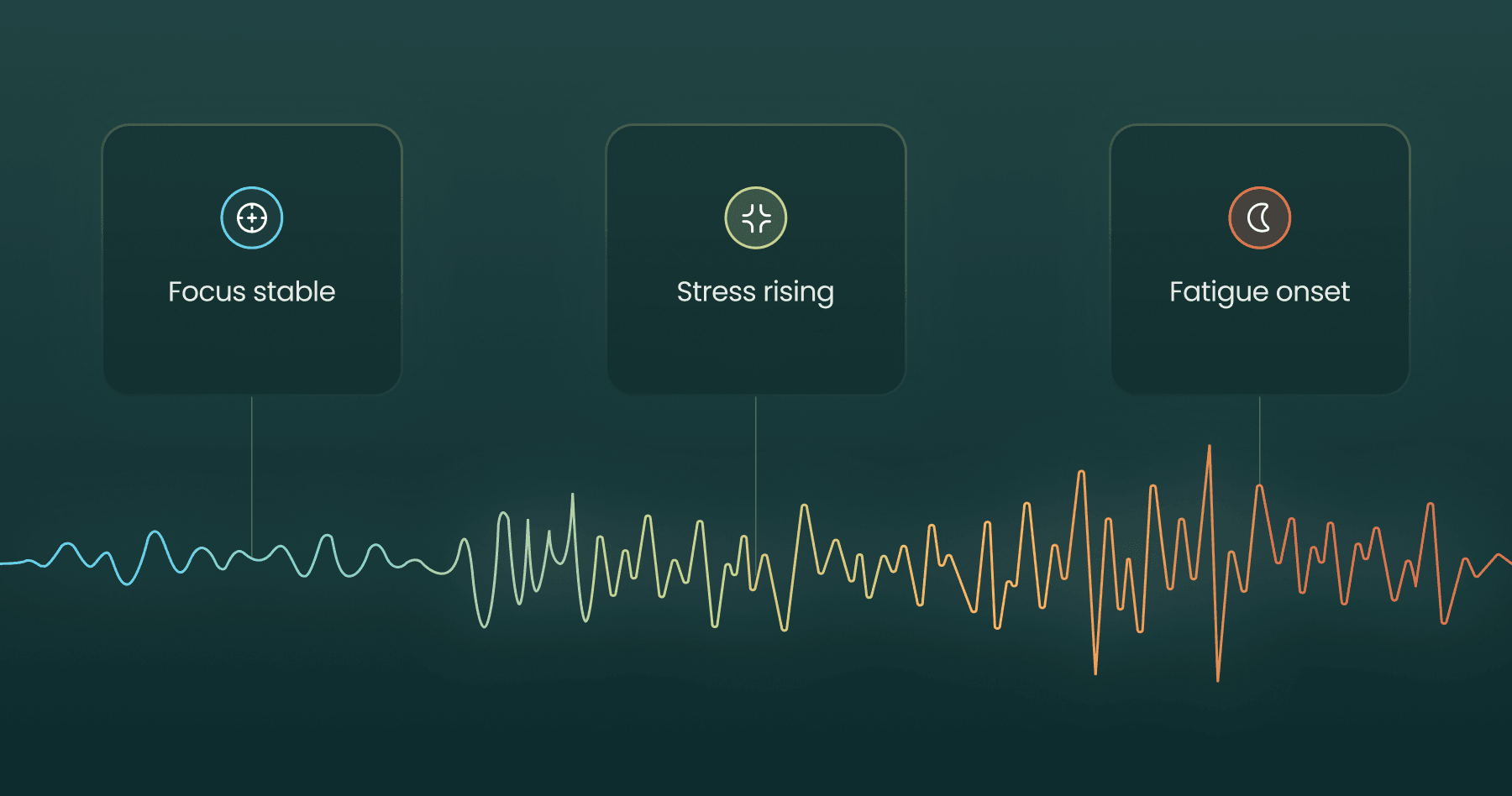 How does real-time brain monitoring work? · May 15, 2026 — Your brain never stops changing, but most shifts go unnoticed until they affect you. Real-time EEG monitoring makes these invisible transitions visible by continuously tracking and interpreting brain activity as it happens.
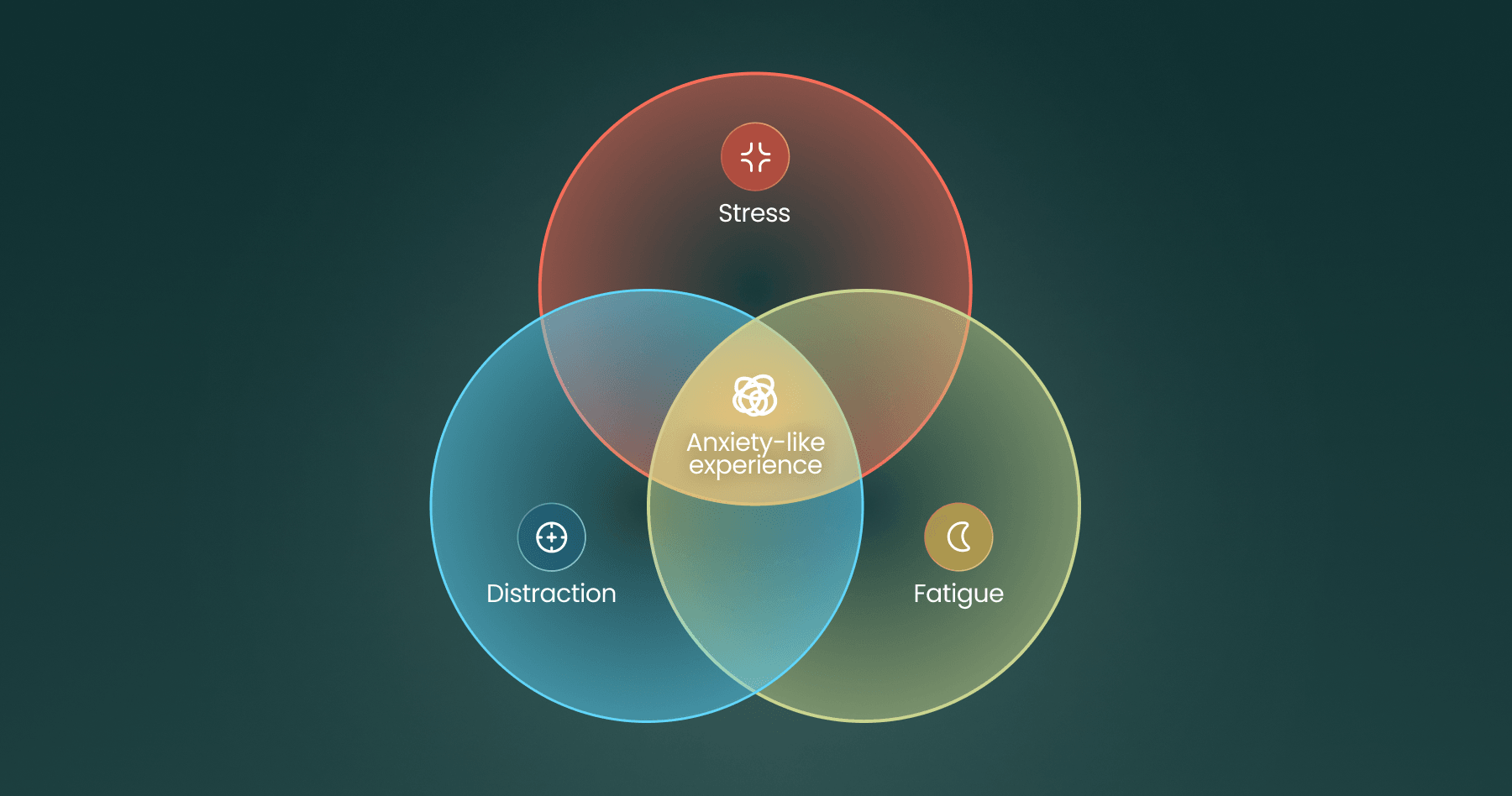 Can anxiety be measured using brain signals? · May 15, 2026 — Anxiety often hides behind everyday distractions, stress, or overthinking. Brain signals help uncover these subtle patterns early, making anxiety more measurable, understandable, and easier to respond to in time.
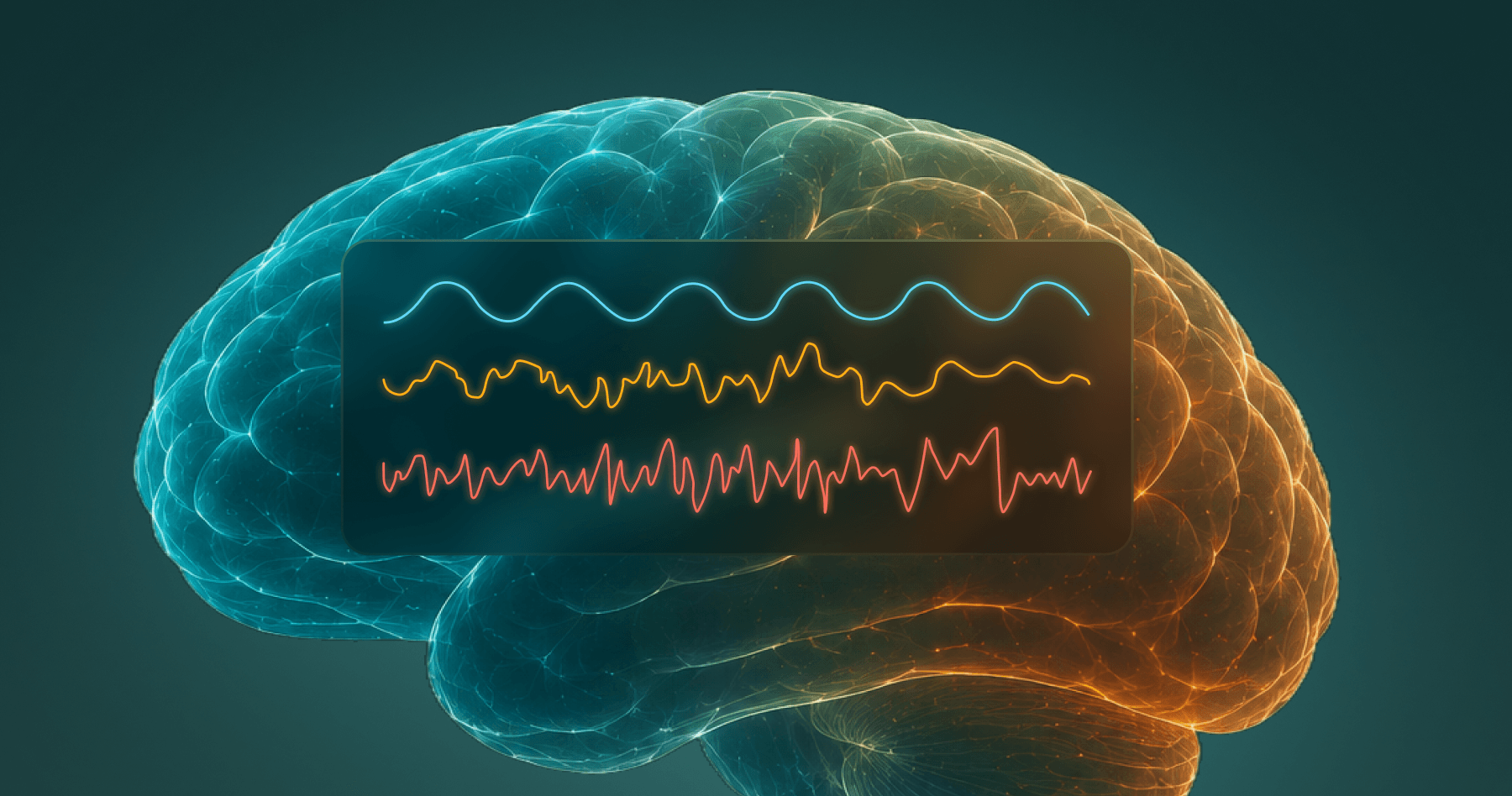 What do brainwaves tell you about your mental state? · May 13, 2026 — Brainwaves don't label your emotions; they reveal the hidden patterns shaping them. EEG helps uncover how your focus, stress, and mental energy continuously shift beneath conscious awareness.
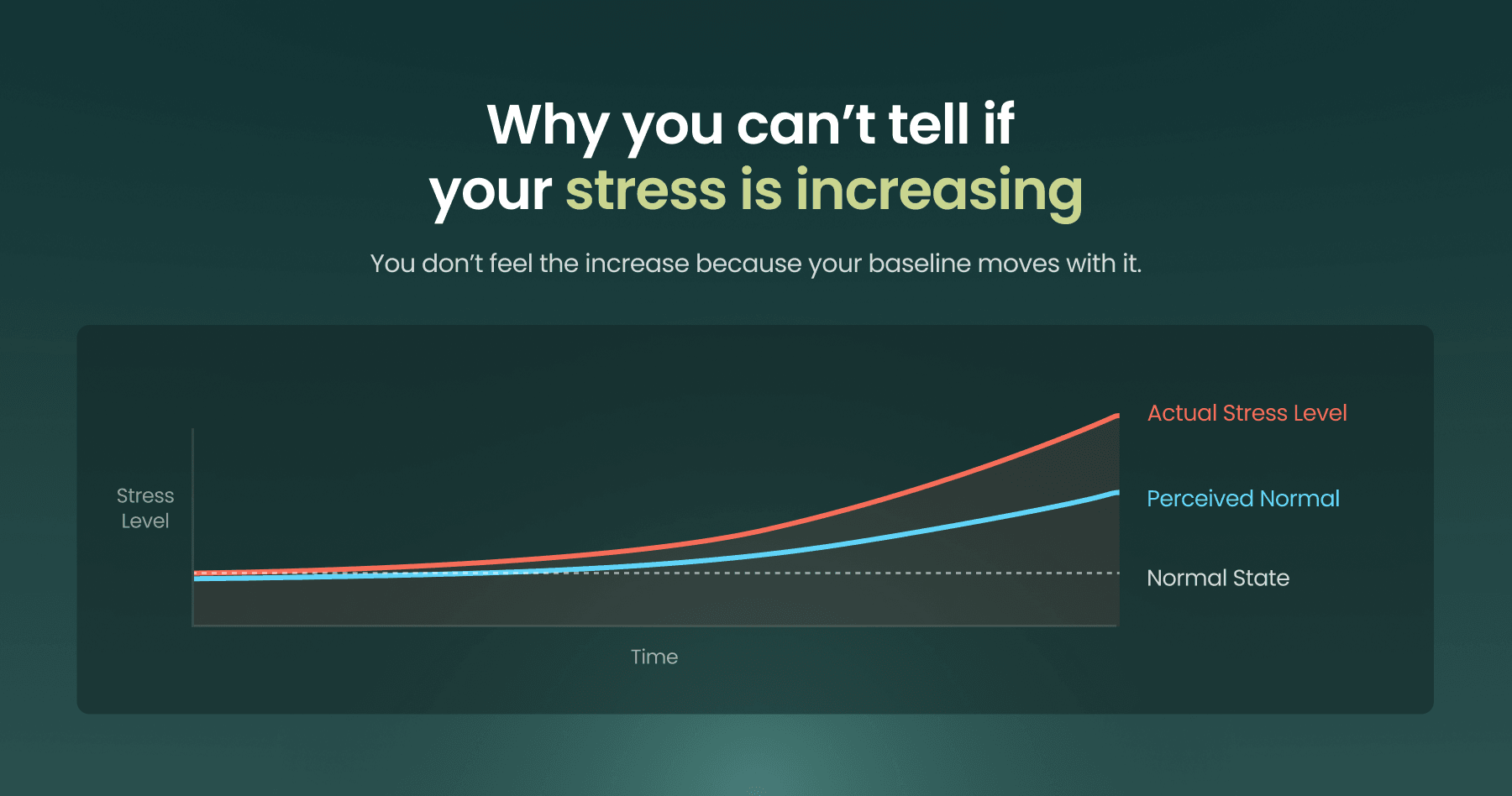 Why can't you tell if your stress is increasing? · May 11, 2026 — Stress doesn't announce itself. It builds gradually while your brain adapts to it, so by the time you notice it, it's already affecting how you think and work.
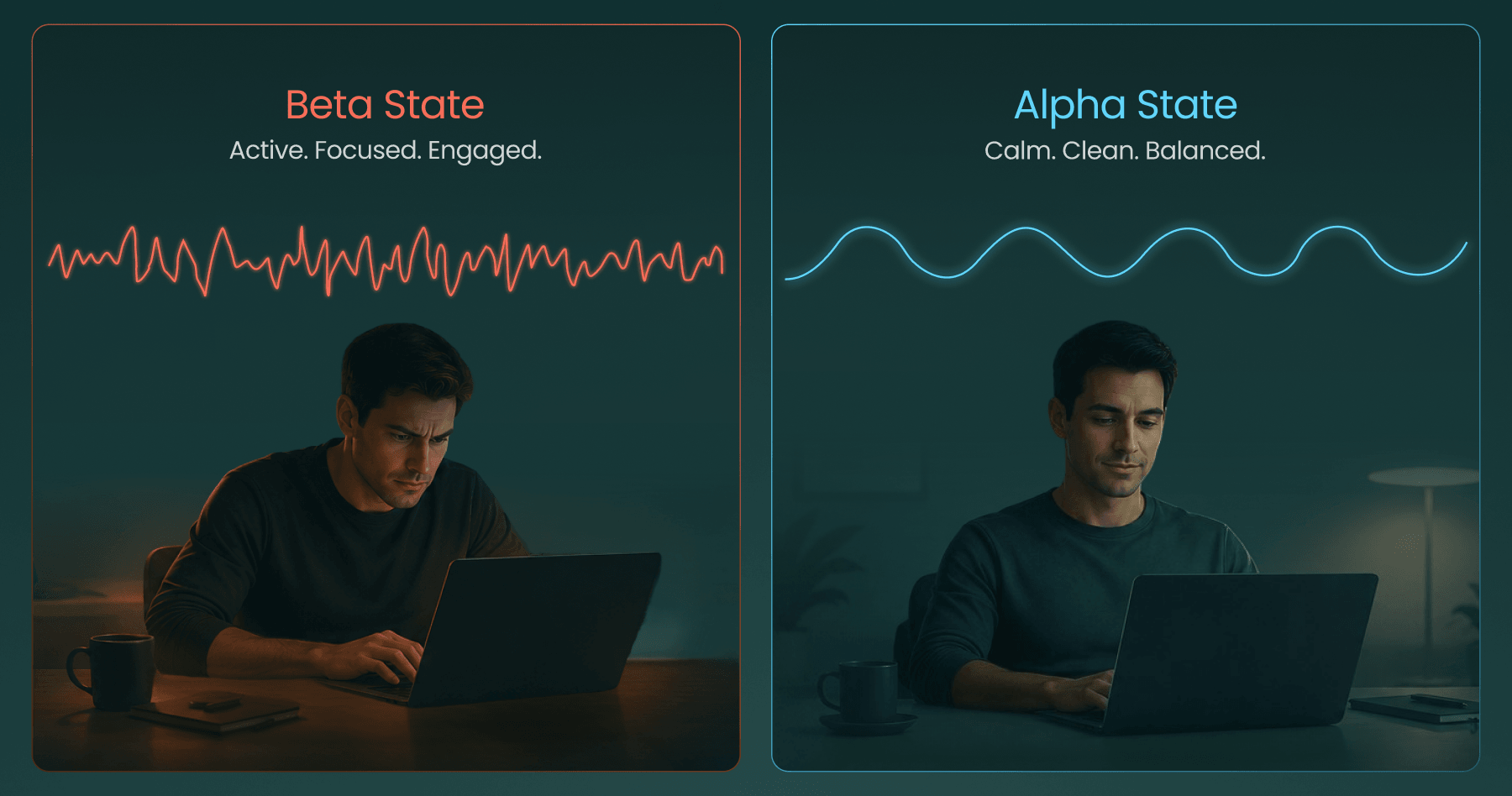 Beta vs Alpha Brainwaves made simpler for explanation · May 11, 2026 — Focus doesn't shift randomly. Different mental states are linked to different brainwave patterns. Understand the difference between beta and alpha — and how they shape how you think, focus, and feel.
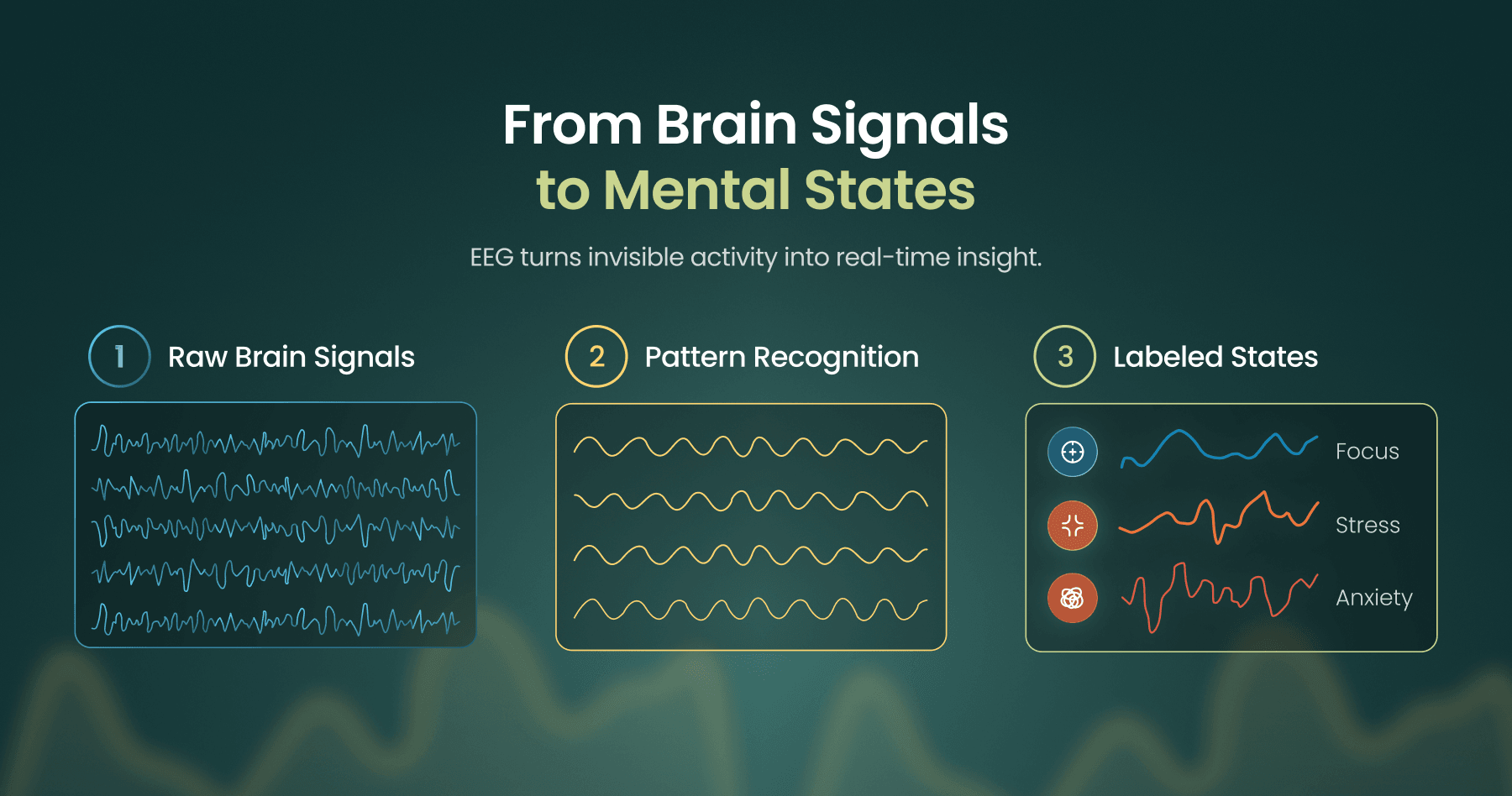 How EEG measures stress, focus, and anxiety? · May 8, 2026 — Your brain changes states long before you consciously notice them. EEG helps make stress, focus, and anxiety visible in real time by decoding the hidden patterns behind your mental performance.
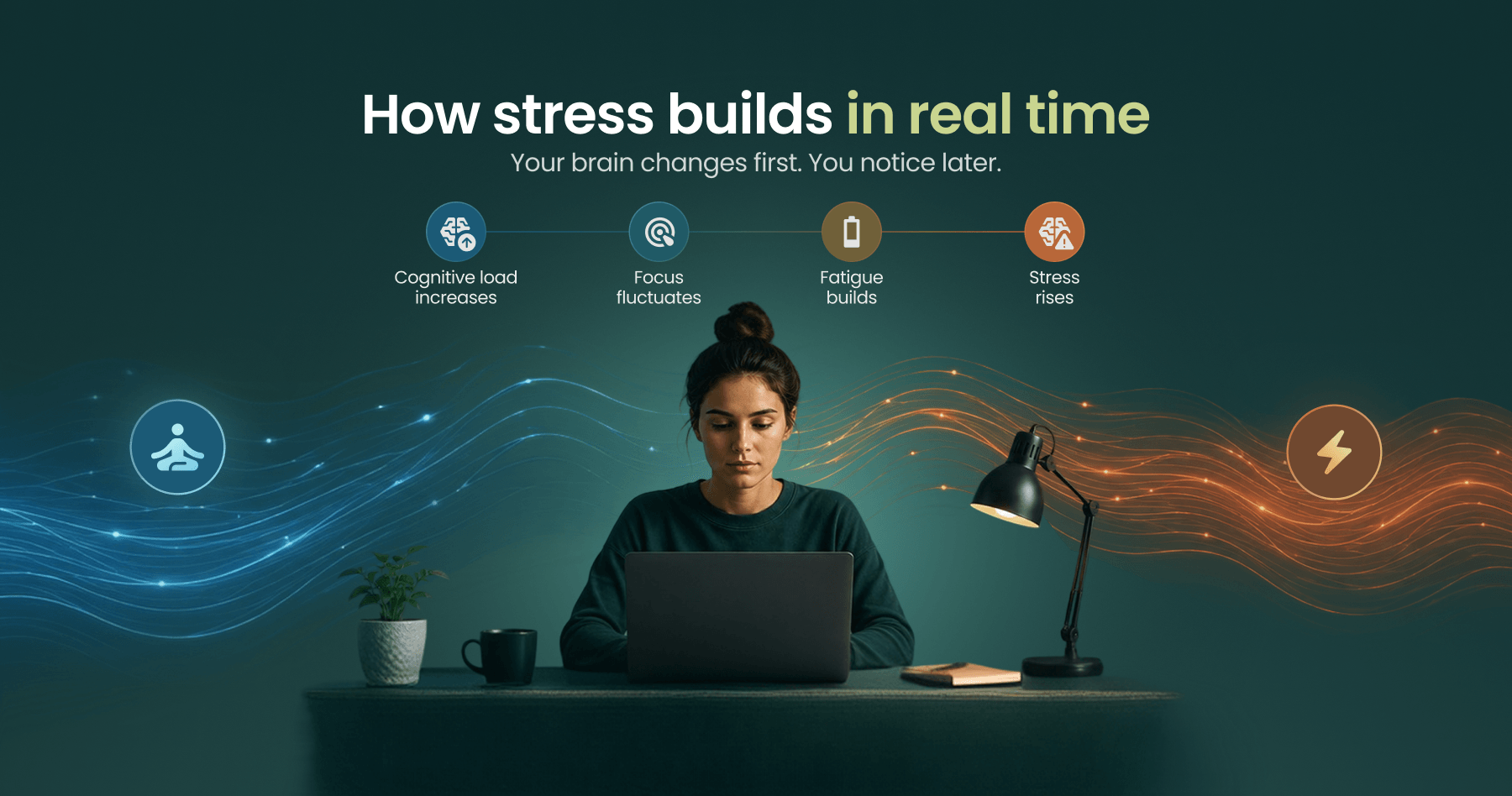 How to measure stress levels in real time? · May 7, 2026 — You don't notice stress when it starts. Most people don't realize their stress is increasing until it starts affecting something visible. Real-time EEG measurement changes that.
 You Are Not Resting. You Are Pausing. · Apr 2026 — Scrolling isn't rest. EEG research shows the brain stays in a working state through most breaks. Rest is a specific brain state, and most people never reach it.
 Focus Is Not Forced. It Emerges. · Apr 2026 — Focus isn't produced by willpower. It's a brain state the brain either permits or prevents, and the difference is measurable in real time with EEG.
 You Are Not Lazy. Your Brain Is Overloaded. · Apr 2026 — What feels like laziness is often measurable overload in the prefrontal cortex that builds through the day. Here is what the neuroscience shows.
 Stress Is Not the Problem · Apr 2026 — Stress is not the problem. Misalignment is. Why removing pressure was modern life's costly mistake, and how ancient practice and EEG point to a better way.
 You Are Not Trying to Feel Good. You Are Trying to Feel Stable. · Apr 2026 — Pleasant state isn't happiness. It's your internal baseline, the background tone behind every thought and decision, and EEG can now make it visible.
 You Are Not Unproductive. Your Brain Is Misaligned. · Apr 2026 — Productivity is a brain state, not a behaviour. Your capacity for high-quality output is rhythmic and measurable across the day. Here is the neuroscience.
 Anxiety Is Not Overthinking · Apr 2026 — Anxiety is not overthinking. It's misplaced time: a mind that keeps visiting a future that doesn't exist yet. A different problem, with a different solution.
 Your Attention Is Not Weak. It Is Oversubscribed. · Apr 2026 — Your attention isn't weak. It's oversubscribed: modern life exploits the part of attention you don't control, leaving less for the work that matters.
 Calmness Is Not a Feeling · Apr 2026 — Calmness isn't a feeling. It's a neural capacity: the prefrontal cortex winning a real-time contest with the amygdala. Measurable, and trainable.
 Your Nervous System is the Real Stress Tracker · Mar 11, 2026 — Stress isn't just emotional — it's biological data flowing through your vagus nerve. Ancient breathwork wasn't mystical. It was nervous system engineering. Calm isn't a vibe. It's measurable autonomic regulation.
 Self Inquiry Mirrors Modern Cognitive Therapy · Mar 5, 2026 — Long before psychology emerged, philosophers encouraged questioning one's own thoughts. Modern CBT uses a remarkably similar approach — and neuroscience confirms they both work.
 Movement Literally Rewires Neural Pathways · Mar 3, 2026 — Yoga and tai chi weren't designed for fitness alone. Modern neuroscience confirms that deliberate movement stimulates neural adaptation between motor and cognitive systems.
 Sound Can Quiet the Brain Naturally · Feb 26, 2026 — Ancient cultures used chanting and harmonic tones to guide emotional states. Neuroscience now shows that certain sound patterns shift brainwaves toward calm, focused alpha states.
 Is Your Vibe Actually Science-Backed? · Feb 10, 2026 — From ancient gongs to AI-powered binaural beats, the 'woo-woo' is officially becoming data. Science proves mindfulness programs slash emotional struggles by 50%.
 2 Weeks are Enough to Reshape Your Mind · Jan 13, 2026 — Decades of neuroscience prove that structured mindfulness physically rebuilds your cognitive performance hubs — a 45% drop in anxiety, in just two weeks.
 Your Brain is Leaving Performance on the Table · Dec 9, 2025 — Elite athletes track every heartbeat. Why treat your cognitive performance like a guessing game? Measure the neuroplasticity that proves you're getting sharper.
 AI is the New Zen Master · Sep 16, 2025 — Ancient rituals just got a high-tech upgrade. Basil Health's Smart Wellness AI reduces trial and error by 70%, personalizing your practice to your unique neurological patterns.
 Your Brain Is Already Talking · Aug 19, 2025 — Your voice tone, facial expressions, and behavior patterns are already telling a story. Multimodal AI can detect emotional distress with striking precision — in real-time.
Explore Basil Health
Back to the homepage, meet the team, or pre-order the device.