Brain Science
Why do you feel mentally exhausted without doing much?
Mental exhaustion isn’t always caused by heavy work. Sometimes, unstable attention, constant mental restarts, and nonstop low-level stimulation quietly drain your brain far more than you realize.
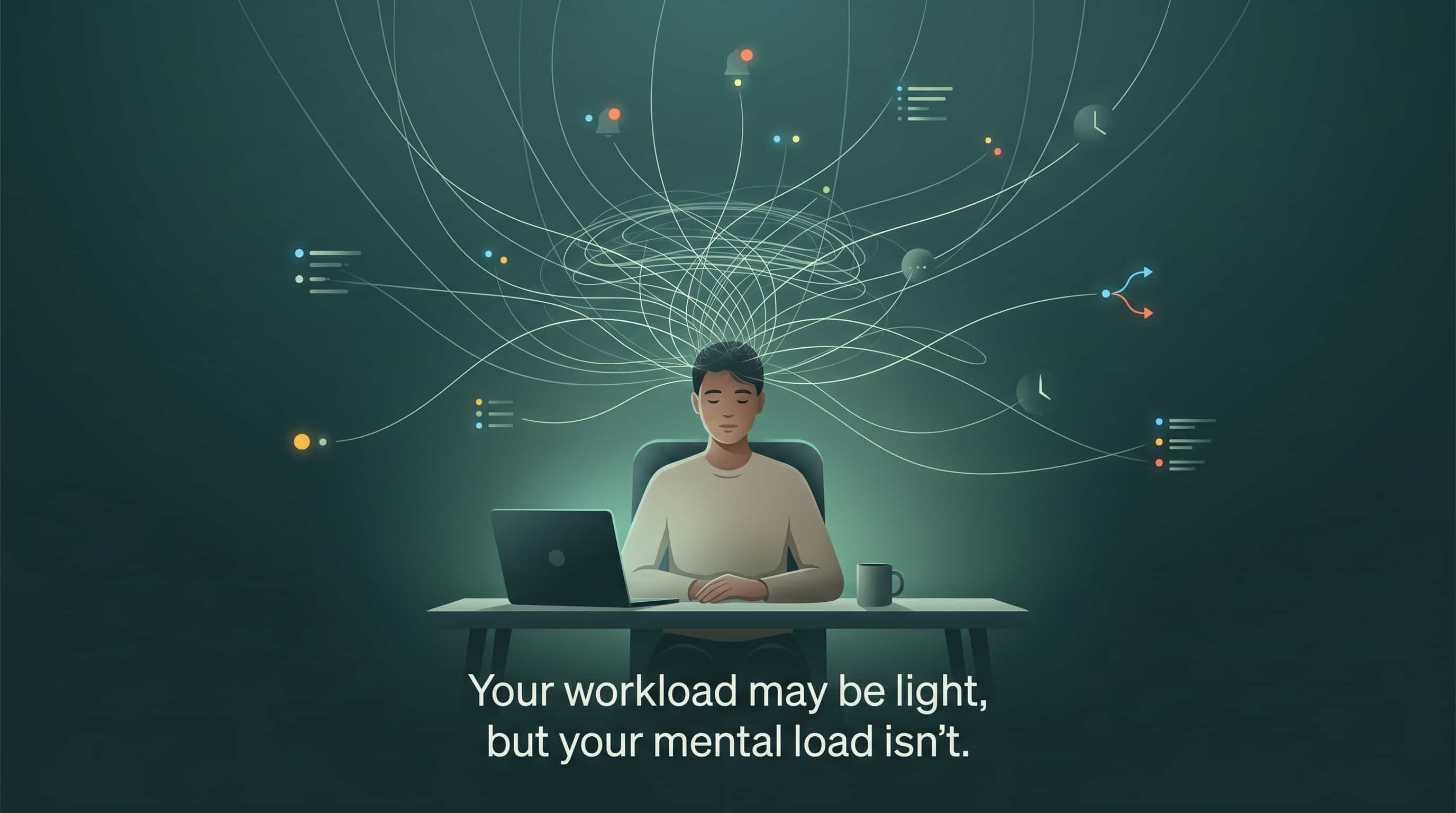
You didn’t do much, but you still feel drained. There are days when you haven’t done anything particularly demanding. No long hours. No intense workload. No major pressure. And yet, by the end of the day, you feel mentally exhausted. Not physically tired. Just… drained.
You try to understand why. Maybe you blame sleep or assume you’re just having an off day. But this pattern repeats often enough to feel confusing. The assumption is simple: less work should mean less fatigue. But your brain doesn’t work that way.
Mental effort isn’t always visible
Most people associate exhaustion with output. How much you worked. How much you completed. But mental fatigue is not driven only by visible effort. It’s influenced by how your brain is functioning while you’re doing even small tasks. Simple activities can still demand high mental effort if:
- your attention is constantly shifting
- you’re switching between tasks frequently
- your mind is processing too many small inputs
- your focus is unstable
You may not be doing ‘a lot,’ but your brain is working inefficiently. This is where the mismatch happens, low output, but high internal effort.
Why your brain feels tired anyway
Mental exhaustion often comes from instability, not intensity. When your brain struggles to maintain a steady state, it uses more energy to keep functioning. This happens when:
- your attention keeps breaking
- you’re constantly re-engaging with tasks
- your mind doesn’t settle into a clear rhythm
The role of constant low-level stimulation
Another factor is continuous background input. You may not be working intensely, but your brain is rarely at rest. Messages, tabs, notifications, small interruptions—each one adds a layer of processing. Individually, they feel insignificant. Collectively, they prevent your brain from settling. This keeps your mental system slightly activated throughout the day, without giving it a chance to recover. The result is a quiet buildup of fatigue that doesn’t feel obvious until later.
How mental fatigue builds without obvious effort
At some point, the accumulated strain starts to show.
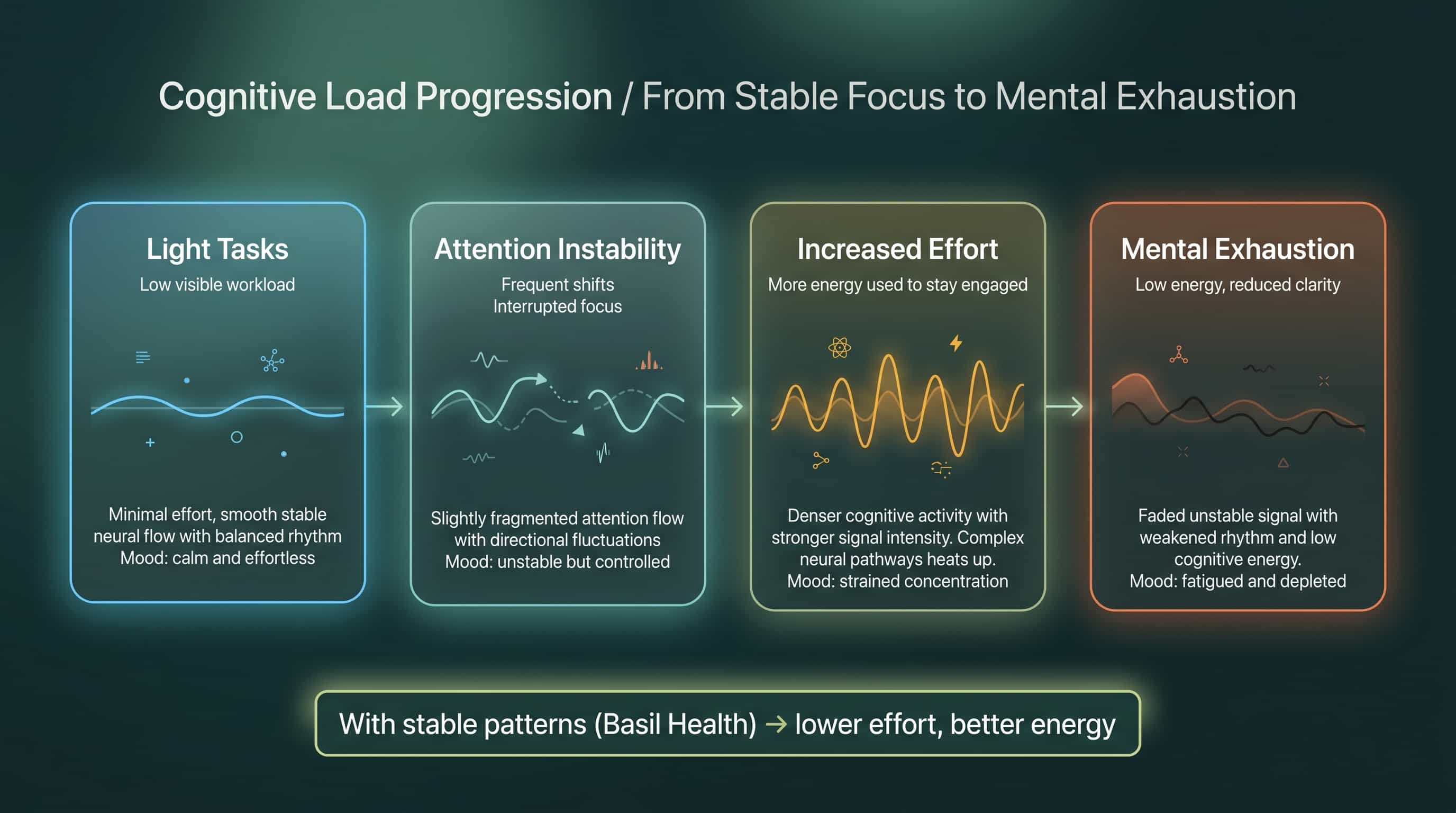
Why this changes how you think about fatigue
Most people try to solve this kind of exhaustion by doing less. Taking breaks. Reducing workload. But if the problem is instability, not intensity, reducing work doesn’t fully solve it. The focus needs to shift from how much you do to how your brain is functioning while you do it. With tools like ours, you can start seeing these patterns; when your focus is stable, when it’s fluctuating, and when your brain is using more effort than necessary. That changes how you approach energy management.
The takeaway
Mental exhaustion doesn’t always come from doing too much. It often comes from doing things in a way that requires more effort than it should. Unstable attention. Constant small inputs. Repeated mental restarts. These are easy to overlook, but they add up. The challenge is that you don’t see this process happening. You only feel the result. And once you understand what’s actually creating that fatigue, it becomes easier to address it in a more effective way.
Frequently Asked Questions
1. Why do I feel tired even when I haven’t done much?
Because mental fatigue can come from unstable focus and constant small inputs, not just heavy workload.
2. Is mental exhaustion the same as physical tiredness?
No. Mental exhaustion comes from how your brain is functioning, while physical tiredness is related to bodily fatigue.