Stress & Focus
Why can't you tell if your stress is increasing?
Stress doesn't announce itself. It builds gradually while your brain adapts to it, so by the time you notice it, it's already affecting how you think and work.
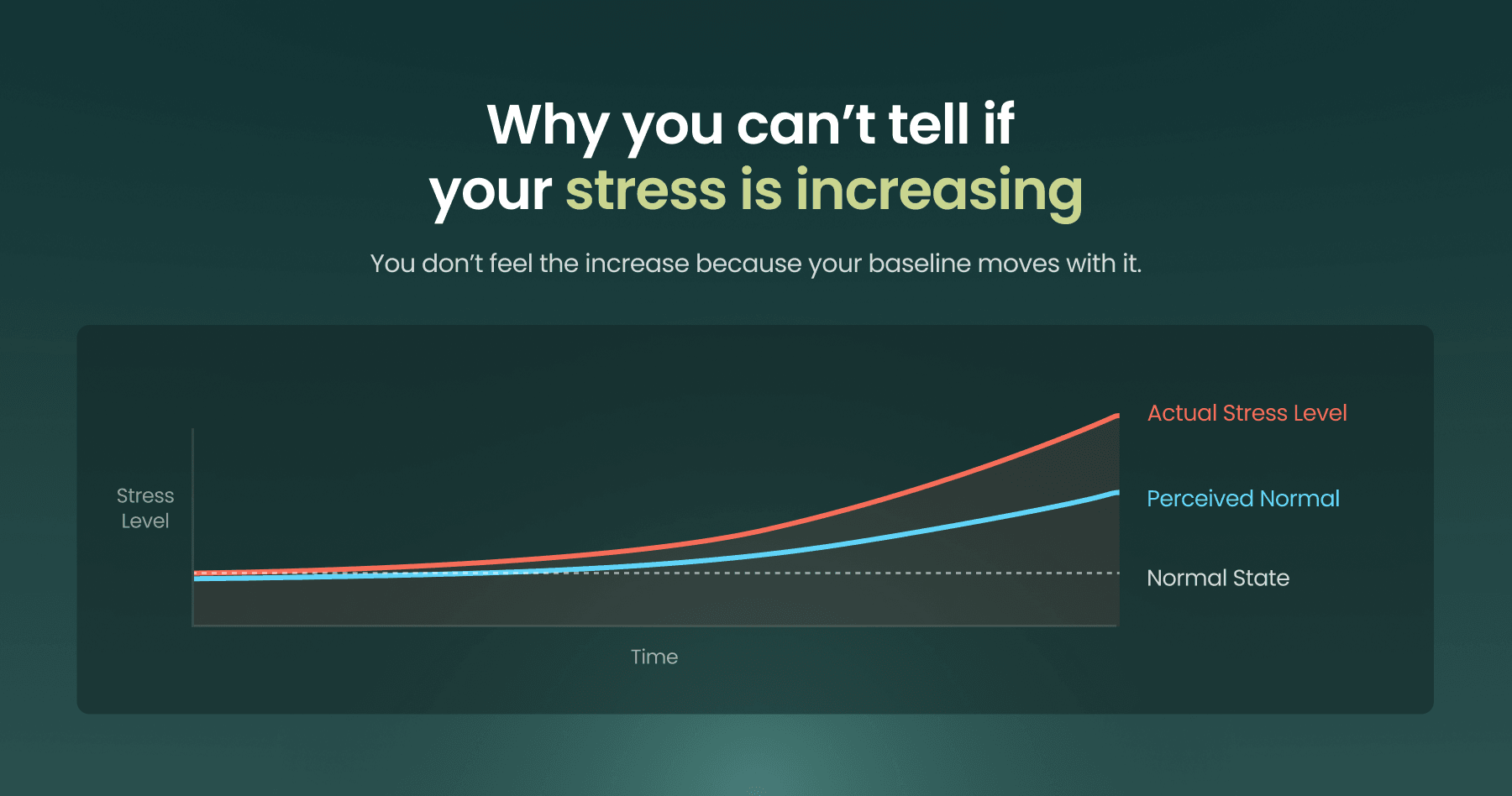
Most people assume they'll know when they're getting stressed. But that's not how it works. You don't wake up one day and suddenly feel 'stressed.' Instead, small things start changing. Your focus slips a little. You get irritated faster than usual. Tasks that were easy begin to feel heavier.
Individually, these changes don't seem significant. So, you ignore them. By the time you recognize stress, it's already affecting how you think and work. This is why stress feels sudden; when in reality, it has been building for a while.
Your brain adapts faster than you notice
One of the main reasons you can't tell if your stress is increasing is adaptation. Your brain constantly adjusts to what you experience. When stress rises gradually, your brain treats it as the new normal. So instead of noticing, you adjust:
- Slightly lower focus feels acceptable
- Faster reactions feel justified
- Constant mental load feels "just part of the day"
Stress shows up as something else
Another reason stress is hard to detect is that it rarely feels like 'stress.' It shows up as difficulty concentrating, low motivation, mental fatigue, irritability, and restlessness. These feel like separate problems. So instead of identifying stress as the cause, you try to fix each symptom individually. You try to focus harder, take breaks, or push through fatigue. But the underlying state remains unchanged. This is where most people get stuck; they respond to the symptoms, not the source.
Why self-awareness isn't enough
It's often said that being aware of your thoughts and feelings is the solution. But awareness has limits. Your perception is influenced by:
- what you're used to
- how gradual the change is
- how you interpret your experience
If stress builds slowly, your awareness adjusts along with it. So even if you're paying attention, you're still working with a moving reference point. This is why relying only on how you feel can be misleading. Brain-based systems approach this differently. By measuring patterns of brain activity, platforms like us provide a stable reference, something that doesn't shift with your perception.
Why you notice stress too late
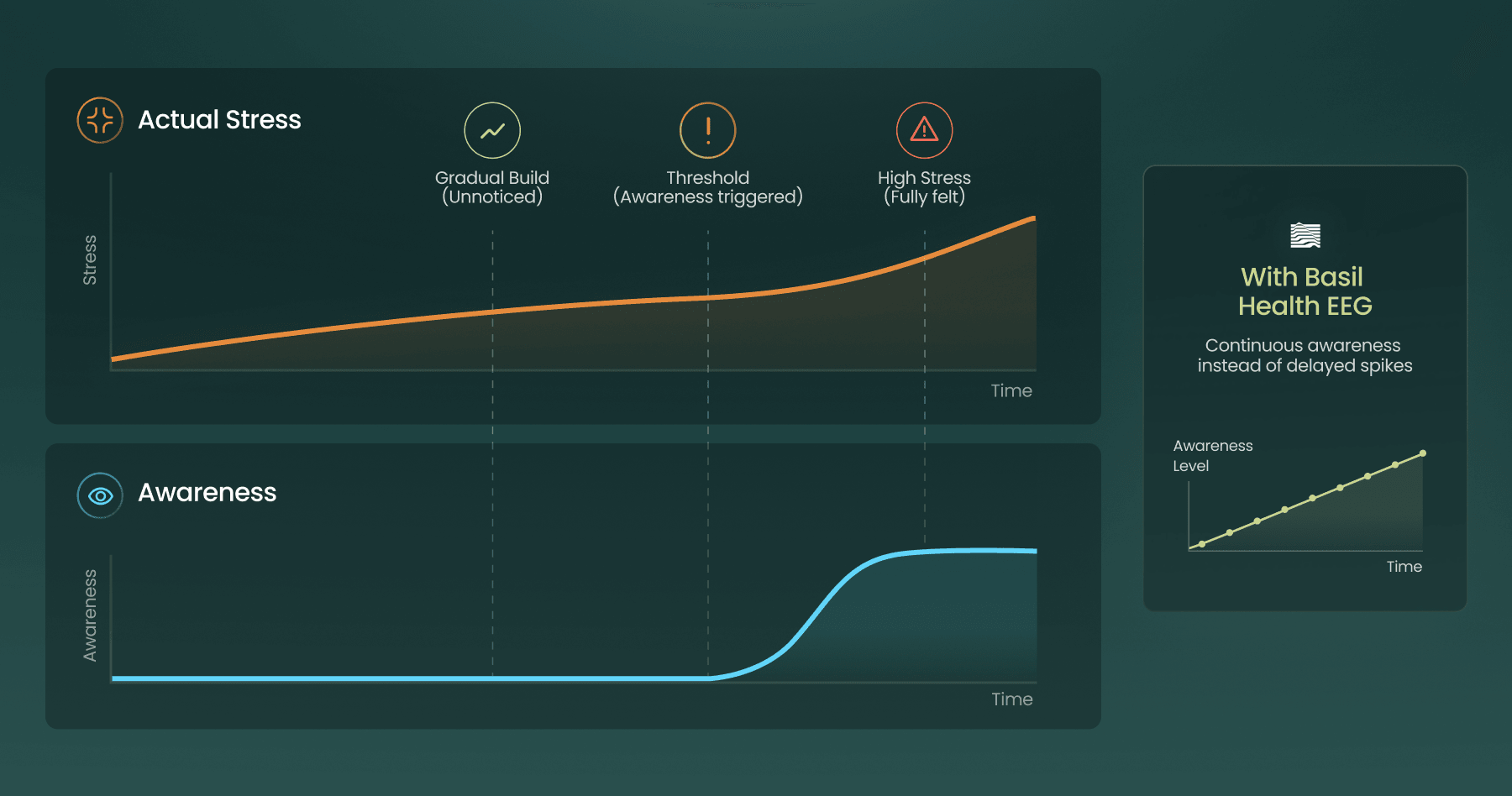
At some point, the buildup crosses a threshold. That's when you finally notice:
- You can't focus
- You feel overwhelmed
- You're mentally exhausted
It feels sudden. But it isn't. It's the first moment your internal state becomes strong enough to break through your adaptation.
Why this matters more than it seems
Not noticing stress early changes how you respond to it. You react late. You try to fix effects instead of causes. You rely on effort when the problem is state. When brands like Basil Health introduce real-time visibility, this timing shifts. You start seeing changes before they escalate, when they're still manageable. That changes the quality of your response.You can't tell if your stress is increasing because it doesn't announce itself. It builds gradually. Your brain adapts to it. And your awareness shifts along with it. So, by the time you notice it, it's already affecting you. Stress isn't invisible. It's just not visible to perception alone. And that's the gap that needs to be solved.
Frequently Asked Questions
1. Why does stress feel sudden even if it builds slowly?
Because your brain adapts to gradual changes, making rising stress feel normal until it crosses a noticeable threshold.
2. Can you train yourself to notice stress earlier?
To some extent, yes. But self-awareness alone has limits because your perception adjusts with the change.
3. How does Basil Health help with this?
Basil Health uses EEG to track changes in brain activity, helping you detect stress as it builds instead of relying only on delayed awareness.