Brain Science
Why can’t you tell if your mind is improving?
Mental improvement rarely feels dramatic because your brain adapts quietly over time. What once felt like progress slowly becomes your new normal, making real growth surprisingly hard to notice.
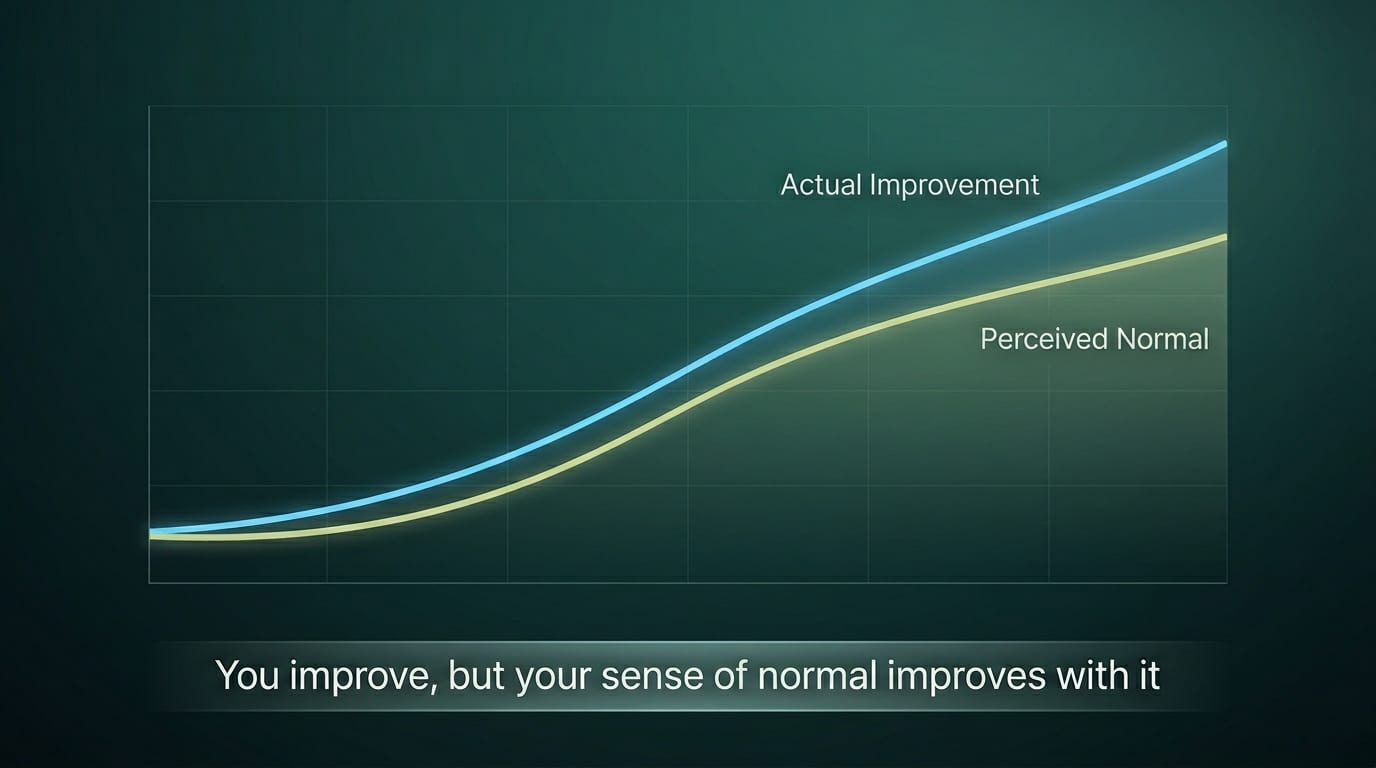
Improvement doesn’t feel like progress. When people think about improvement, they expect something noticeable. Clear changes. Better focus. Less stress. More control. Something they can feel and say, this is working. But mental improvement rarely shows up that way.
You don’t suddenly become more focused overnight. You don’t wake up one day feeling completely calm or mentally clear. Instead, the changes are subtle. You handle a distraction slightly better. You recover from a stressful moment a bit faster. You stay engaged just a little longer than before. These changes are easy to miss. So even when your mind is improving, it doesn’t feel like it is.
Your baseline keeps shifting
One of the main reasons you can’t tell if your mind is improving is because your baseline keeps changing. As your mental state improves, your expectations adjust with it. What once felt like progress starts feeling normal. For example:
- better focus becomes “how it should be”
- quicker recovery feels ordinary
- reduced stress no longer stands out
So instead of recognizing improvement, you experience it as your new standard. This makes progress invisible.
At Basil Health, this shows up as gradual stabilization in brain activity patterns, even when the person feels like nothing significant has changed.Progress in the mind is gradual, not dramatic
Physical progress is often visible. You can measure strength, speed, or output. Mental progress is different. It happens in small adjustments:
- slightly more stable attention
- fewer sharp drops in focus
- better control over reactions
- smoother transitions between tasks
None of these feel dramatic. They don’t stand out in isolation. But over time, they change how your mind functions. The problem is that these changes are distributed across moments, not concentrated into one noticeable shift.
Why you rely too much on how you feel
Most people judge their mental progress based on how they feel in the moment. But feelings are inconsistent. A single bad day can make it feel like nothing has improved. A stressful situation can temporarily override progress, making it seem like you’re back to where you started. This creates a distorted view. Instead of seeing long-term change, you evaluate yourself based on short-term experience. That’s where the confusion comes from.
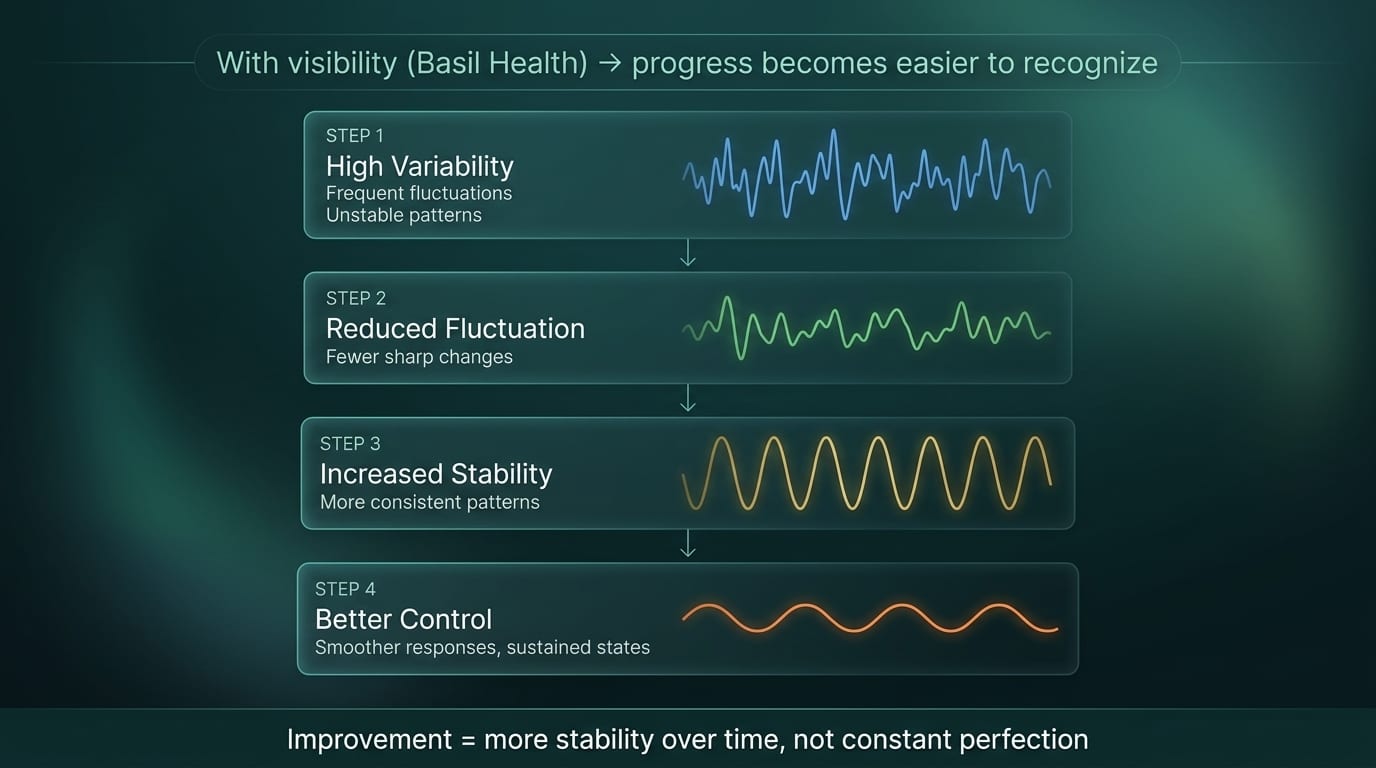
With Basil Health, patterns of brain activity provide a more stable reference. Instead of relying only on momentary perception, you can observe whether your mental state is becoming more stable over time.How mental improvement actually shows up
At a deeper level, improvement is not about feeling better all the time. It’s about how your brain behaves over time.
Why this changes how you evaluate yourself
If you expect improvement to feel obvious, you’ll miss it. You’ll think nothing is changing, even when it is. But when you understand that progress is subtle, gradual, and often invisible in the moment, your perspective shifts. You stop looking for dramatic changes. You start paying attention to patterns.
With Basil Health, this becomes clearer over time. Instead of guessing whether you’re improving, you begin to see how your mental patterns are evolving. That makes progress more tangible.The takeaway
You can’t always tell if your mind is improving. Not because nothing is changing, but because the change is subtle, gradual, and constantly becoming your new normal. Your baseline shifts. Your expectations adjust, and progress blends into everyday experience. The challenge is not the absence of improvement. It’s the way you perceive it. And once you understand that, you start looking at progress differently, not as something you feel instantly, but as something that builds over time.
Frequently Asked Questions
1. Why can’t I feel my mental improvement?
Because mental progress is gradual and your baseline shifts with it, making improvements feel normal rather than noticeable.
2. How do I know if my mind is improving?
Look for patterns over time — more stability, better control, and fewer fluctuations in focus and stress.