Brain Science
Why stress builds up without you noticing?
Stress rarely arrives all at once. It builds quietly through small mental shifts your brain gradually adapts to, making exhaustion and overwhelm feel sudden only when the accumulated load becomes impossible to ignore.
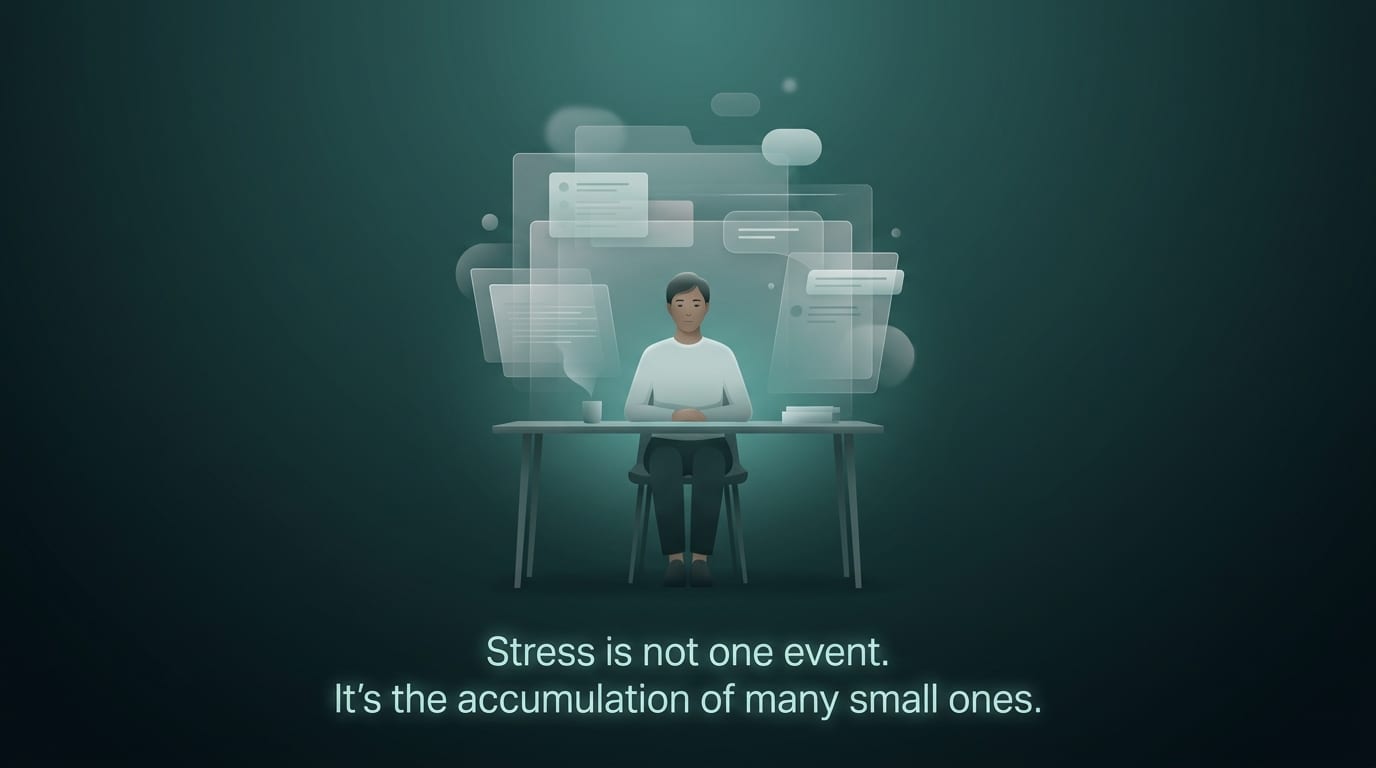
It doesn’t feel like stress in the beginning. Most people expect stress to feel obvious. Something intense. Something immediate. Something you can clearly point to and say, this is stress. But that’s not how it usually begins. It starts subtly. A slightly shorter attention span. A bit more mental effort to stay on task. A mild sense of pressure that feels manageable and easy to ignore. Nothing feels serious enough to stop and question. So, you continue as usual.
By the time stress becomes noticeable, it already feels like it appeared suddenly. But in reality, it has been building quietly in the background for much longer than you realize.
Small changes don’t register as problems
The reason stress builds without you noticing are because the early changes are too small to stand out on their own. You might:
- lose focus a little faster than usual
- feel slightly more reactive to interruptions
- take longer to get into a task
- feel mentally tired earlier than expected
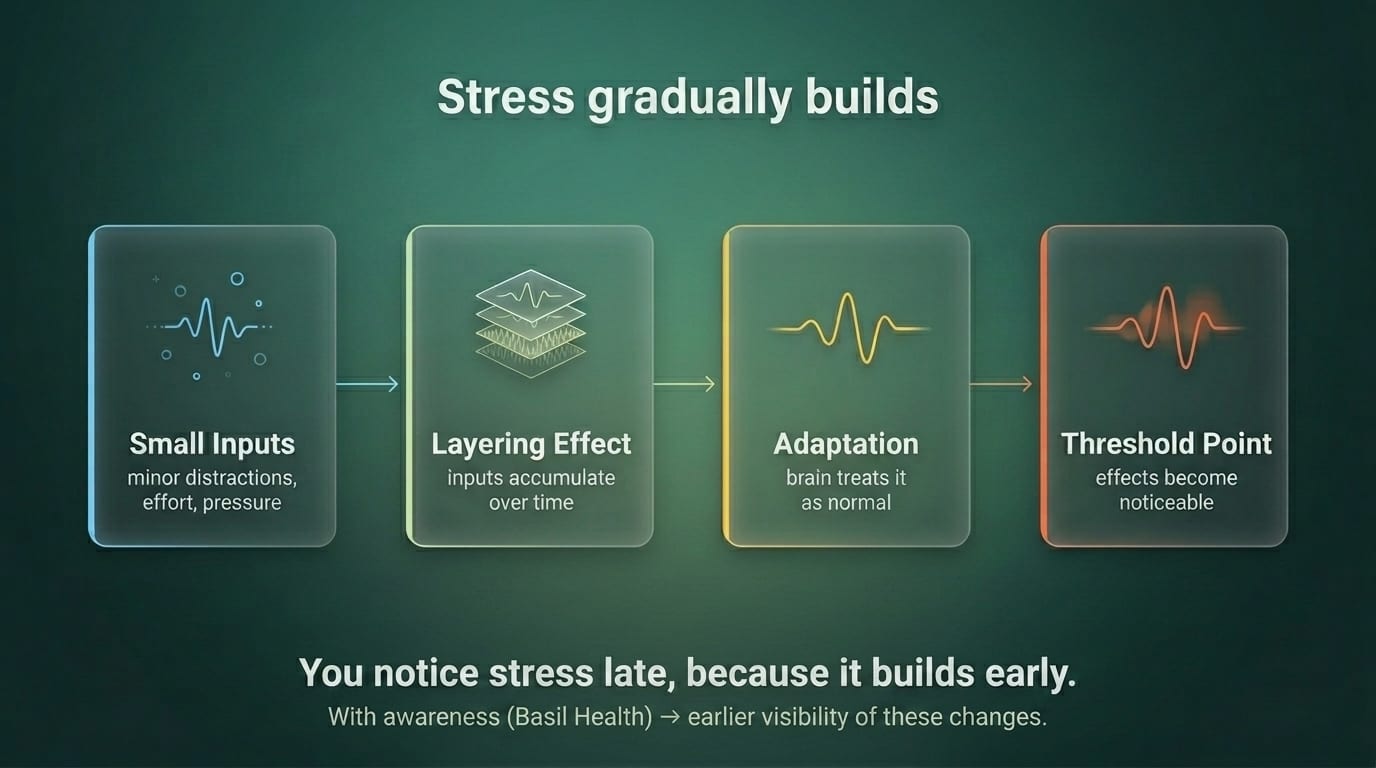
Each of these feels minor. Individually, they don’t seem important enough to address. So, you adjust and move on without thinking much about them. But these are not isolated events. They are early signals of a changing mental state. Without a clear reference point, they blend into your normal experience instead of standing out as indicators of stress.
Your brain keeps adapting to the increase
Another reason stress goes unnoticed is adaptation. As these small layers build, your brain adjusts to them. What initially felt slightly uncomfortable starts feeling normal. The extra effort, the mild tension, the reduced clarity, they all become part of your baseline without you realizing it. So instead of noticing that stress is increasing, you experience it as your usual state.
What initially felt slightly uncomfortable starts feeling normal. The extra effort, the mild tension, the reduced clarity, they all become part of your baseline without you realizing it. At Basil Health, this gradual shift shows up as changing patterns in brain activity; where stability reduces over time, even though the person doesn’t consciously feel a major difference yet.When accumulation turns into impact
At some point, the buildup crosses a threshold. That’s when the effects become visible:
- you struggle to focus
- your patience drops
- mental fatigue becomes more noticeable
- small tasks start feeling heavier
It feels like something changed suddenly. But this is just the first moment the accumulated load becomes strong enough to affect your experience in a noticeable way. The buildup didn’t start here. This is just where you finally notice it.
How stress builds over time
Why this changes how you think about stress
Most people think stress comes from big events. Deadlines. Pressure. Long hours. But in reality, stress often builds from small, repeated inputs that don’t feel important in isolation. That’s why it’s hard to manage.
You try to address it when it becomes visible, but by then, it has already accumulated. When Basil Health brings visibility to these gradual changes, you start seeing the buildup earlier, when it’s still subtle and easier to respond to. That changes the timing of how you deal with stress.The takeaway
Stress rarely begins in a way that feels obvious. It builds through small changes. It accumulates quietly. And your brain adapts to it as it grows. So, by the time you notice it, it feels sudden, even though it wasn’t. The challenge is not the presence of stress. It’s the fact that you don’t see it building. And once you understand that process, it becomes easier to recognize it earlier and approach it differently.
Frequently Asked Questions
1. Why does stress feel sudden even when it builds slowly?
Because small changes don’t stand out, and your brain adapts to them over time, making the buildup feel invisible until it crosses a threshold.
2. What are early signs of stress buildup?
Subtle signs include reduced focus, increased mental effort, faster fatigue, and slight irritability.