Brain Science
Why stress becomes invisible before it becomes a problem?
The earliest signs of stress are often the easiest to ignore. Learn why the brain normalizes ongoing pressure and how invisible stress quietly grows before becoming a problem.
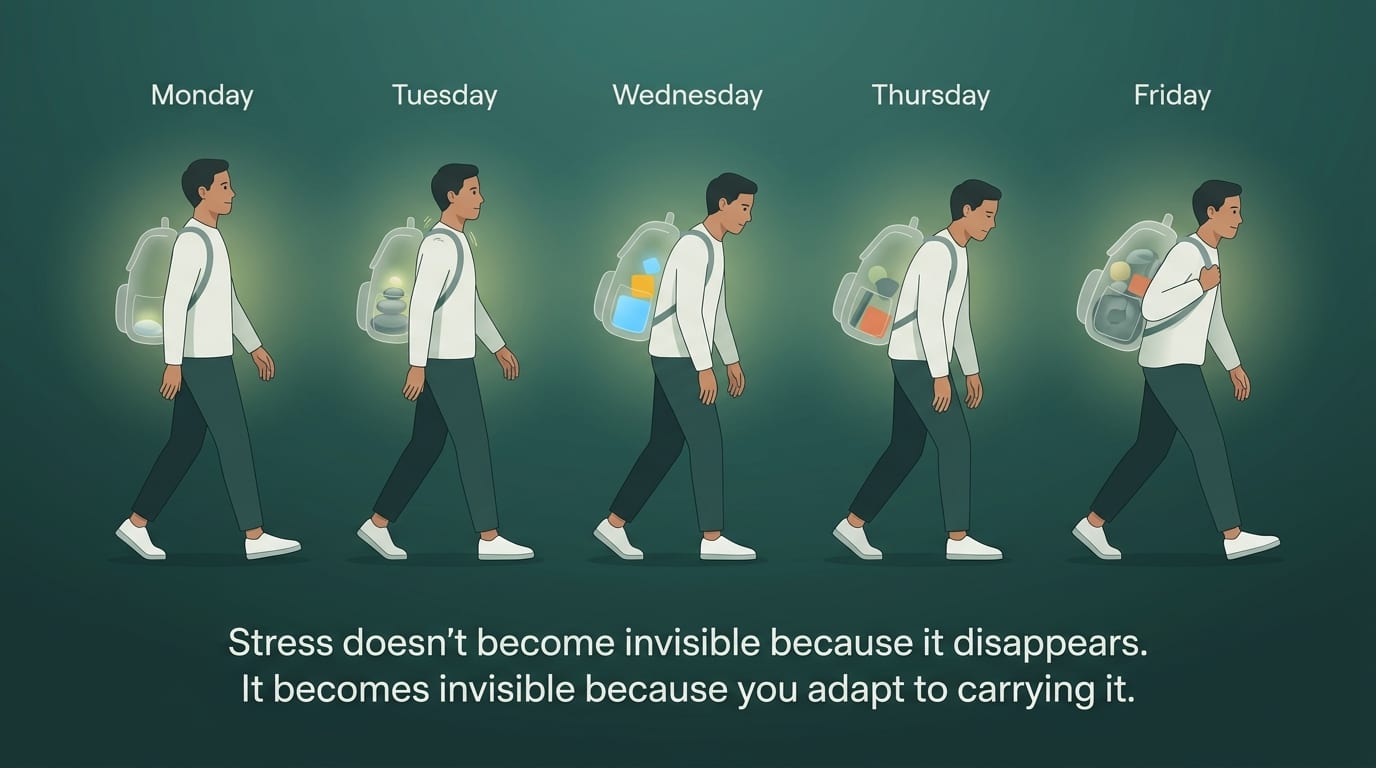
Most people think stress arrives with obvious signs. A difficult deadline. A sleepless night. A feeling of overwhelm that clearly signals something is wrong. But stress rarely begins that way. More often, it starts as small changes that seem easy to dismiss. You feel slightly less patient than usual. It takes a little longer to concentrate. You feel mentally drained sooner than expected.
Nothing feels serious enough to be called stress. So, you continue with your day. The challenge is that stress often becomes a problem long before it becomes noticeable. By the time it feels obvious, your mind and body have usually been adapting to it for weeks, or even months.
Your brain is designed to normalize what repeats
One reason stress becomes invisible is because the brain constantly adapts to repeated experiences. When a new pressure enters your life, you notice it. But if that pressure remains present for days or weeks, your brain gradually begins treating it as normal. What once felt unusual starts feeling familiar. You stop noticing:
- constant mental tension
- reduced focus
- emotional irritability
- low-level fatigue
Not because they disappear, but because they become part of your baseline experience. This process is useful for survival. It helps you function during challenging periods. The downside is that it can make growing stress surprisingly difficult to recognize.
The signs are there, but they rarely arrive together
Many people expect stress to announce itself through one major symptom. It often appears as a collection of small signals spread across different parts of daily life. You might notice:
- more difficulty staying focused
- lower mental energy
- increased frustration with small inconveniences
- difficulty switching off after work
- feeling mentally occupied even during rest
Each signal seems minor on its own. Because they don't appear as a single dramatic event, they rarely feel connected. As a result, stress remains hidden behind everyday explanations like being busy, tired, or distracted.
At Basil Health, this gap between what people feel and what is happening internally is one of the most important challenges in mental wellness. Brain activity often begins changing long before people consciously recognize rising stress levels.Why awareness usually arrives late
Most people become aware of stress only after it starts affecting performance. Maybe your focus drops significantly. Maybe you feel emotionally exhausted. Maybe tasks that were once simple begin feeling difficult. These moments create awareness because the effects become impossible to ignore. But awareness is arriving at the end of the process, not the beginning. This is like noticing a leak only after water appears on the floor. The issue existed earlier, you simply couldn't see it yet. That is why relying only on how you feel can be misleading. Internal changes often begin before conscious awareness catches up.
How invisible stress gradually becomes visible
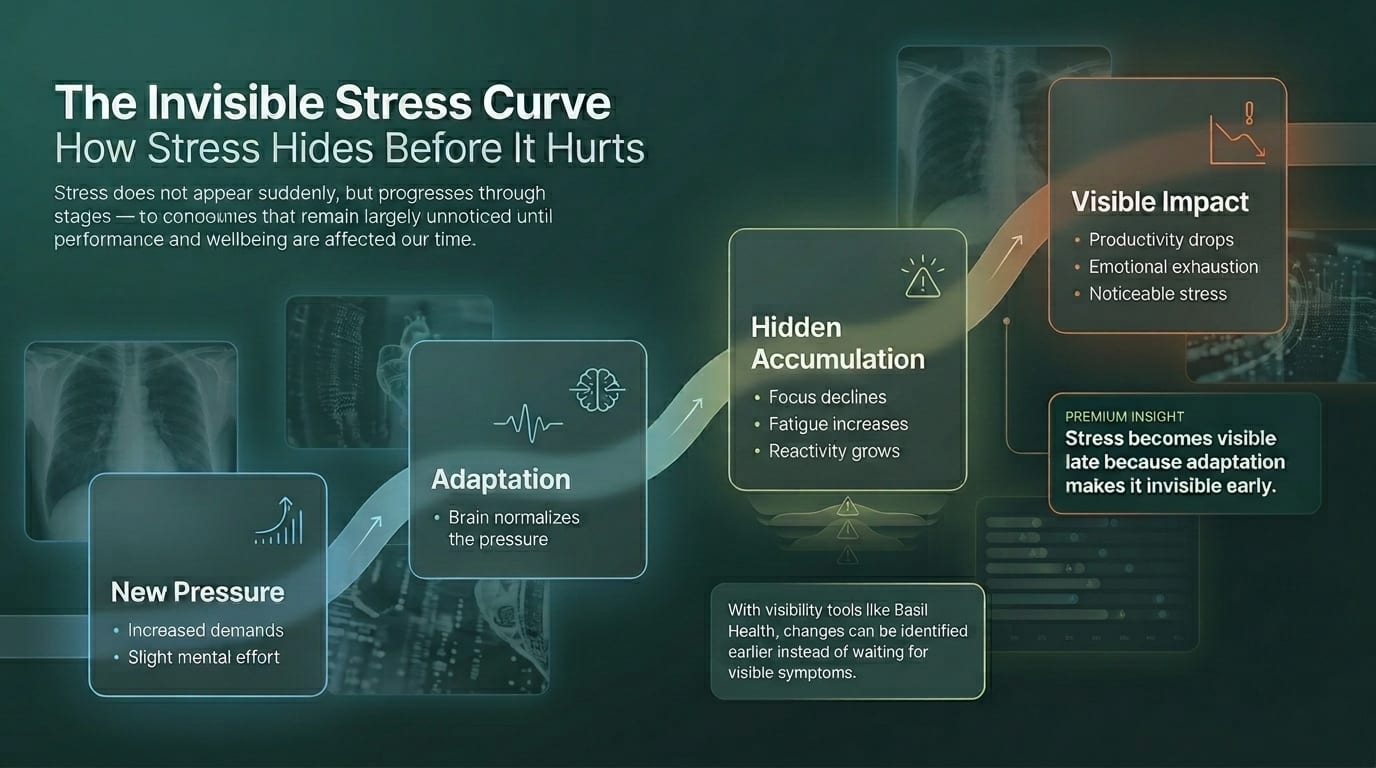
Why seeing stress earlier changes everything
Managing stress becomes much easier when you recognize it early. The problem is that most people wait for strong symptoms before taking action. By then, stress has already affected focus, energy, and overall mental performance. Early awareness changes the timeline. Instead of reacting to exhaustion, you notice growing mental strain. Instead of waiting for focus to collapse, you recognize subtle shifts before they become disruptive.
This is one of the reasons Basil Health focuses on making mental states more visible. When you can see patterns developing, you're no longer dependent solely on delayed awareness.The takeaway
Stress rarely appears overnight. It grows through small changes that your brain gradually learns to accept as normal. The longer those changes remain unnoticed, the more invisible they become. The challenge is not that stress hides from you. It's that your brain becomes familiar with it. And when familiarity replaces awareness, problems often become visible only after they've already started affecting your life. The earlier you can recognize those changes, the easier it becomes to respond before stress turns into something larger.
Frequently Asked Questions
1. Why does stress become invisible?
Stress often becomes invisible because the brain adapts to repeated pressure and begins treating it as normal, making gradual changes harder to notice.
2. What are early signs of hidden stress?
Common signs include reduced focus, lower patience, mental fatigue, difficulty relaxing, and feeling mentally occupied even during downtime.