Brain Science
What happens in the brain when you observe your thoughts?
The moment you observe a thought instead of following it, your brain begins to respond differently. Discover how simple awareness can reduce reactivity and create greater mental stability.
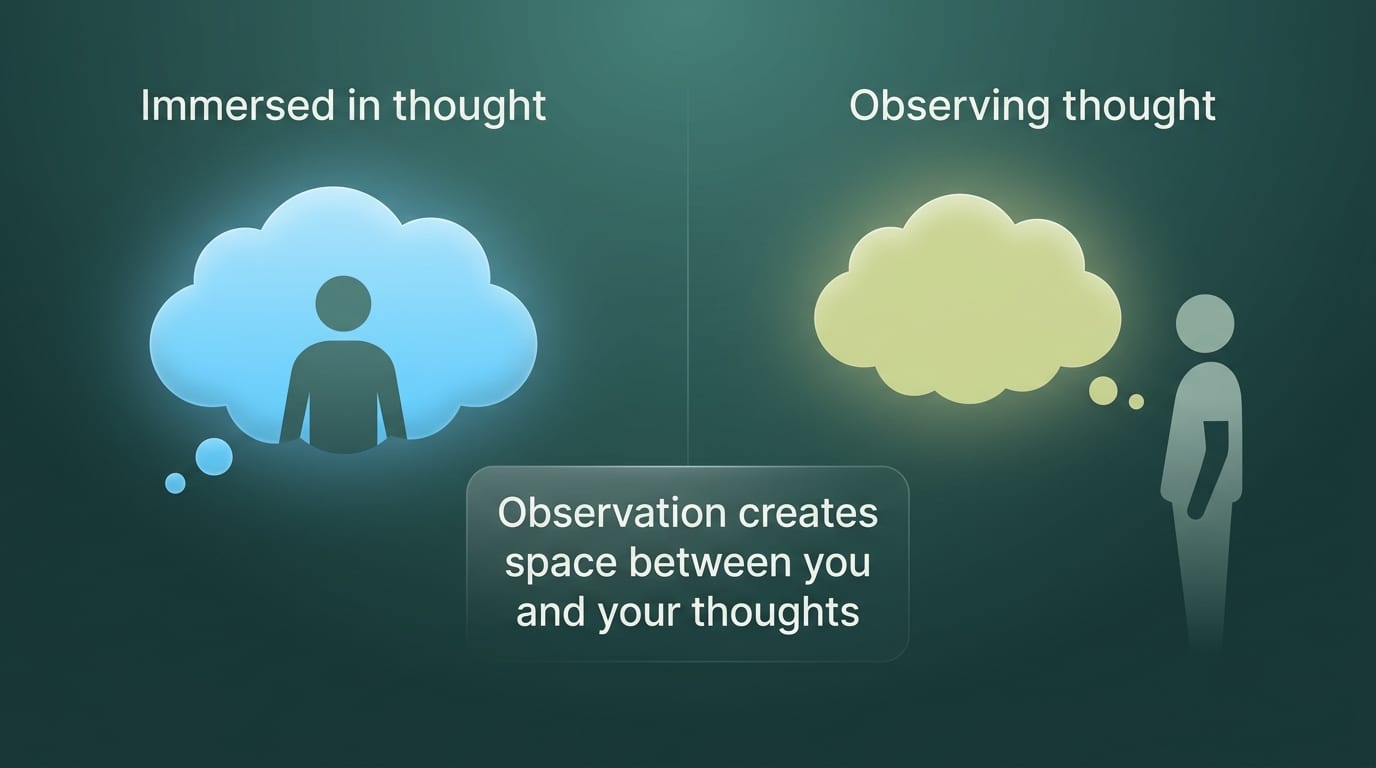
You notice a thought, and something shifts. Most of the time, thoughts just happen. They appear, pull your attention, and before you realize it, you’re already following them. One thought leads to another, and your mind keeps moving without pause. But something different happens the moment you observe a thought instead of following it. You notice it.
For a moment, there’s a gap. The thought is still there, but you’re not completely inside it. You’re aware of it. That small shift, from being in a thought to observing it, changes how your mind is operating.
Observation creates distance inside the mind
When you observe a thought, you’re not stopping it. You’re changing your relationship with it. Instead of reacting automatically, your brain introduces a layer of awareness. This creates distance between the thought and your response. This distance matters. It allows you to:
- pause before reacting
- notice patterns in your thinking
- avoid getting pulled into every thought
Without this, thoughts feel continuous and controlling. With observation, they become something you can see rather than something you are fully inside. This is a core idea in many ancient practices, but it also reflects measurable changes in how the brain functions.
What changes in brain activity when you observe
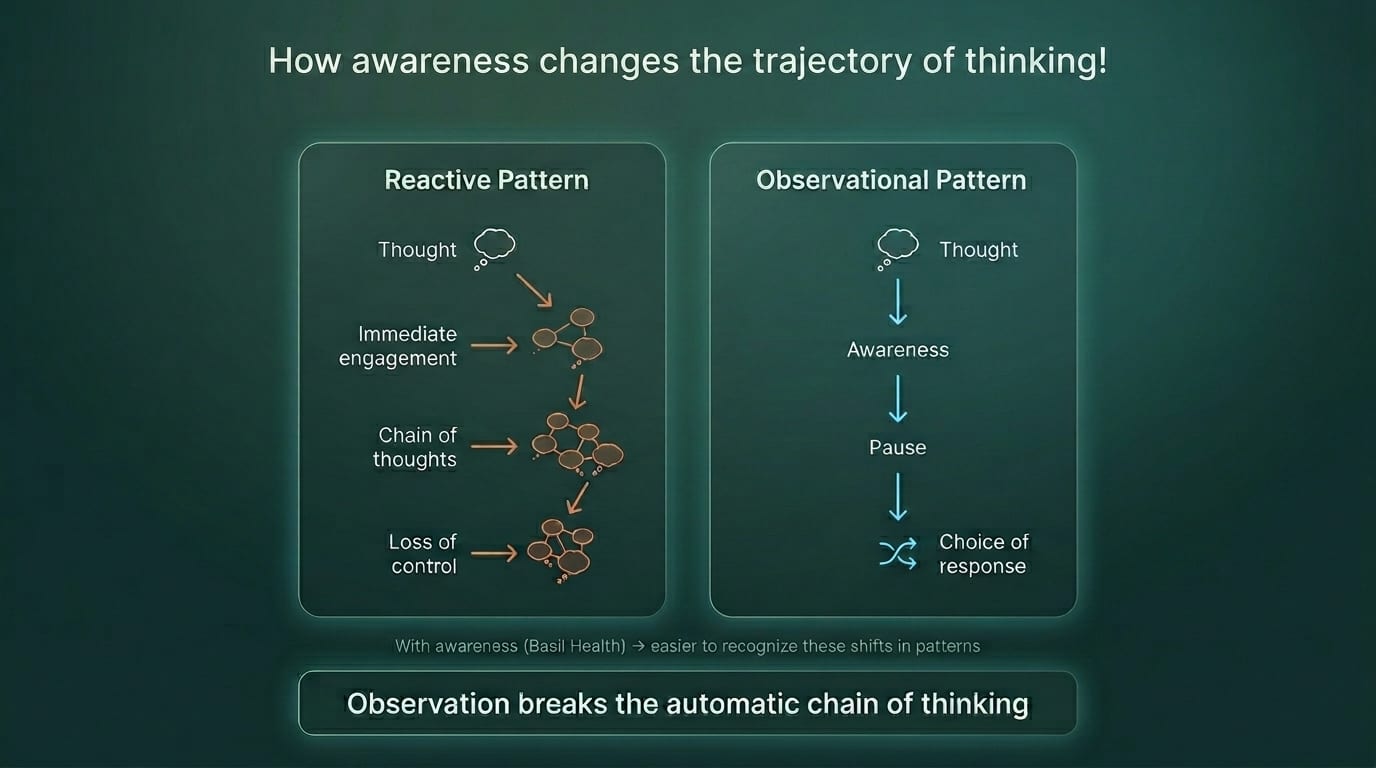
Observing a thought doesn’t remove it, but it changes how your brain processes it. When you’re fully immersed, your brain tends to follow the thought automatically. The activity is continuous and reactive, moving from one idea to the next without interruption. When you observe, that pattern shifts. Your brain becomes less reactive and more regulated. Instead of immediately extending the thought, it slows down and stabilizes.
This leads to:
- reduced automatic reactions
- more controlled attention
- less mental noise over time
Why observing thoughts feels subtle but powerful
The effect of observing thoughts is not dramatic. You don’t suddenly stop thinking. You don’t eliminate distractions instantly. Instead, the intensity of your thoughts reduces. They feel less urgent. Less consuming.
Over time, this creates a different mental environment, one where thoughts don’t automatically take over your attention. This is why practices like mindfulness focus on observation, not control. The goal is not to stop thoughts, but to change how your brain engages with them.
How observation changes your mental pattern
When this process repeats, the overall pattern begins to shift.
Why this changes how you relate to your mind
Most people try to control their thoughts. They try to stop overthinking, reduce distractions, or force focus. But control is difficult when the process is automatic. Observation offers a different approach. Instead of controlling every thought, you change how your brain responds to them.
With Basil Health, this shift becomes more visible. You can begin to see how your brain activity changes when you move from reacting to observing. That makes the process more understandable, and more consistent over time.The takeaway
Thoughts are not the problem. The way you engage with them is. When you’re fully immersed, your brain follows every thought automatically. When you observe, you create space. That space allows for more control, more stability, and less reactivity. The change is subtle, but it affects everything that follows. You don’t need to stop your thoughts. You need to see them differently.
Frequently Asked Questions
1. What does it mean to observe your thoughts?
It means noticing your thoughts without immediately reacting to them or getting carried away by them.
2. Does observing thoughts stop overthinking?
It doesn’t stop thoughts instantly, but it reduces automatic engagement, which can decrease overthinking over time.