Brain Science
What happens in your brain when you’re stressed?
Stress begins long before you consciously feel overwhelmed. Your brain gradually shifts into a more reactive, less efficient state, affecting focus, clarity, and emotional control before the symptoms become obvious.
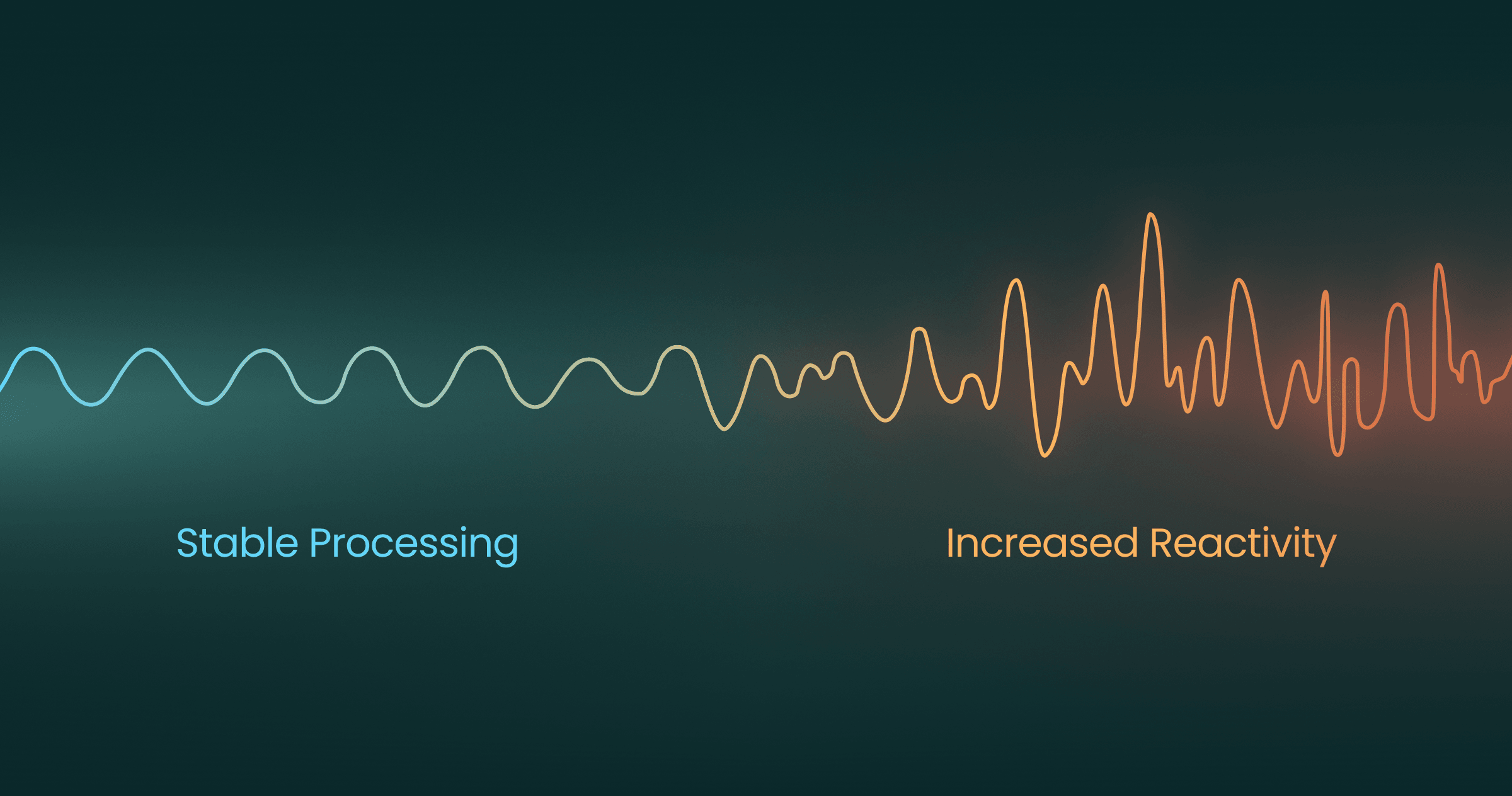
When people think about stress, they think about how it feels. Tension, frustration, overwhelm. But those are late signals. Stress begins much earlier; at a level you don’t consciously notice. Long before you feel anything, your brain has already started shifting how it processes information, responds to stimuli, and allocates energy.
That’s why stress often feels sudden. Not because it appears instantly, but because you only notice it once it becomes strong enough to affect your thinking. Without visibility into these early changes, the process remains hidden. Brands like Basil Health approach this differently by using EEG to track how brain activity shifts as stress begins to build.The brain shifts into a different mode
When stress starts increasing, your brain doesn’t just ‘feel different.’ It changes how it operates. Instead of staying balanced, it begins prioritizing speed and reactivity over stability and clarity. This shows up in subtle ways:
- your attention becomes less steady
- your responses become quicker and more automatic
- your ability to hold information reduces
- your mental effort increases
At this stage, everything still feels manageable. But internally, your brain is moving into a more reactive state. The shift is gradual, which is why it’s hard to detect.
What changes as stress builds further
As stress continues to rise, the changes become more pronounced. Your brain starts allocating more resources to handling perceived pressure, which leaves less capacity for controlled thinking. This leads to:
- reduced ability to stay focused for long periods
- increased mental fatigue
- difficulty switching between tasks
- stronger emotional reactions
At this stage, you begin to notice something is off, but it still may not register as ‘stress.’ Instead, it feels like low productivity or lack of clarity. This is where most people misinterpret the problem.
Why stress affects thinking so quickly
Stress doesn’t just add pressure. It changes how efficiently your brain works. When activity becomes less stable, your brain must work harder to maintain the same level of performance. This creates a feedback loop in the form of more effort leads to faster fatigue, fatigue reduces control, and reduced control increases reactivity. From the outside, it looks like a drop in focus. From the inside, it’s a system becoming less efficient. EEG-based systems like ours capture these shifts as patterns of activity, helping you see how your brain is changing, not just how it feels.
From early signals to visible impact
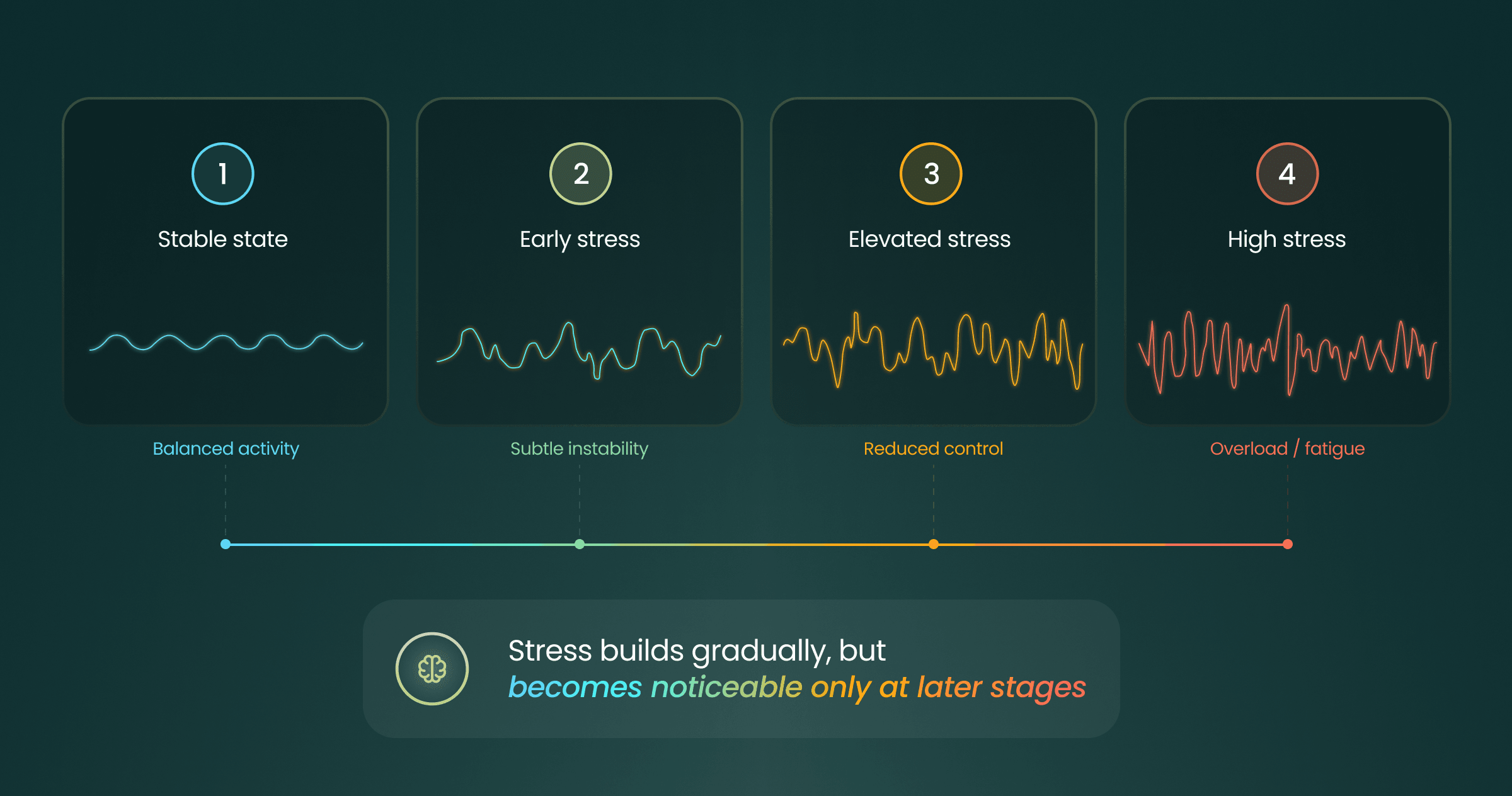
At some point, the internal changes reach a threshold where they start affecting your experience clearly.
Why this changes how you manage stress
Most people try to manage stress only after it becomes uncomfortable. They take breaks, try to refocus, or step away, but by then, the system is already under strain. The challenge is timing. When our tools provide real-time visibility into brain activity, you begin to see stress while it’s still building. That allows for earlier adjustments, before the impact becomes significant. This doesn’t remove stress, but it changes how you respond to it.
The takeaway
Stress is not a sudden event. It’s a gradual shift in how your brain functions. It starts with subtle instability, builds into reduced efficiency, and eventually affects how you think and feel. The difficulty is that you only notice it late in the process. Brain-based measurement makes that process visible. And once you can see how stress develops, it becomes easier to understand, and easier to manage.
Frequently Asked Questions
1. What happens in the brain during stress?
The brain shifts toward more reactive and less stable activity patterns, affecting focus, control, and mental efficiency.
2. Why does stress affect focus?
Stress changes how brain activity is organized, making it harder to maintain stable attention and process information efficiently.