Brain Science
What emotional overload feels like inside the brain?
Emotional overload is not a single emotion but the cumulative burden of unresolved mental demands, gradually reducing the brain's capacity for focus, clarity, and emotional resilience.
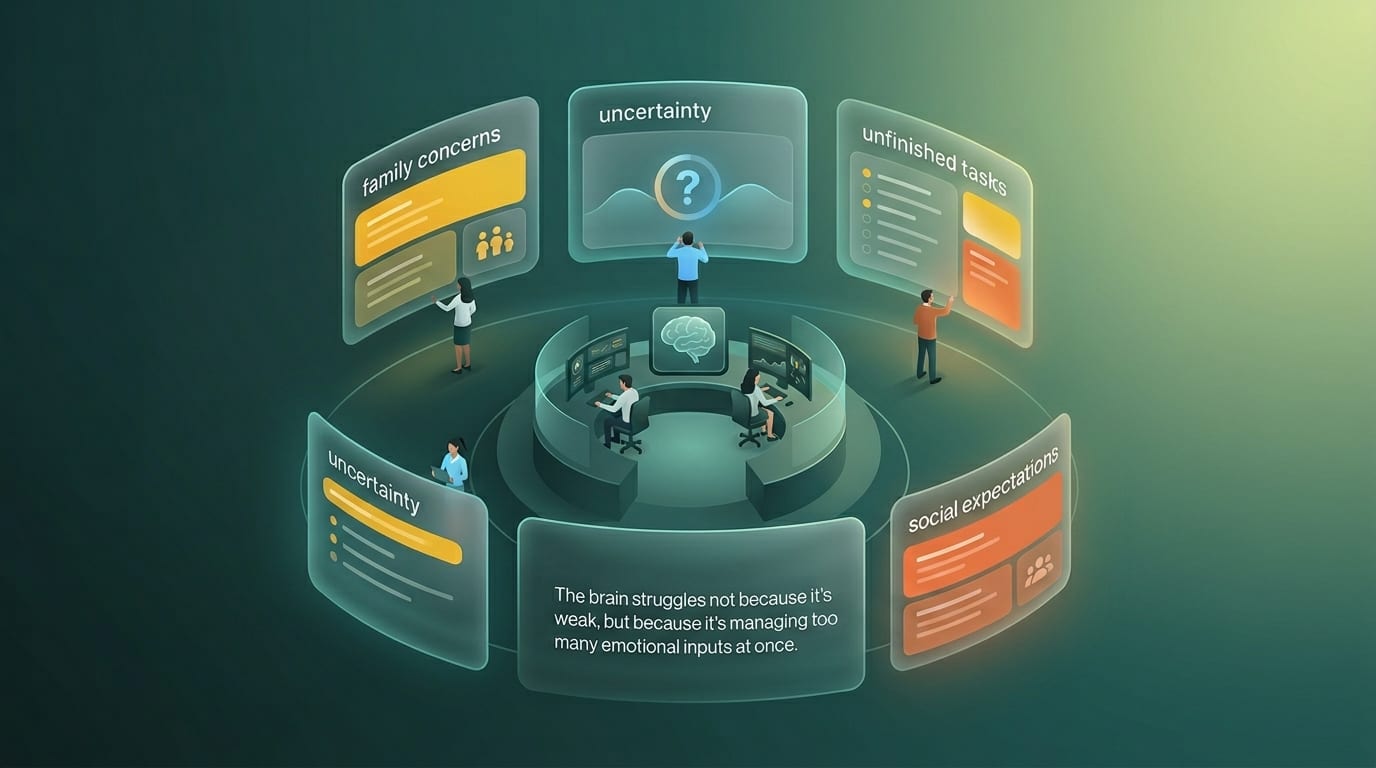
Most people think emotional overload comes from a single difficult event. But more often, it comes from accumulation. A demanding week at work. An unresolved conversation. Constant responsibilities. Small frustrations that never fully leave your mind. Individually, each experience feels manageable. Together, they create something heavier.
At first, you may not even recognize it as emotional overload. You just feel more drained, more distracted, or less capable of handling things that normally wouldn't bother you. The challenge is that emotional overload rarely announces itself clearly. Instead, it changes how your brain processes the world around you.
Your brain must process more than you realize
Every emotional experience creates mental work. Whether you're worried about something, excited about a future event, frustrated by a situation, or trying to suppress an emotion, your brain is constantly processing information in the background. Normally, this system works well. But when too many emotional demands accumulate at the same time, your brain has fewer resources available for everything else. This is why emotional overload often feels confusing. You may not feel intensely emotional. Instead, you notice:
- difficulty concentrating
- reduced patience
- mental exhaustion
- feeling overwhelmed by small tasks
- struggling to think clearly
Why small things suddenly feel bigger
One of the clearest signs of emotional overload is that ordinary situations begin feeling disproportionately difficult. A minor inconvenience feels frustrating. A simple decision feels exhausting. A small interruption breaks your concentration completely. This happens because your brain is already carrying a significant emotional load in the background.
When capacity becomes limited, even small additional demands feel larger than they actually are.
At Basil Health, this is one reason mental state measurement can be valuable. What feels like a sudden drop in patience or focus is often the result of ongoing changes that have been building beneath conscious awareness.Emotional overload often disguises itself as something else
Many people mistake emotional overload for laziness, poor focus, lack of motivation, or burnout. But the experience is different. The desire to function is still there. The challenge is that too much mental energy is being spent processing emotional demands that haven't been fully resolved. This is why emotional overload can create a strange contradiction. You want to focus. You want to be productive. You want to feel present. But your mind feels crowded. The problem isn't effort. It's capacity.
How emotional overload develops
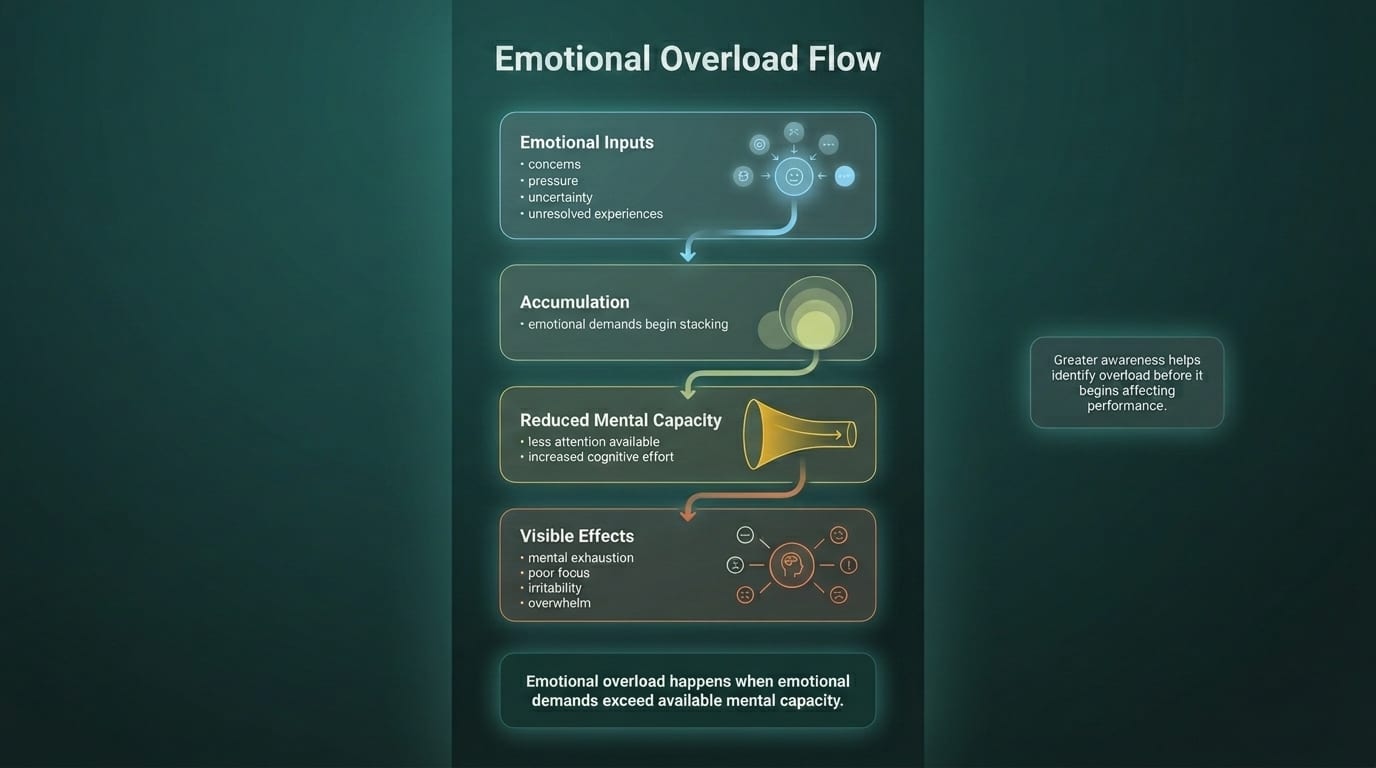
Why awareness matters more than control
Many people try to solve emotional overload by pushing harder. They force productivity. They ignore exhaustion. They convince themselves they just need more discipline. But emotional overload is not primarily a motivation problem. It's an awareness problem.
When you understand what your brain is carrying, your response changes. Instead of fighting symptoms, you begin recognizing the underlying load that created them.
This is where approaches like Basil Health become valuable. By helping people better understand their mental state, they can move beyond guesswork and gain clearer insight into what may be affecting their focus, energy, and emotional well-being.The takeaway
Emotional overload doesn't always feel emotional. Often, it feels like distraction. It feels like exhaustion. It feels like reduced focus, lower patience, and a mind that never seems fully available. Inside the brain, emotional overload is less about one powerful emotion and more about too many emotional demands competing for the same mental resources. When those demands accumulate, your brain has less capacity for everything else. Understanding that distinction is important. Because sometimes the problem isn't that you're doing too much. It's that your mind is carrying more than you realize.
Frequently Asked Questions
1. What is emotional overload?
Emotional overload occurs when the brain is processing more emotional demands than it can comfortably manage, leading to mental fatigue, reduced focus, and feelings of overwhelm.
2. How is emotional overload different from stress?
Stress is often a response to pressure or demands, while emotional overload comes from the accumulation of emotional experiences that consume mental resources over time.
3. Can emotional overload affect productivity?
Yes. Emotional overload can reduce attention, increase mental effort, and make even simple tasks feel more difficult than usual.