Brain Science
What do brainwaves tell you about your mental state?
Brainwaves don't label your emotions; they reveal the hidden patterns shaping them. EEG helps uncover how your focus, stress, and mental energy continuously shift beneath conscious awareness.
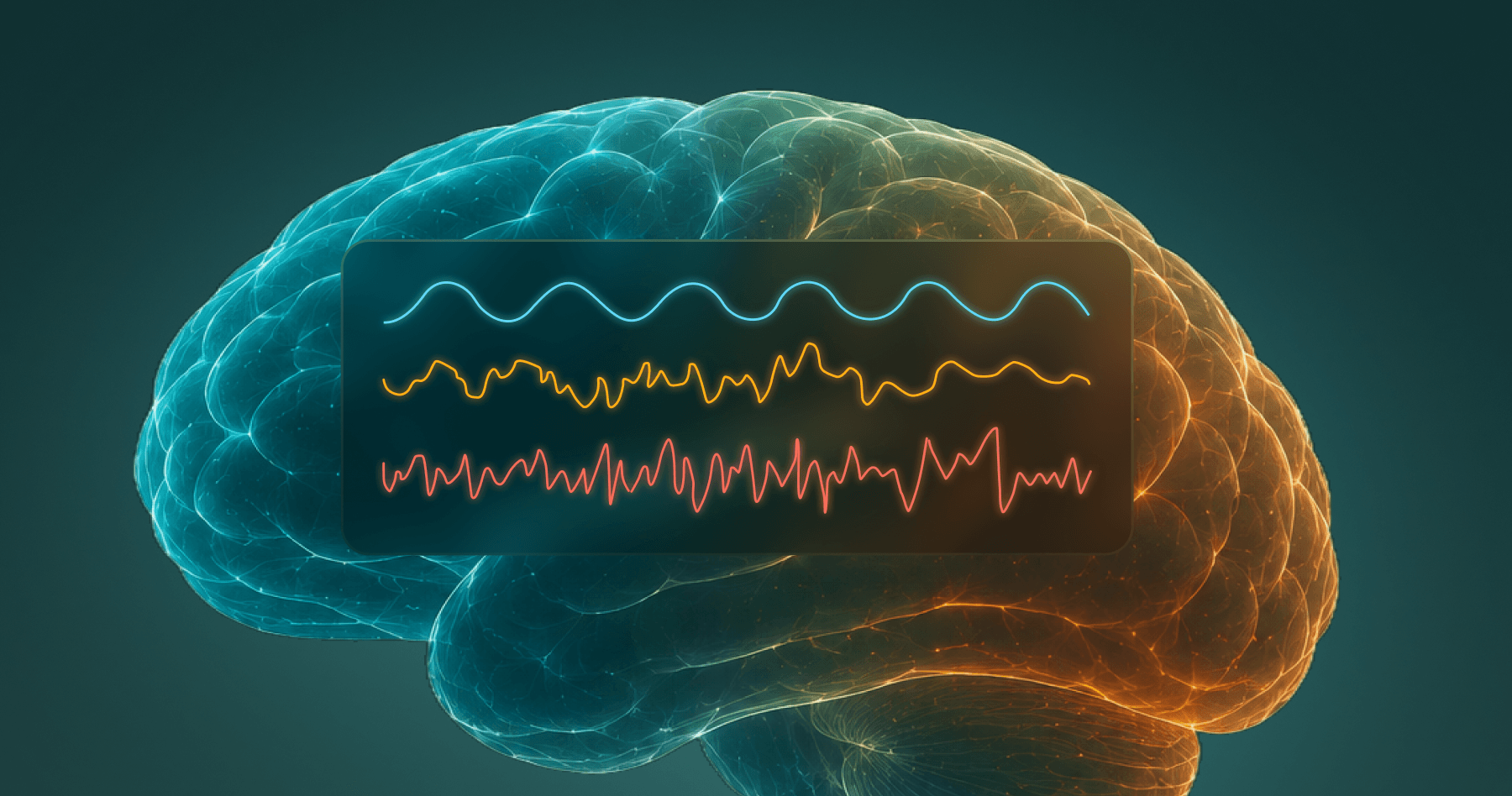
Most of the time, you rely on how you feel to understand your mental state. You feel focused, distracted, calm, or overwhelmed, and you assume that's enough to understand what's happening. But these are outcomes. They don't tell you how your state is forming or why it's changing.
Two days can feel completely different even when your work is the same. Sometimes you're clear and productive. Other times, you're restless or mentally drained without a clear reason. Without a way to observe what's happening internally, your mental state feels inconsistent. Brands like Basil Health approach this differently by using EEG to track brainwave patterns, helping you see what your brain is doing beneath those feelings.The question is: what do those patterns actually tell you?
Brainwaves are patterns, not labels!
Brainwaves are simply patterns of electrical activity in your brain. They don't directly say 'you are stressed' or 'you are focused.' Instead, they reflect how your brain is functioning in that moment. Different patterns are associated with different types of activity:
- Some reflect active thinking
- Some reflect relaxed awareness
- Some reflect mental overload or fatigue
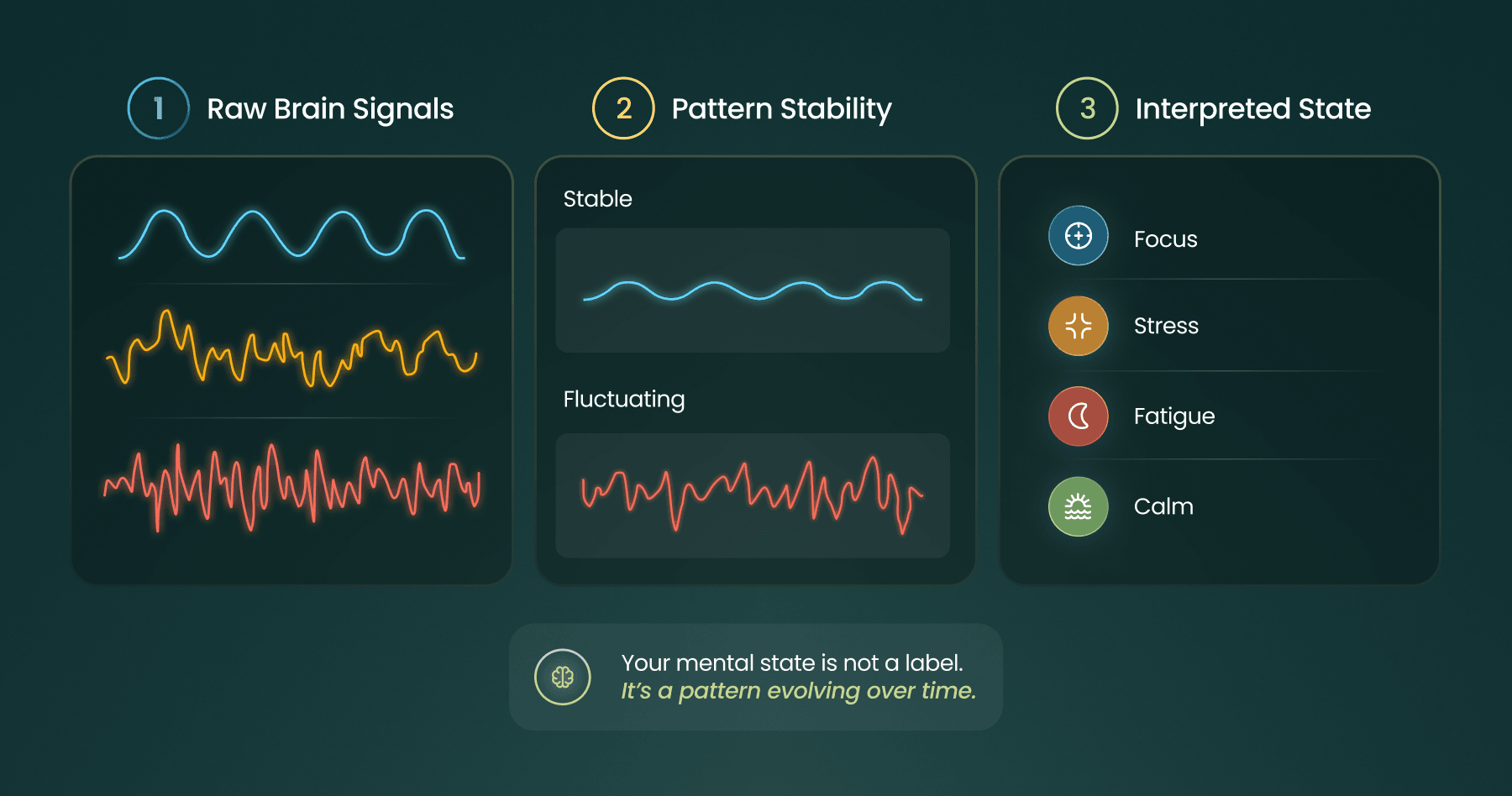
The key is not the name of the wave; it's the pattern and context. This is where most people misunderstand brainwaves. They try to label them as good or bad. But brainwaves don't work that way. They are signals. What matters is how they combine and shift over time.
What do brainwaves reveal?
Brainwaves don't just show what state you're in. They show how stable or unstable that state is. This is where they become useful. Instead of asking 'am I stressed?' you start seeing:
- Is my focus stable or fluctuating?
- Is my brain overactive or under-engaged?
- Is this state temporary or sustained?
This level of detail is hard to access through feeling alone. EEG-based systems like ours interpret these patterns to give you a clearer picture, not just of your state, but of how it's evolving. This moves you from vague awareness to structured understanding.
Why your perception often gets it wrong
One of the biggest limitations of relying on feelings is that perception is inconsistent. The same brain state can feel different depending on context. For example, high activity can feel like productivity, or stress whereas low activity can feel like calm, or lack of motivation. Without a reference point, it's easy to misinterpret what's happening. Brainwaves provide that reference.
They don't replace how you feel, but they give it context. When brands like Basil Health combine brainwave data with interpretation, your mental state becomes easier to understand and less dependent on guesswork.From patterns to understanding
At this point, the shift becomes clear. Brainwaves are not just signals; they are indicators of how your mind is functioning over time.
Why this changes how you think about your mind
Most people treat their mental state as something fixed in the moment. You feel distracted, so you assume you lack focus. You feel tired, so you assume you need rest. But brainwaves show that these states are dynamic. They shift, fluctuate, and evolve throughout the day.
With our tools, you can start seeing these shifts as they happen, understanding not just what you feel, but how your state is changing over time. That changes how you respond.
The takeaway
Your mental state is not just something you feel. It's something your brain is constantly shaping through patterns. The challenge is that you experience the outcome, not the process. Brainwaves make that process visible. And when those patterns are interpreted clearly, they give you something most people don't have: an understanding of your mind as it changes, not just after it affects you.
Frequently Asked Questions
1. What do brainwaves measure?
Brainwaves measure electrical activity patterns in the brain, reflecting how your brain is functioning at a given moment.
2. Can brainwaves tell if I'm stressed or focused?
Indirectly, yes. Certain patterns are associated with stress, focus, or relaxation, especially when interpreted through tools like ours.
3. Are brainwaves always consistent?
No. Brainwave patterns change continuously based on your activity, environment, and mental state.