Stress & Focus
How to measure stress levels in real time?
You don't notice stress when it starts. Most people don't realize their stress is increasing until it starts affecting something visible. Real-time EEG measurement changes that.
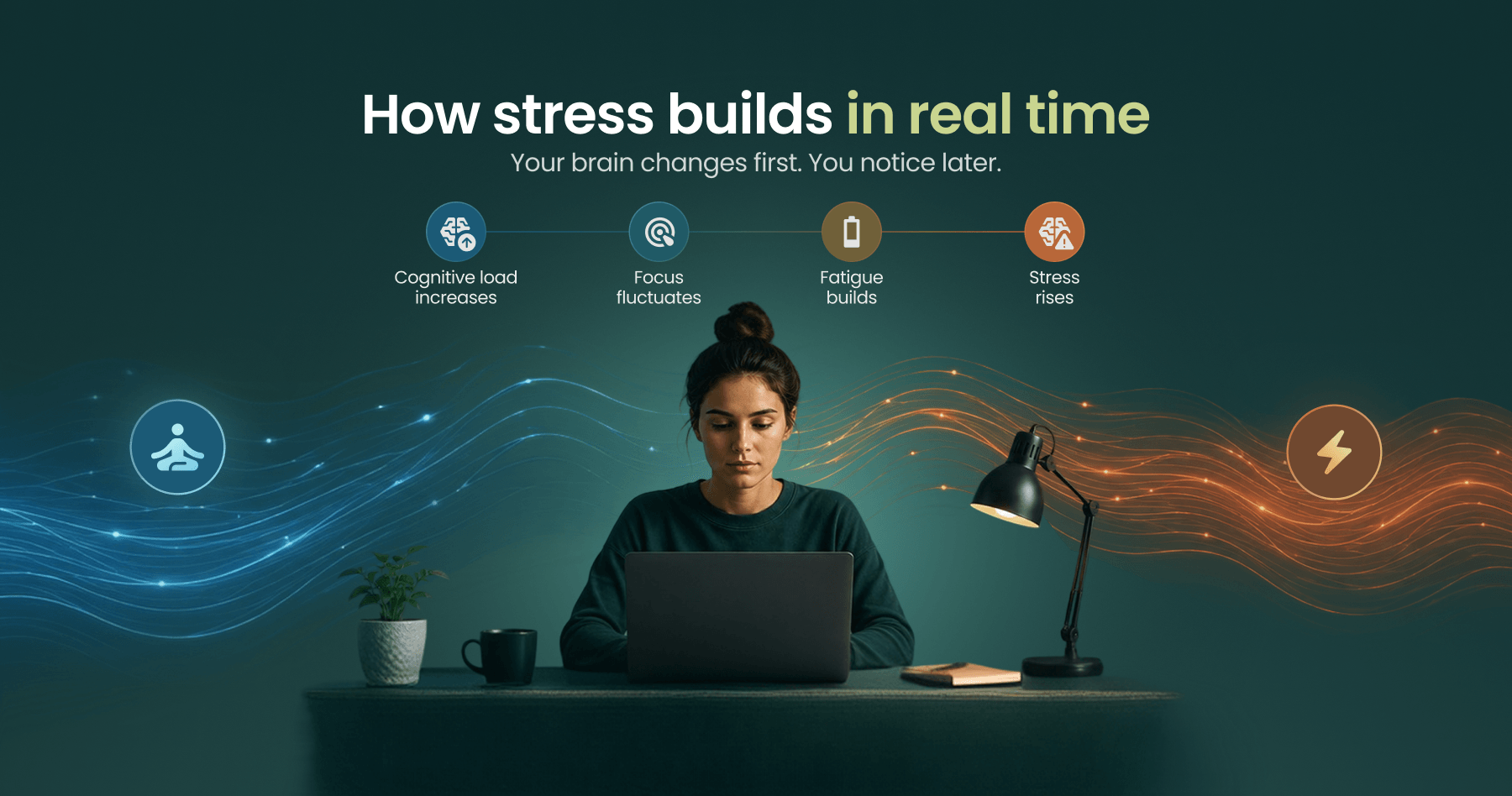
You don't notice stress when it starts. Most people don't realize their stress is increasing until it starts affecting something visible; focus, patience, or energy. You sit down to work, and everything feels normal at first. Then your attention starts drifting. Tasks take longer. Small interruptions feel more frustrating than they should. By the time you notice something is off, your mental state has already shifted.
Stress doesn't appear suddenly. It builds gradually, often without clear signals. And this is where most people rely on guesswork. Without a way to observe what's happening internally, you end up recognizing stress only after it starts affecting your performance. We at Basil Health approach this differently by using EEG to measure stress levels in real time, making these changes visible as they happen, not after.The problem isn't stress. It's the lack of visibility.
What's actually happening in your brain?
Stress is not just something you feel. It's a shift in how your brain operates. Throughout the day, your brain moves between different states. Some support focus and clarity, while others make it harder to concentrate or stay calm under pressure.
As stress begins to increase, these patterns start changing subtly. Your focus becomes inconsistent. Your reactions become quicker. Mental fatigue builds faster than usual. You don't notice these changes immediately because they happen in the background.
This creates a gap between what's happening and what you're aware of. Brain-based systems are designed to close this gap. By tracking patterns of brain activity, platforms like Basil Health make these invisible shifts visible, helping you understand how your stress, focus, and fatigue evolve in real time.Can stress be measured in real time? Well, YES!
But not by relying only on how you feel. Self-awareness is useful, but it's delayed. By the time you feel stressed, your brain has often been operating in that state for a while.
To truly measure stress levels in real time, you need to observe the underlying changes directly. This is where EEG becomes important. It tracks shifts in brain activity continuously, offering a more accurate view of your mental state. When combined with systems like ours, these signals are translated into meaningful insights, so you're not just collecting data, you're understanding what's happening in your mind.
A lot changes when you can measure stress
Most people operate reactively. They try to fix stress after it affects their work or focus. Real-time measurement changes that dynamic. When you can measure stress levels in real time:
- You notice stress as it begins, not after it builds up
- You understand how your focus shifts during work or study
- You detect mental fatigue before productivity drops
- You rely less on guesswork and more on actual patterns
- You can respond earlier, instead of reacting later
This shift, from reacting to outcomes to understanding the process, is where meaningful improvement begins.
How stress builds vs how you notice it
By this point, one thing becomes clear: stress builds gradually, but your awareness of it is delayed. This is where visual understanding helps.
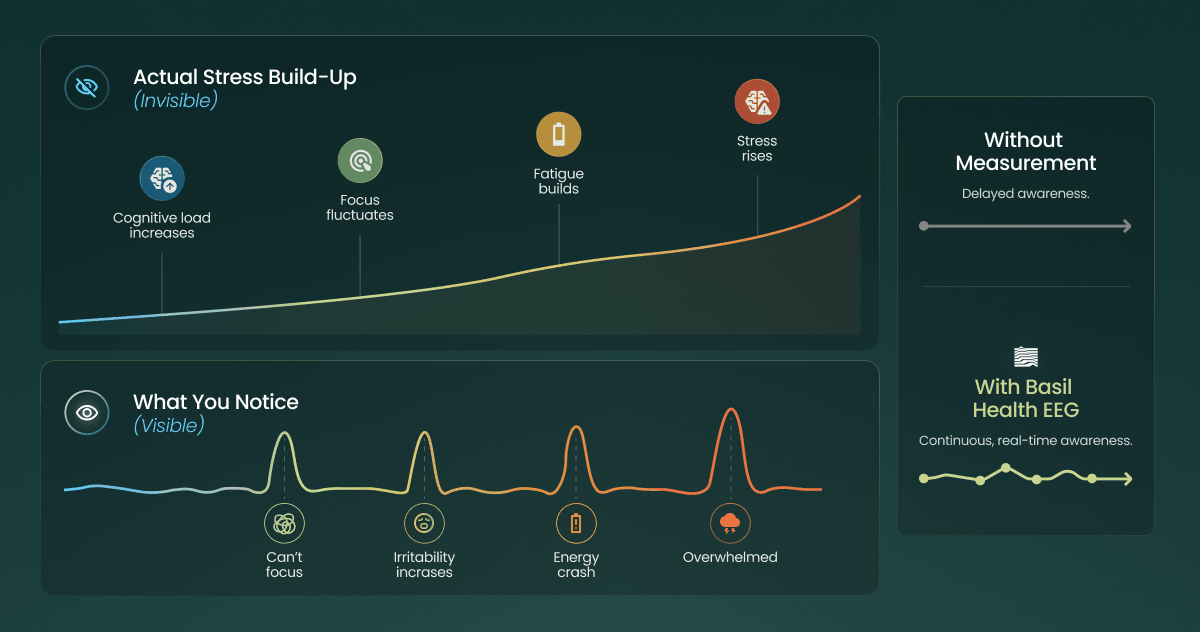
Why this changes how you manage stress
Most people try to manage stress after it becomes a problem. They take breaks when they're already exhausted or try to refocus when their attention is already gone. But by then, the system is already overloaded. Real-time awareness changes the timing.
You begin to notice when your focus starts slipping, when your mental energy drops, and when stress begins to rise. With our tools, this awareness is based on measurable patterns, not just how you feel in the moment. That makes your response more precise and more effective.
The takeaway
Stress is not the problem. It's a natural part of how your brain responds to demands. The real challenge is trying to manage something you can't see. When your mental state becomes visible, it becomes easier to understand. And when it becomes understandable, it becomes trainable. You don't notice stress when it starts. You notice it when it affects you.
Real-time measurement changes that. Basil Health is changing that!Frequently Asked Questions
1. Can stress really be measured in real time?
Yes. Stress can be measured in real time using EEG-based tools that track changes in brain activity linked to stress and focus.
2. How is measuring stress different from feeling stressed?
Feeling stressed is subjective and often delayed. Measurement provides real-time, objective insight into your mental state.