Brain Science
How EEG measures stress, focus, and anxiety?
Your brain changes states long before you consciously notice them. EEG helps make stress, focus, and anxiety visible in real time by decoding the hidden patterns behind your mental performance.
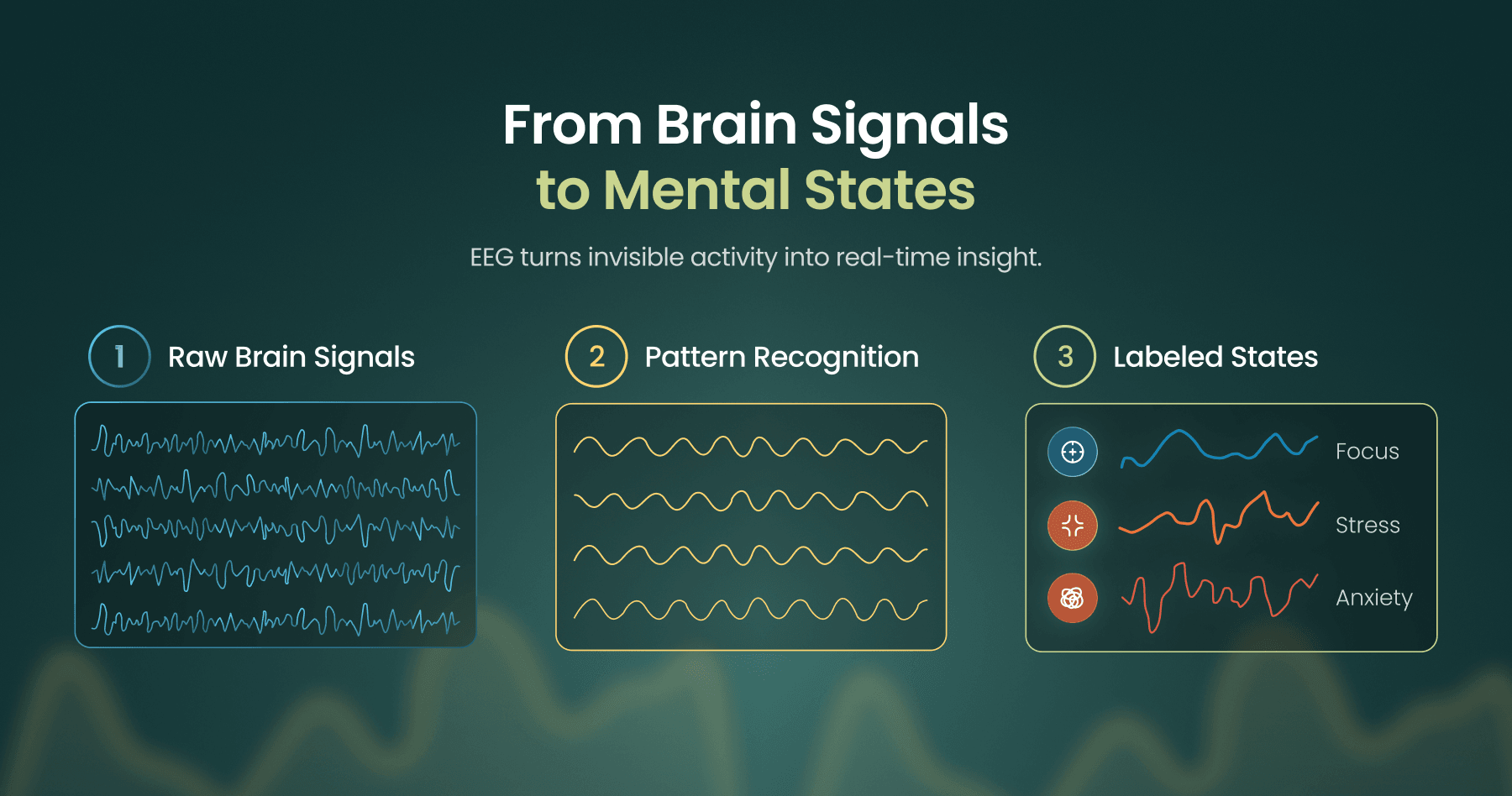
Most people don't realize their mental state is shifting until it starts affecting their performance. You sit down to work expecting to focus. A few minutes in, your attention drifts. Tasks take longer. You feel slightly restless or mentally tense without knowing why. At other times, you feel unusually sharp or calm without any clear reason. We label these experiences as stress, focus, or anxiety.
But most of the time, we're only naming what we feel, not understanding what's changing. Without visibility, these shifts feel unpredictable. Brands like Basil Health approach this differently by using EEG to measure stress, focus, and anxiety in real time, helping you see these changes as they happen, not after they affect you.The problem isn't that your mind is inconsistent. It's that you can't see how it's changing.
Your brain is constantly producing electrical signals.
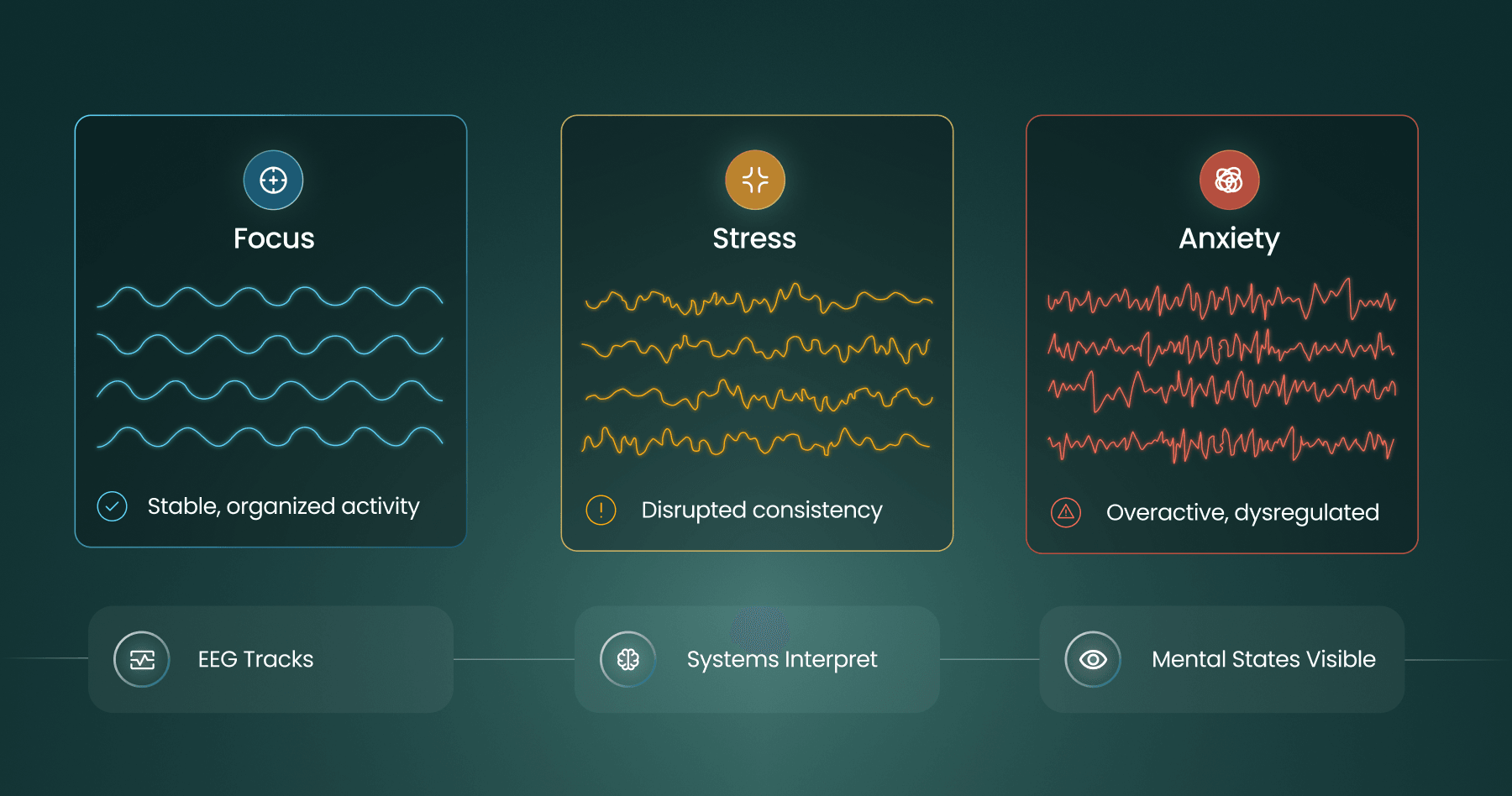
These signals form patterns, and those patterns change depending on your mental state. When you're focused, your brain shows a more stable and organized pattern. When stress increases, that pattern becomes less consistent. When anxiety rises, activity becomes more intense and harder to regulate. These are not separate events; they are shifts in the same system. The important part is this: these changes happen continuously, even when you're not aware of them.
You don't notice the shift when it begins. You notice it when it affects your ability to think, concentrate, or stay calm. This creates a gap between what your brain is doing and what you're aware of. EEG-based systems are designed to close that gap by tracking these patterns directly, instead of relying on delayed perception.
How EEG measures stress, focus, and anxiety?
EEG measures electrical activity in the brain. It doesn't interpret thoughts; it tracks patterns. Different mental states are associated with different patterns of activity. EEG captures these patterns in real time and identifies how they shift. For instance, focus is reflected in more stable and consistent activity. Stress introduces variability. Anxiety often shows more intense, less regulated patterns.
On their own, these signals are complex. But when interpreted through our system, they become usable insights, helping you understand what state your brain is in at any given moment. This is what makes measurement meaningful. You're not just collecting data; you're gaining clarity.
What EEG reveals about these states?
Measuring stress, focus, and anxiety is not just about knowing that they exist. It's about understanding how they differ. Most people group these experiences together. Feeling distracted, overwhelmed, or restless often gets labeled as 'stress.' But from the brain's perspective, these are not the same state. EEG makes that distinction visible. What becomes clearer with EEG measurement:
- You start seeing that low focus is not always stress—it can be mental fatigue or unstable attention
- You notice that stress and anxiety follow different patterns, even if they feel similar subjectively
- You understand when your brain is overactive vs under-engaged, which require very different responses
- You can differentiate between temporary fluctuations and sustained states
- You begin to see your mental state as a pattern, not a label
EEG differentiates stress, focus, and anxiety uniquely.
Understanding that these states are measurable is useful. But what makes EEG powerful is its ability to distinguish between them.
This indeed changes how you respond!
Most people try to manage stress or anxiety after they feel overwhelmed. They try to focus after losing attention. But these are late responses.
When brands like us provide real-time EEG-based feedback, the timing changes. You begin to see when stress is rising, when focus is stabilizing, and when anxiety is building. That makes your response more precise, because it's based on what's happening and not just how it feels.
The takeaway
Stress, focus, and anxiety are not random experiences. They are patterns of brain activity. The challenge is that you experience them without seeing how they develop. EEG makes those patterns visible. And with brands like Basil Health, they become understandable. You move from guessing your state to actually knowing it.Frequently Asked Questions
1. How does EEG measure stress, focus, and anxiety?
EEG measures patterns of brain activity. Different mental states correspond to different patterns, which can be tracked and interpreted in real time.
2. Is EEG reading my thoughts?
No. EEG tracks electrical activity patterns, not specific thoughts.