Brain Science
Can anxiety be measured using brain signals?
Anxiety often hides behind everyday distractions, stress, or overthinking. Brain signals help uncover these subtle patterns early, making anxiety more measurable, understandable, and easier to respond to in time.
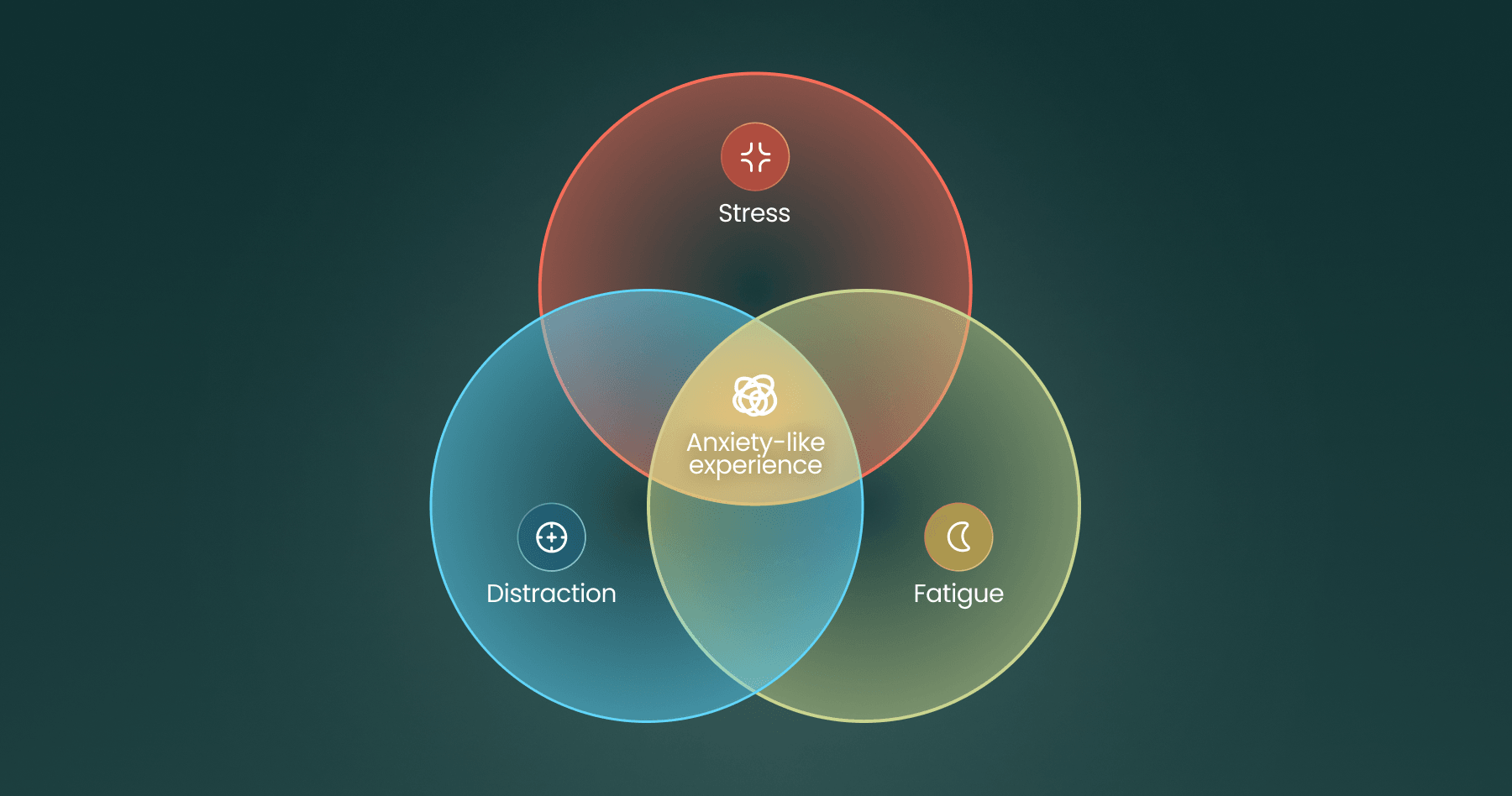
Most people assume they'll know when they're anxious. But anxiety isn't always intense or visible. It doesn't always show up as panic or overwhelm. More often, it appears quietly; restlessness, constant thinking, difficulty settling into a task, or a subtle sense that something isn't quite right. Because these signs are mild and familiar, they're easy to dismiss.
You might think you're just distracted, tired, or having an off day. You adjust your routine, try to focus, or take a break, without realizing that the underlying state hasn't changed. This is what makes anxiety difficult to identify.
Without a clear way to observe it, anxiety blends into everyday experience. Brands like Basil Health approach this differently by using EEG to track underlying brain activity, offering a way to detect patterns that may not be obvious through feeling alone.Why anxiety is hard to recognize accurately?
One of the biggest challenges with anxiety is that it overlaps with other mental states. It can feel like:
- stress under pressure
- lack of focus
- mental fatigue
- overthinking
From the outside, these experiences look similar. Even internally, they can feel almost identical. So instead of identifying anxiety as a distinct state, you interpret it based on context. A busy day feels like stress. A slow day feels like lack of motivation. The underlying pattern remains unclear. This creates a situation where you're responding to symptoms without fully understanding the cause.
That's where perception starts to fall short.
Yes, brain signals detect anxiety!
But not in the way most people expect. Brain signals don't label emotions directly. They reflect patterns of activity. Anxiety is associated with certain types of patterns, typically more intense, less stable, and harder-to-regulate activity compared to calmer states. These patterns indicate that the brain is more reactive or over-engaged. EEG captures these shifts in real time.
On their own, these signals are complex. But when interpreted through our tools, they can indicate when your brain is operating in a pattern commonly linked to anxiety. This doesn't mean the system is 'reading' anxiety as a label. It means it's identifying the conditions under which anxiety tends to arise.
What makes anxiety measurable and not just felt!
The key difference between feeling anxiety and measuring it is consistency. Feelings vary based on context, awareness, and interpretation. But brain activity patterns follow more consistent signals. When anxiety is observed through brain signals:
- You can see sustained patterns of heightened activity
- You can detect instability in how your brain is regulating itself
- You can distinguish between temporary stress and prolonged activation
- You can identify when your state is shifting, even subtly
- You can move beyond vague labels to clearer patterns
This shifts the question from “Do I feel anxious?” to “What is my brain doing right now?”
From patterns to meaningful signals
Understanding that anxiety can be measured is one thing. Understanding how those signals become useful is another.
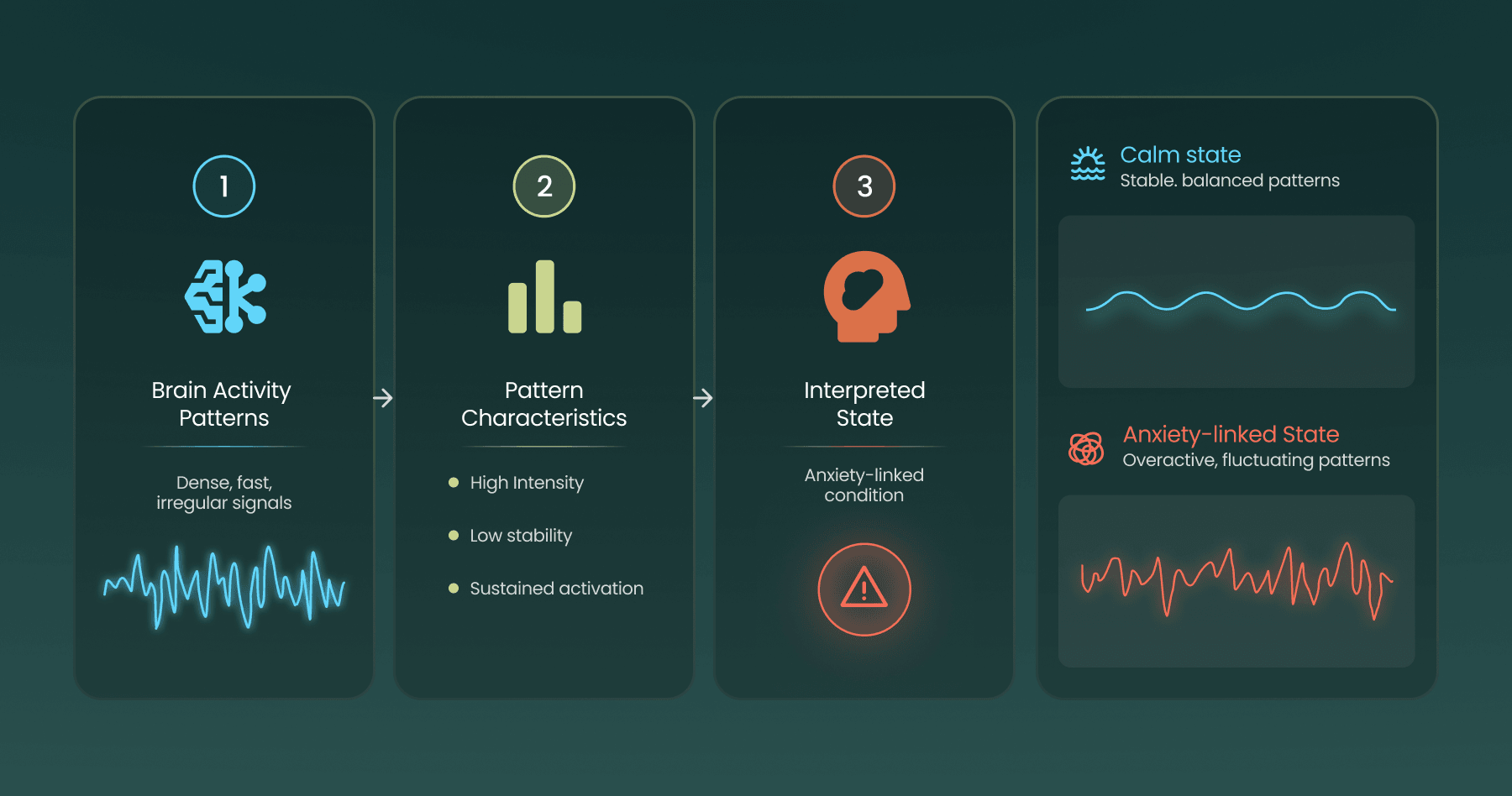
This changes how you respond to anxiety
Most people respond to anxiety only after it becomes uncomfortable or disruptive. They try to relax, distract themselves, or push through it. But these responses often come late. When brands like us provide visibility into brain activity, the timing shifts. You begin to notice when your brain is entering a pattern linked to anxiety, before it fully affects your behavior. That allows for earlier and more targeted responses. Over time, this changes how you relate to anxiety. It becomes less about reacting to a feeling and more about understanding a pattern.
The takeaway
Anxiety is not always obvious. It blends with other states. It develops gradually. And it often goes unnoticed until it becomes difficult to ignore. That's why relying only on how you feel can be limiting. Brain signals offer a different perspective. They don't replace your experience, but they reveal what's happening beneath it. And when those patterns are interpreted clearly, anxiety becomes something you can recognize earlier, understand better, and respond to more effectively.
Frequently Asked Questions
1. Can anxiety really be measured using EEG?
EEG can detect patterns of brain activity associated with anxiety, especially when interpreted through systems that analyze these signals in real time.
2. Does EEG directly detect anxiety as an emotion?
No. EEG measures activity patterns. Anxiety is inferred based on how those patterns behave.