Brain Science
What actually changes when breathwork affects brainwaves?
Breathwork does more than slow your breathing; it gradually reshapes your brain activity. As breathing stabilizes, brainwaves become calmer, clearer, and more organized, influencing focus, emotional control, and mental clarity in real time.
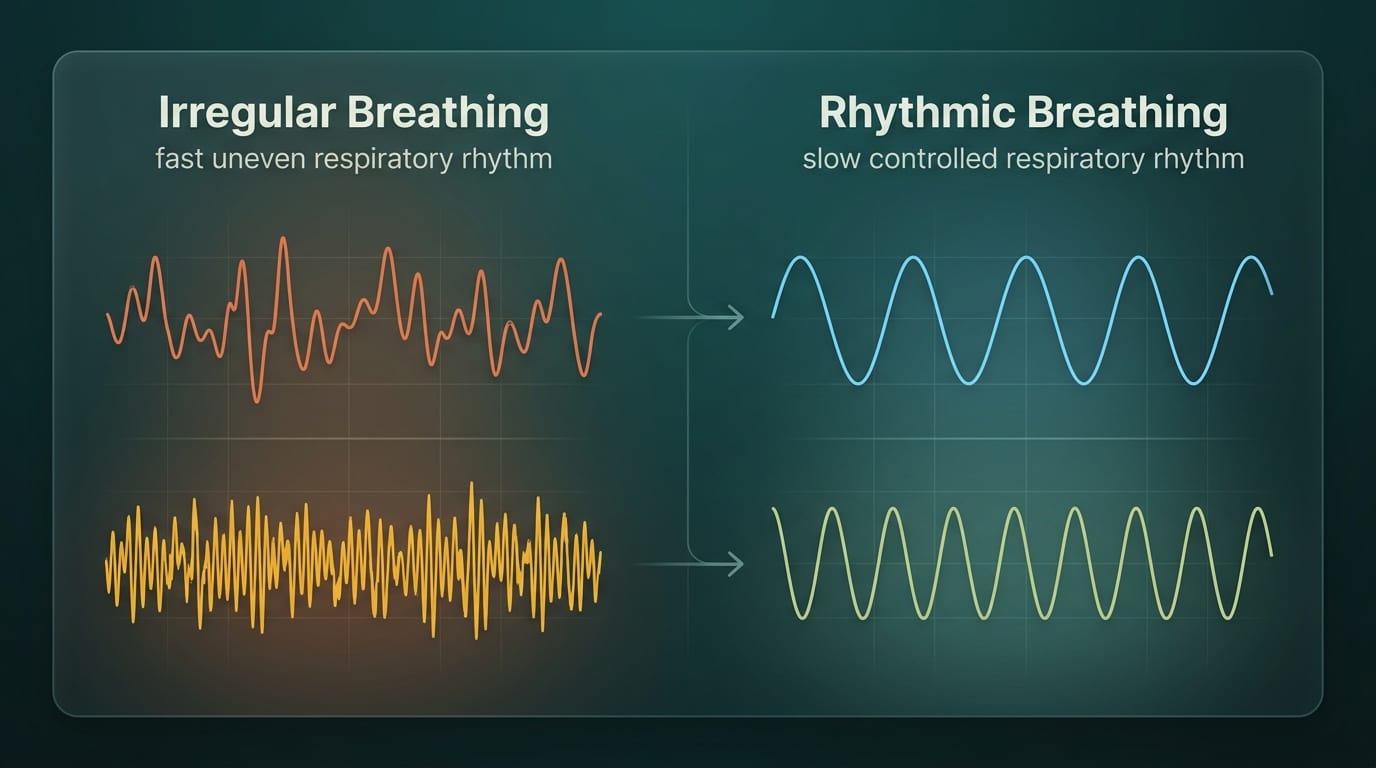
You change your breath, but something deeper shifts. Breathwork often feels simple. You slow your breathing. You follow a pattern. You focus on the rhythm. At the surface, it looks like just a physical act. But after a few minutes, something starts to change. Your mind feels quieter. Your reactions slow down. Your thoughts feel less scattered.
It’s not just your breathing that has shifted. Something deeper in your mental state has adjusted. This is where breathwork becomes more than a relaxation technique. It begins to influence how your brain is functioning in that moment.
Breath directly influences how your brain operates
Your breathing is closely linked to your brain’s activity. When your breath is fast and shallow, your brain tends to move into a more reactive and alert state. When your breath slows down and becomes more controlled, your brain activity begins to settle. This is not a vague connection.
Changes in breathing patterns affect how stable or unstable your brain’s activity becomes. Slower, more consistent breathing often leads to smoother and more balanced brainwave patterns. Faster or irregular breathing can lead to more fragmented and uneven patterns. This is the bridge between breathwork and brainwaves. At Basil Health, these shifts can be observed as changes in brain activity patterns as breathing becomes more regulated over time.What changes in your mental state
As your breathing becomes more controlled, your brain begins to shift out of a reactive mode. This leads to:
- more stable attention
- reduced mental noise
- slower, more deliberate responses
- a greater sense of control over thoughts
These are not separate effects. They are outcomes of your brain activity becoming more organized and less chaotic. The key point is this: breathwork doesn’t “add calmness” directly. It changes the conditions in which your brain operates.
Why the effect feels subtle but meaningful
Breathwork doesn’t create dramatic changes instantly. Instead, it reduces internal fluctuations. You may not feel a strong difference immediately, but the intensity of your thoughts decreases. Your mind becomes less jumpy. Your focus becomes easier to hold. These changes are easy to overlook because they are not loud or obvious. But they affect how you think, respond, and process information.
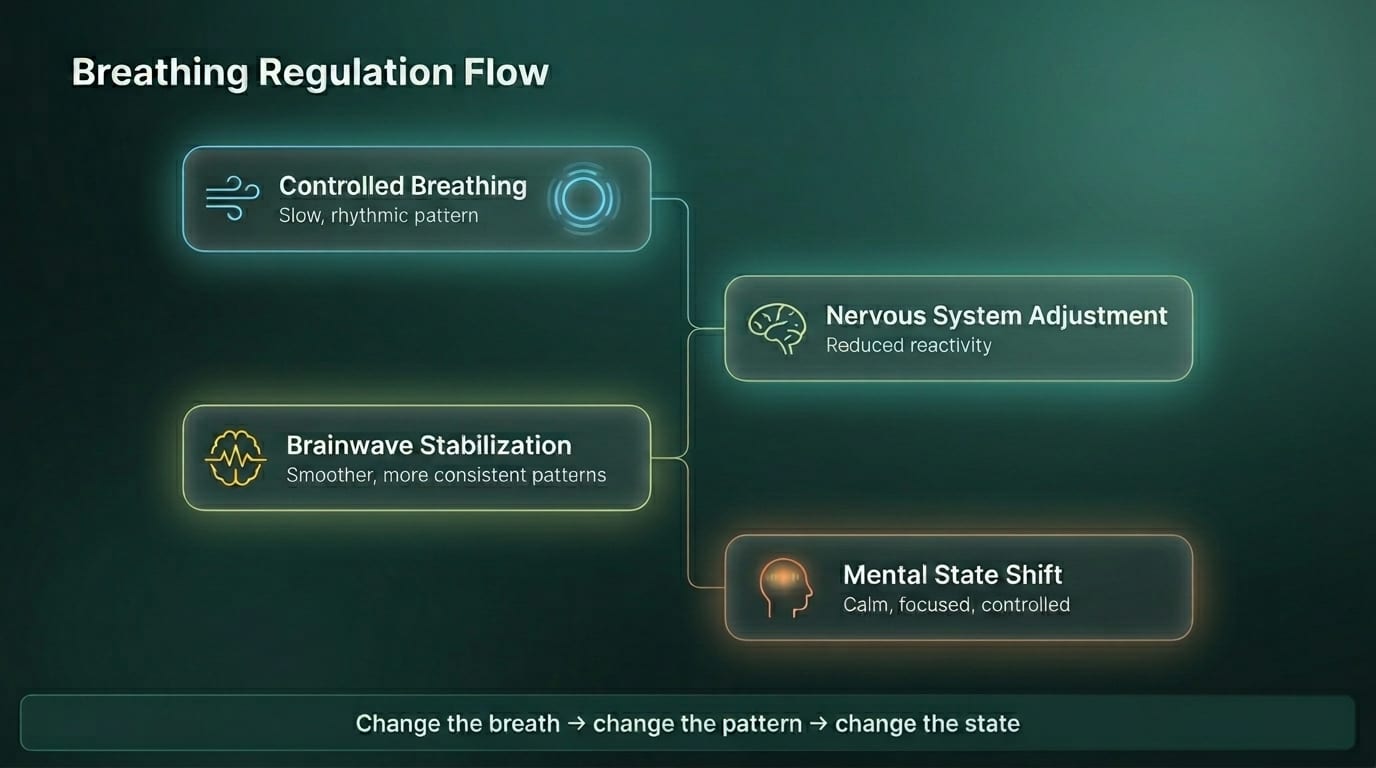
With Basil Health, these changes appear as smoother and more consistent patterns in brain activity during and after breathwork practices.From breath to measurable change
The connection becomes clearer when you see it as a process.
Why this changes how you approach breathwork
Most people treat breathwork as a way to relax. Something you do when you feel stressed. But its role is deeper than that. It’s a way to influence how your brain is functioning in real time.
Instead of reacting to stress or distraction, you can shift your internal state by changing your breathing pattern. At Basil Health, this connection between breath and brain activity becomes more visible, helping you understand how these practices affect your mental state beyond just how they feel.The takeaway
Breathwork is not just about breathing differently. It’s about changing how your brain operates. Your breath influences your brain activity. Your brain activity shapes your mental state. When your breathing becomes more stable, your brain follows. And when your brain becomes more stable, your experience of focus, calmness, and control begins to change. The shift may feel subtle. But it is real, and it is measurable.
Frequently Asked Questions
1. How does breathwork affect brainwaves?
Breathwork changes breathing patterns, which influence brain activity, leading to more stable and less reactive brainwave patterns.
2. Does slow breathing always calm the brain?
In most cases, slower and more rhythmic breathing supports more stable brain activity, which is associated with calm and focused states.