Brain Science
How ancient practices make sense through neuroscience today?
The practices haven’t changed. Our understanding of them has. Neuroscience is helping decode how ancient techniques influence the brain, transforming timeless wisdom into observable mental patterns.
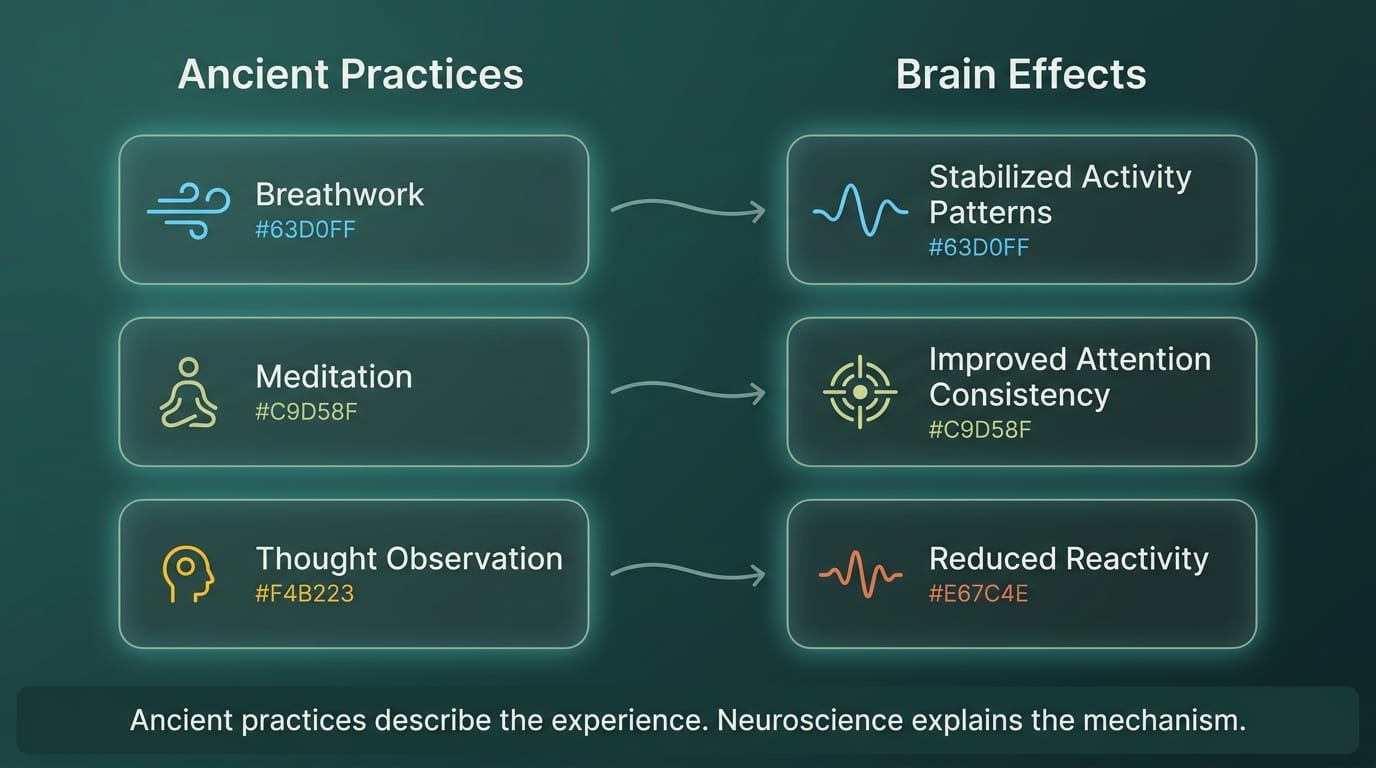
These practices existed long before we understood the brain. Practices like meditation, breath control, and self-observation have been around for centuries. They were developed without modern science, without brain scans, and without technical explanations. Yet they focused on things we still struggle with today; stress, distraction, emotional reactivity, and lack of clarity.
For a long time, they were seen as philosophical or spiritual. Something you either believed in or didn’t. But now, that perspective is changing. Not because the practices have changed, but because our ability to understand what they do has improved.
What seemed abstract is actually functional
Ancient practices often sound vague when described in words.
- “Calm the mind.”
- “Be present.”
- “Observe your thoughts.”
These ideas feel difficult to measure or define. But when you look at them through a neuroscience lens, they become more concrete. They are not abstract goals. They are changes in how the brain operates. For example:
- calming the mind relates to reducing instability in brain activity
- being present relates to sustained attention patterns
- observing thoughts relates to reduced automatic reactivity
What once sounded philosophical now maps to specific changes in mental functioning.
Why these practices actually work
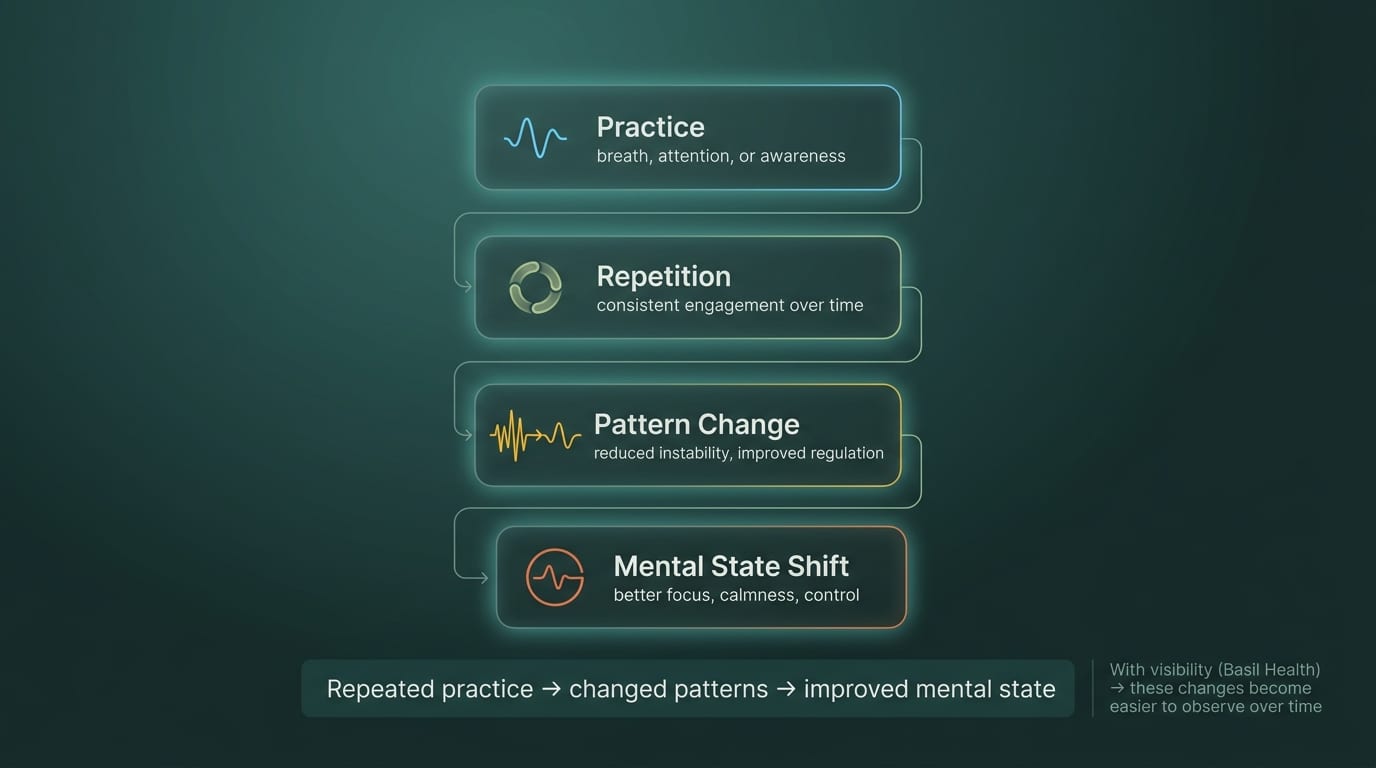
At their core, most ancient practices are forms of training. They repeatedly guide your attention, your breathing, or your awareness in a specific direction. Over time, this repetition changes how your brain behaves. It leads to:
- more stable patterns of activity
- reduced fluctuations in attention
- better regulation of responses
The common thread across different practices
Even though ancient techniques appear different on the surface, many of them share a common mechanism. They all train some form of awareness. Whether it’s:
- focusing on the breath
- returning attention during meditation
- observing thoughts without reacting
The underlying process is similar. You notice when your mind shifts, and you guide it back. This repeated process strengthens your ability to maintain stability and reduces automatic reactivity. That’s why different practices often lead to similar outcomes.
How these changes develop over time
When you look at it as a process, the pattern becomes clearer.
Why this changes how you see these practices
When something feels abstract, it’s hard to stay consistent with it. That’s why many people try these practices briefly and then stop. They don’t see immediate results, or they don’t fully understand what’s happening. But when you understand the mechanism, the approach changes. You stop expecting instant results. You start recognizing that these are training processes that gradually reshape how your brain functions.
With Basil Health, this shift becomes more visible. Instead of relying only on how you feel, you can begin to understand how your mental patterns are evolving over time.The takeaway
Ancient practices were never random. They were structured ways of influencing how the mind works. What has changed today is not the practice, but the explanation. Neuroscience provides a way to understand what these practices are actually doing. It connects experience with mechanism. And once that connection becomes clear, these practices stop feeling abstract. They start making sense, not just conceptually, but practically.
Frequently Asked Questions
1. Are ancient practices scientifically proven?
Many aspects of practices like meditation and breathwork are supported by research showing changes in brain activity and mental states.
2. How do ancient practices affect the brain?
They influence patterns of brain activity, improving stability, attention, and emotional regulation over time.