We count steps. We track sleep. We monitor heart rates. But stress? We just feel it.
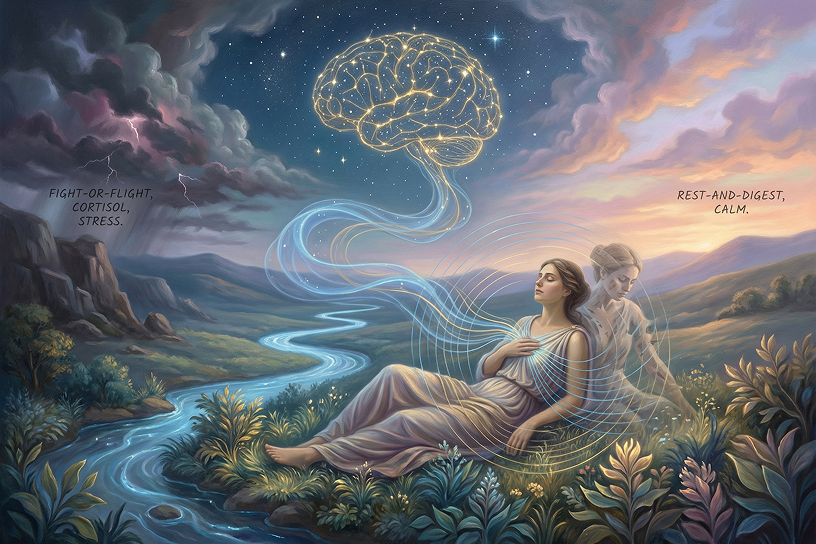
Here’s the twist: stress isn’t just emotional, its biological data flowing through your vagus nerve, the superhighway connecting body and brain. Nearly 80% of bodily signals travel upward to your mind. Translation? Your body is constantly updating your brain about safety, threats, and balance. Ancient breathwork wasn’t mystical. It was nervous system engineering. Slow diaphragmatic breathing increases heart rate variability (HRV) lowers cortisol levels and activates your parasympathetic nervous system.
Modern neuroscience now confirms what monks knew centuries ago: vagus nerve stimulation reduces anxiety, supports trauma recovery, and may even protect cognitive health. Calm isn’t a vibe. It’s measurable autonomic regulation.
And once you can measure stress, you can master it.
Armstrong, A. (2023). Healing through the vagus nerve: Improve your body’s response to anxiety, depression, stress and trauma through nervous system regulation.